
AI
AI Agents for Manufacturing: Use Cases, Architecture, and Controls
A maintenance model flags a spindle that may fail. The warning is useful, but it does not check whether the...

GroupBWT connects validated AI use cases to the systems people already use. Each model response or action sits on live data and the access rules your team already enforces. Start a conversation about the production blocker you’d like to remove first.



A working demo rarely carries production’s real questions: who is allowed to see this record, who has to approve that change, and who fixes it when an answer is wrong. Those gaps usually decide whether a pilot survives.
Fragmented Data & Context
Most pilots are scored against a curated document set. Production answers arrive from records that drift between ERP, CRM, and SQL systems during the week. Someone ends up verifying each answer against the original source.
Security, Access & Compliance Constraints
A test account does not move a deployment forward. When access rules, retention, and audit obligations aren't mapped to each user and record, the rollout stops regardless of how accurate the model is.
Workflow & System Integration Gaps
An AI answer without a destination is just another inbox to clear. Staff copy text into the next system by hand, and the model has added a step instead of completing the work it was meant to do.
Uncontrolled AI Costs
Each model call, retry, and long context has a price, and most pilots test with a small handful of requests. Running several departments for a day looks very different on the same invoice.
Platform & Vendor Dependency
When the provider's framework holds the business rules, switching models means rebuilding data, permissions, and tests as well. The lock-in extends past the model itself.
Operational Capability Gaps
A few wrong answers, a few broken connections, a few quiet source changes: without a named operating team and a maintenance plan, those small issues pile up until staff stop trusting the system.
GroupBWT’s AI implementation company takes AI implementation services and AI implementation solutions into production: planning, integration, deployment, and the follow-up that keeps results stable.
A prototype can be ready while the access path behind it isn’t. We name the remaining blockers and put them into an implementation plan: dependencies, owners, release criteria. The work that already shipped isn’t redone.
Production prediction or assistant work needs current inputs that match the records people see. We connect the source systems, refresh what the workflow needs, and carry the access rules into the application.
Different models behave differently under live load. We test the model and interface choices against representative workloads so the agreed architecture keeps model selection separate from the business logic.
A staff login shouldn’t unlock records the same person can’t open in the source system. We wire the agreed identity checks, data permissions, retention settings, and action boundaries, and your legal team defines what those controls need to support.
A model that answers smoothly can still be wrong. We build the release test suite with the workflow owner, separate development cases from holdout acceptance tests, and give you the test output and configuration record before each release.
Once the answer reaches the recipient, what does it change? We wire the application to the permitted actions, decide which changes need approval before execution, and document retry or escalation paths for when a step fails.
The operating team needs to see broken connections, bad answers, and source changes. We set up the production environment and incident instructions, and document which pieces your team runs and which stay with GroupBWT.
A slower answer or a bigger invoice usually has a workload-level reason. We measure response time and cost against accepted outputs, then try smaller context, a different model, or fewer passes, never below the agreed quality bar.
We agree the operating baseline and the measures that determine whether the implemented workflow is useful.
Faster Time to Production
Your validated prototype can move toward release without another round of integration rework. GroupBWT identifies missing connections and access decisions early, then sequences the build around those dependencies.
Reduced Manual Work
GroupBWT connects model output to the next permitted task, reducing copying and repeated review. In a single healthcare engagement, our integrated documentation agents cut manual administrative tasks per patient by 50% (company-reported).
Reliable AI-Enabled Workflows
Staff can see incomplete work and take over without starting again. GroupBWT preserves the task’s state and routes failed connections or uncertain outputs to a responsible person.
Controlled AI Costs
Your team can see what completing a useful task costs. GroupBWT combines model usage, infrastructure, and support costs, so a cheaper API bill does not hide extra manual correction.
Secure and Governed AI Adoption
Your team can limit data access and review consequential changes before execution. GroupBWT separates those controls and records the resulting actions, giving security staff a traceable route for investigating unexpected behavior.
Measurable Business Performance
GroupBWT links acceptance to the workflow outcome. In a single lender engagement, our connected underwriting agents reduced exception-application review time by up to 75% (company-reported), while analysts retained final lending decisions.

Bring the workflow you want to launch, whether it starts with a prototype, a purchased platform, or an existing custom system. On an implementation scoping call, GroupBWT can identify the immediate blocker and agree which engineering work needs a closer assessment.
For implementing AI solutions, GroupBWT defines the build sequence, responsible teams, and tests required before launch.
A user request or system event starts the workflow. Access checks precede the source read; authorized context reaches the model; its proposed output passes to orchestration for policy checks before use. The model interprets context or predicts from prepared inputs, but does not grant permission to act.
Model Interfaces
Hosted or privately deployed models selected for the task, data boundary, quality, and response-time requirements.
Task-Specific AI Components
Retrieval-grounded generation, classification, extraction, or prediction according to the workflow’s requirements.
Source connections supply the current record needed for the task. Retrieval and model inputs remain separate from the systems that hold the authoritative business state.
Enterprise Data Connections
Approved documents, business-system records, and relevant operational signals.
Retrieval & Context Assembly
Source selection, indexing where needed, and evidence returned alongside generated answers.
Reading a record and approving a change are separate decisions. In the published lender implementation, GroupBWT kept final credit decisions with analysts rather than assigning them to the agents.
Identity & Data Permissions
Authenticated users, service identities, and permissions limited to the agreed workflow.
Action & Privacy Controls
Permitted actions, human-review requirements, retention settings, and execution records.
Orchestration keeps context attached across handoffs. GroupBWT’s published maintenance implementation used a shared case record for equipment risk, repair needs, and production constraints; engineers approved consequential changes.
Connected System Actions
Authorized reads and updates through business-system interfaces, after applicable access and approval checks.
Exception Handling
Safe stopping, state preservation, retries where appropriate, and escalation to the responsible team.
Release tests assess a proposed configuration; operating records expose what changes under real usage. Reviewing accepted outputs prevents retries or unusable answers from masquerading as productive work.
Quality & Release Evaluation
Development examples, separate holdout acceptance tests, and recorded model/configuration versions.
Operating Signals
Output review, failed-task traces, response time, and cost per accepted task.
Runtime placement depends on source access and the model’s processing boundary. We define where the application runs and what may reach an external model before selecting the environment.
Deployment Boundary
Cloud, private, or on-premises deployment scoped to source access, model availability, and security requirements.
Release & Support Configuration
Environment configuration, release records, incident responsibilities, and maintenance procedures.
Compare the work needed to launch each approach in the first row, then its ownership and operating costs in the second.
When the platform already covers the task, we configure its data connections, identity checks, and workflow handoffs. Custom work focuses on gaps around the product rather than rebuilding its core features. The platform’s supported interfaces and data policies determine what we can integrate.
When proprietary task logic defines the product, we build the application and connect models to your systems. Custom work includes the workflow logic, interfaces, and release tests. The design can separate model providers from business logic where portability is a requirement.
When a platform covers part of the task, we retain it and build the missing retrieval or workflow components. Custom work focuses on the boundary between purchased and owned software. We define which component holds data, performs actions, and reports failures.
Your vendor maintains its product; your team owns the platform contract and source permissions. GroupBWT maintains custom integrations where support is included. Budgeting combines platform subscriptions or usage charges with integration maintenance, and provider changes may require rebuilding product-specific connections.
Your contract defines ownership of custom code and deployment assets. The designated operating team maintains the application, infrastructure, and model connections, with GroupBWT support where included. Budgeting covers model usage, hosting, and maintenance; changing providers still requires testing rather than a simple name swap.
Your team manages the vendor contract and owns custom components under the agreed terms. GroupBWT documents support responsibilities across that boundary. Budgeting includes platform charges and custom-system costs, with clear incident ownership so a failure does not move unresolved between the vendor and your team.
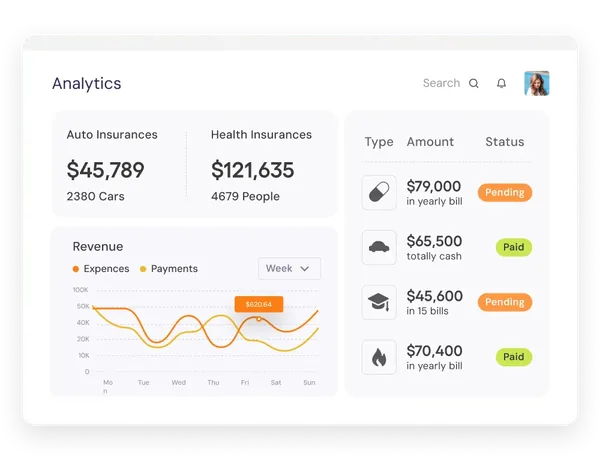
On a claims-document review, policy and claim records go into extraction and comparison tools, and staff check the discrepancies before any claim-system update. The model still does not decide who is covered.
Related AI Services
Look at use-case priorities, data fitness, and operating readiness before committing to a build.
Set program priorities and the engineering direction when the roadmap is still open, and continue the engagement into implementation.
Try the workflow with real data first to settle feasibility and usability, before you commission the production build.
Build the generation, retrieval, and application logic when the AI capability itself still needs to be developed.
Build agents that read context and coordinate permitted work across business systems, with the tool access and exception handling baked into the design.
Build retrieval-augmented generation that pulls from approved company sources and attributes them, with evaluation and enterprise integration included.
Make customer or employee conversations that stay grounded in company information, with the handoff into the service workflow defined up front.
Place individual AI engineers or a pod inside your existing delivery structure when the in-house team needs more development capacity.
Supporting Data & Infrastructure Services
Build source integrations and reliable pipelines when the application's data foundation is incomplete.
Implement data ownership, access, lineage, and quality responsibilities in the platform that supplies AI inputs.
Turn a large-scale data architecture into working infrastructure and production flows beyond one application's connections.
Build extract, transform, and load pipelines to reconcile source data when consistent input delivery requires separate engineering.
Normalize and deduplicate fragmented records so downstream models receive consistent datasets rather than conflicting formats.
Build storage and processing for structured and unstructured data when AI workloads need accessible source history.
Build the application and interfaces around AI when the product requires broader software delivery beyond one implementation workflow.
Coordinate architecture, migration, governance, and AI-ready infrastructure when data dependencies extend beyond one deployment.








What Our Clients Say

What do you like best?
Their deep understanding of our needs and how to craft a solution that provides more opportunities for managing our data. Their data solution, enhanced with AI features, allows us to easily manage diverse data sources and quickly get actionable insights from data.
What do you dislike?
It took some time to align the a multi-source data scraping platform functionality with our specific workflows. But we quickly adapted and the final result fully met our requirements.

What do you like best?
It was incredible how they could build precisely what we wanted. They were genuine experts in data scraping; project management was also great, and each phase of the project was on time, with quick feedback.
What do you dislike?
We have no comments on the work performed.

What do you like best?
GroupBWT is the preferred choice for competitive intelligence through complex data extraction. Their approach, technical skills, and customization options make them valuable partners. Nevertheless, be prepared to invest time in initial solution development.
What do you dislike?
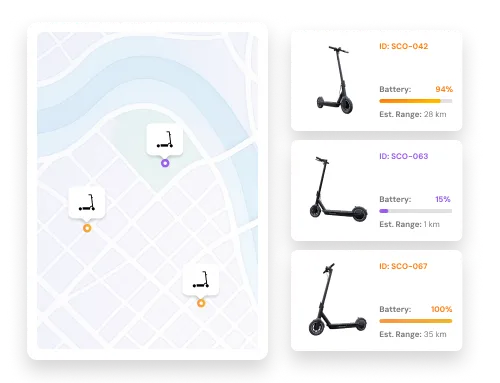
GroupBWT provided us with a solution to collect real-time data on competitor micro-mobility services so we could monitor vehicle availability and locations. This data has given us a clear view of the market in specific areas, allowing us to refine our operational strategy and stay competitive.

What do you like best?
The company's dedication to understanding our needs for collecting competitor data was exemplary. Their methodology for extracting complex data sets was methodical and precise. What impressed me most was their adaptability and collaboration with our team, ensuring the data was relevant and actionable for our market analysis.
What do you dislike?
Finding a downside is challenging, as they consistently met our expectations and provided timely updates. If anything, I would have appreciated an even more detailed roadmap at the project's outset. However, this didn't hamper our overall experience.

What do you like best?
GroupBWT excels at providing tailored data scraping solutions perfectly suited to our specific needs for competitor analysis and market research.
What do you dislike?
Given the complexity and customization of our project, we later decided that we needed a few additional sources after the project had started.
What do you like best?
What we liked most was how GroupBWT created a flexible system that efficiently handles large amounts of data. Their innovative technology and expertise helped us quickly understand market trends and make smarter decisions.
What do you dislike?
The entire process was easy and fast, so there were no downsides.
What do you like best?
Their deep understanding of our needs and how to craft a solution that provides more opportunities for managing our data. Their data solution, enhanced with AI features, allows us to easily manage diverse data sources and quickly get actionable insights from data.
What do you dislike?
It took some time to align the a multi-source data scraping platform functionality with our specific workflows. But we quickly adapted and the final result fully met our requirements.
What do you like best?
It was incredible how they could build precisely what we wanted. They were genuine experts in data scraping; project management was also great, and each phase of the project was on time, with quick feedback.
What do you dislike?
We have no comments on the work performed.
What do you like best?
GroupBWT is the preferred choice for competitive intelligence through complex data extraction. Their approach, technical skills, and customization options make them valuable partners. Nevertheless, be prepared to invest time in initial solution development.
What do you dislike?
GroupBWT provided us with a solution to collect real-time data on competitor micro-mobility services so we could monitor vehicle availability and locations. This data has given us a clear view of the market in specific areas, allowing us to refine our operational strategy and stay competitive.
What do you like best?
The company's dedication to understanding our needs for collecting competitor data was exemplary. Their methodology for extracting complex data sets was methodical and precise. What impressed me most was their adaptability and collaboration with our team, ensuring the data was relevant and actionable for our market analysis.
What do you dislike?
Finding a downside is challenging, as they consistently met our expectations and provided timely updates. If anything, I would have appreciated an even more detailed roadmap at the project's outset. However, this didn't hamper our overall experience.
What do you like best?
GroupBWT excels at providing tailored data scraping solutions perfectly suited to our specific needs for competitor analysis and market research.
What do you dislike?
Given the complexity and customization of our project, we later decided that we needed a few additional sources after the project had started.
What do you like best?
What we liked most was how GroupBWT created a flexible system that efficiently handles large amounts of data. Their innovative technology and expertise helped us quickly understand market trends and make smarter decisions.
What do you dislike?
The entire process was easy and fast, so there were no downsides.


Do we need to replace our existing software or databases?
Not necessarily. We first assess whether the required data and actions are available through the existing systems’ interfaces. Where they are, we can build the agreed connections without replacing the core application. A missing interface or unsupported system may require additional software work, which enters the scope before delivery begins.
How do you protect sensitive data and control AI actions?
We agree which data the application may use, where it may be processed, and which identities can access it. Data permissions are checked before retrieval; action policies and required approvals are checked before system changes. Human review supports consequential decisions but does not replace access controls. Your legal and security teams define the obligations and approve the relevant design.
Can we change model providers, and who owns the custom code?
Code ownership, licensing, and access to deployment assets are defined in the contract. Where provider portability is required, we separate model interfaces from the application’s business logic as far as the selected design allows. A provider change still requires quality, permission, and integration testing. Provider-hosted features and third-party licenses may place limits on what can be transferred.
How will we know the solution is useful and affordable?
We agree the workflow baseline and acceptance measures before the build. Evaluation covers task quality, exceptions, response time, and operating cost, with separate holdout examples for acceptance. A low-cost run is not enough if staff must redo its output. After release, the agreed monitoring compares actual usage and accepted results with those measures.
What happens after launch, and how long does implementation take?
The schedule depends on the application scope, source access, integrations, and release requirements. We estimate it after reviewing those dependencies rather than promising one deadline for every deployment. Handover includes the agreed documentation and training; ongoing monitoring and support are defined separately in the engagement scope. Your operating team and GroupBWT know who maintains each component and handles incidents after release.


How can we help you?

We’ll review your goals and suggest the right solution — technical, scalable, and tailored to you.
What do you need extracted, structured, or automated?