

Data Extraction
Why Enterprise Data Integration Breaks—and How Systems Should Withstand It
The global race for data alignment is accelerating. The enterprise data integration market reached $17.1 billion in 2024 and is...

Replace disconnected systems and manual handoffs with software, data, cloud, automation, and AI capabilities that work together. Our digital transformation services and solutions connect the plan to implementation, release, and support.






Services That Turn Transformation Into Working Systems
Renew a legacy application, build a digital product, or connect internal systems through APIs. The work covers architecture, implementation, testing, deployment, and a practical handover to your team.
Refactor fragile pipelines and move approved workloads to a cloud data platform. Parallel runs, reconciliation, and rollback criteria protect priority reporting while old and new flows operate together.
Unify source data, quality rules, governance, and analytics delivery in one maintainable foundation. Your teams receive pipelines and models they can operate instead of another layer of disconnected reports.
Remove repetitive transfers between spreadsheets, desktop tools, and enterprise applications. We design exception handling and action logs around the workflow so people can step in when automation needs judgment.
Design, deploy, and maintain AI systems that connect models, governed data, business applications, and production operations. This route fits transformation programs where AI is part of the operating system, not a separate experiment.
Connect governed data to forecasts, operational views, and recurring decisions. We define the metric logic and validation path so teams can act without reconciling another report by hand.

Partner with GroupBWT for Strategic Transformation
Choose a digital transformation services company that can carry decisions into design, build, release, and support. The first step in digital transformation services is to name the operating problem, the systems it touches, and the outcome that matters. We will identify a practical first build, the dependencies it carries, and the evidence needed to approve the next phase.
As a digital transformation services provider, GroupBWT does more than produce a roadmap. Our architects and engineers stay close to the operating problem, build the approved solution, and make its release conditions visible.
Start with one bounded workflow, application, or data domain before widening the program. A working release gives stakeholders something concrete to evaluate, while the agreed backlog keeps later phases separate from the first commitment.
Work directly with solution architects, lead data engineers, software leads, and domain specialists. The people making architecture decisions can discuss trade-offs with your team without routing every technical question through an account layer.
Prototypes and staged releases test the hardest assumption before a broad rollout. The timing depends on access, scope, and system complexity, but each phase ends with an output and acceptance decision rather than a presentation alone.
We map dependencies before changing a critical system, then use test environments, parallel runs, reconciliation, and rollback criteria where the architecture allows them. This reduces cutover risk without promising that every estate can change with zero interruption.
Under the agreed contract, your organization owns the custom code, pipelines, models, documentation, and deployment assets created for it. Third-party licenses and managed services keep their own terms, which we make visible during design.
New tools are tested with the people who will use them. Role-based access, clear exception paths, interface validation, and training become part of the release plan so adoption does not depend on a launch announcement. GroupBWT also records what the internal team will operate after handover.
By connecting CRM, core banking, servicing, and support in one identity layer, GroupBWT gave teams a shared customer record. The system reached 95%+ matching accuracy and reduced manual reconciliation by 80%. Ambiguous matches went to a human data steward instead of being forced into the profile.
By automating work across Excel and legacy desktop applications, our engineers cut manual administrative time by 80%. Exception handling and action logs kept unusual cases visible to the people responsible for them.
By indexing SAP, CAD, Microsoft 365, and three other systems behind one enterprise search layer, we cut document lookup from up to an hour to seconds. Engineers kept working in the tools they already knew. Every AI answer linked back to its source drawing, and low-confidence CAD extraction went to an engineer for review.
The same technology choice creates different value in sales, logistics, finance, workforce operations, and IT. We shape each initiative around the decision, handoff, or delay that the operating team needs to change.
Connect CRM, service, product, and transaction data so sales and support teams work from the same customer view. Shared identifiers keep an updated address, service request, or account event from becoming another manual reconciliation task.
A late shipment often becomes visible after the customer feels it. We connect orders, stock, suppliers, and fleet events so planners see the exception early enough to reroute work or reset expectations.
Finance should not spend month-end copying figures between files. We automate the handoffs, check records against agreed rules, and send exceptions to the person who can resolve them. Finance keeps control of exceptions while routine records move between source systems and reporting tools with a traceable history.
Digitize document routing, onboarding, approvals, and repetitive desktop work without forcing every system into a replacement program. Staff keep control of exceptions while routine fields move between the applications they already use.
Modernize applications, integrations, deployment pipelines, and monitoring as one operating concern. Architecture decisions account for recovery, access, release ownership, and support, not only what the new system can do on launch day.

Our digital transformation consulting services shape the priorities. The approved transformation services and solutions then move from the current operating state to a controlled release. Each stage produces a decision or working output, and the sequence changes when evidence shows that the original assumption was wrong.


The cloud choice starts with where the data may live and what must keep running. Traffic patterns, recovery needs, and the systems already in place narrow the options from there.
AWS, Azure, and Google Cloud
Hosting options for the application, its data, and approved AI workloads.


Docker and Kubernetes
Packaging and orchestration for services that need controlled deployment and scaling.


Terraform
The setup lives in versioned files, so a reviewer can see what changed and rebuild an approved environment without relying on someone’s memory.

A model is chosen for the job, not its position on a benchmark. The decision weighs private data, acceptable errors, running cost, response time, and when a person must review the result.
Claude and OpenAI
Model options for language, reasoning, extraction, and assisted workflows where external model APIs fit the approved design.


PyTorch and TensorFlow
Useful when the work needs its own training loop, evaluation code, or tighter control over how the model runs.


Playwright
Browser automation for approved workflows where a stable API is unavailable.

Start with the decision a team repeats every week. That tells us which source records must arrive, how they should be checked, and what the final report needs to show.
Snowflake and Databricks
Cloud data-platform options selected against workload, governance, ecosystem, and operating requirements.


Apache Kafka and Airflow
Streaming and workflow orchestration options for data that moves on different cadences.


Power BI and Tableau
Reporting and visualization tools for governed metrics and operational analysis.


Connect applications through interfaces and services that fit the existing estate, security model, release process, and support responsibilities.
Python and .NET
Application and service-development options for integration, automation, data, and internal tools.


React and Angular
Interface frameworks for customer portals, operational tools, and internal applications.


REST APIs and GraphQL
Interface patterns for controlled data and action exchange between systems.








What Our Clients Say

What do you like best?
Their deep understanding of our needs and how to craft a solution that provides more opportunities for managing our data. Their data solution, enhanced with AI features, allows us to easily manage diverse data sources and quickly get actionable insights from data.
What do you dislike?
It took some time to align the a multi-source data scraping platform functionality with our specific workflows. But we quickly adapted and the final result fully met our requirements.

What do you like best?
It was incredible how they could build precisely what we wanted. They were genuine experts in data scraping; project management was also great, and each phase of the project was on time, with quick feedback.
What do you dislike?
We have no comments on the work performed.

What do you like best?
GroupBWT is the preferred choice for competitive intelligence through complex data extraction. Their approach, technical skills, and customization options make them valuable partners. Nevertheless, be prepared to invest time in initial solution development.
What do you dislike?
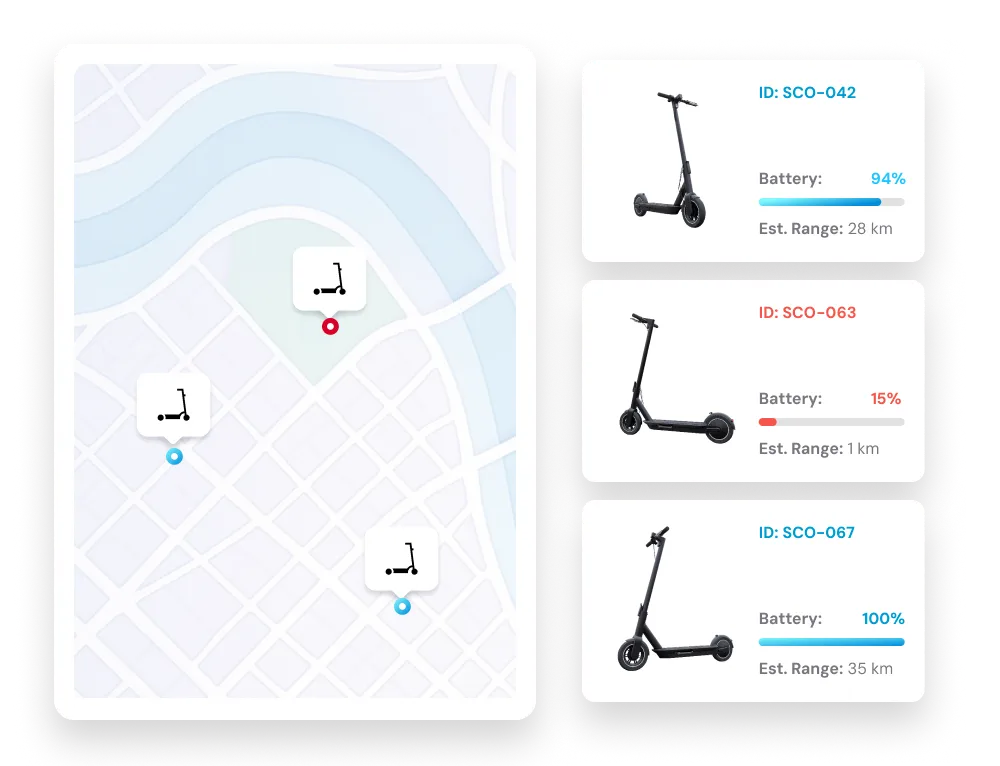
GroupBWT provided us with a solution to collect real-time data on competitor micro-mobility services so we could monitor vehicle availability and locations. This data has given us a clear view of the market in specific areas, allowing us to refine our operational strategy and stay competitive.

What do you like best?
The company's dedication to understanding our needs for collecting competitor data was exemplary. Their methodology for extracting complex data sets was methodical and precise. What impressed me most was their adaptability and collaboration with our team, ensuring the data was relevant and actionable for our market analysis.
What do you dislike?
Finding a downside is challenging, as they consistently met our expectations and provided timely updates. If anything, I would have appreciated an even more detailed roadmap at the project's outset. However, this didn't hamper our overall experience.

What do you like best?
GroupBWT excels at providing tailored data scraping solutions perfectly suited to our specific needs for competitor analysis and market research.
What do you dislike?
Given the complexity and customization of our project, we later decided that we needed a few additional sources after the project had started.
What do you like best?
What we liked most was how GroupBWT created a flexible system that efficiently handles large amounts of data. Their innovative technology and expertise helped us quickly understand market trends and make smarter decisions.
What do you dislike?
The entire process was easy and fast, so there were no downsides.
What do you like best?
Their deep understanding of our needs and how to craft a solution that provides more opportunities for managing our data. Their data solution, enhanced with AI features, allows us to easily manage diverse data sources and quickly get actionable insights from data.
What do you dislike?
It took some time to align the a multi-source data scraping platform functionality with our specific workflows. But we quickly adapted and the final result fully met our requirements.
What do you like best?
It was incredible how they could build precisely what we wanted. They were genuine experts in data scraping; project management was also great, and each phase of the project was on time, with quick feedback.
What do you dislike?
We have no comments on the work performed.
What do you like best?
GroupBWT is the preferred choice for competitive intelligence through complex data extraction. Their approach, technical skills, and customization options make them valuable partners. Nevertheless, be prepared to invest time in initial solution development.
What do you dislike?
GroupBWT provided us with a solution to collect real-time data on competitor micro-mobility services so we could monitor vehicle availability and locations. This data has given us a clear view of the market in specific areas, allowing us to refine our operational strategy and stay competitive.
What do you like best?
The company's dedication to understanding our needs for collecting competitor data was exemplary. Their methodology for extracting complex data sets was methodical and precise. What impressed me most was their adaptability and collaboration with our team, ensuring the data was relevant and actionable for our market analysis.
What do you dislike?
Finding a downside is challenging, as they consistently met our expectations and provided timely updates. If anything, I would have appreciated an even more detailed roadmap at the project's outset. However, this didn't hamper our overall experience.
What do you like best?
GroupBWT excels at providing tailored data scraping solutions perfectly suited to our specific needs for competitor analysis and market research.
What do you dislike?
Given the complexity and customization of our project, we later decided that we needed a few additional sources after the project had started.
What do you like best?
What we liked most was how GroupBWT created a flexible system that efficiently handles large amounts of data. Their innovative technology and expertise helped us quickly understand market trends and make smarter decisions.
What do you dislike?
The entire process was easy and fast, so there were no downsides.



How soon can we expect a usable result?
Digital transformation services can produce a bounded first release sooner than an enterprise-wide program, but there is no responsible universal timeline. Access to source systems, undocumented legacy logic, security review, third-party dependencies, and client approvals shape the schedule. We set the first working output and its acceptance conditions before implementation begins.
Can we start if our data is fragmented or incomplete?
Yes, if the first use case has enough reliable data to test. We can improve the foundation and build a bounded capability in parallel, but quality rules and human review remain part of the release. We do not hide poor source data behind an attractive interface. The release plan shows which gaps can affect decisions and how they will be handled.
How do you keep cloud and AI operating costs under control?
Cost is treated as an architecture and operating constraint from the start. We agree on workload assumptions, model choices, resource limits, monitoring, and ownership before scale increases. Usage data then shows where to resize infrastructure, change a model route, or simplify a workflow without relying on a universal savings percentage.
Do we need to replace our ERP, CRM, or other core systems?
Not always. GroupBWT can add integration, automation, data, and search layers around systems that must remain the source of record. We map which records and business rules must stay in the core platform, then modernize the surrounding workflow in controlled stages.
Who owns the software, data pipelines, and AI models?
The contract defines ownership before work starts. Custom code, pipelines, models, documentation, and deployment assets created for your organization can transfer to you under those terms. Licenses, hosted platforms, foundation models, and other third-party services retain their own conditions, which are recorded during design.


How can we help you?

We’ll review your goals and suggest the right solution — technical, scalable, and tailored to you.
What do you need extracted, structured, or automated?