AI Implementation
Broader AI delivery across a business or product. Choose this service when the need extends beyond one agent workflow or involves several connected AI capabilities.


With our AI agent development services, you can automate work that requires business context and action across your enterprise systems – not just fixed rules. We build agents that retrieve and compare information, update records, prepare responses, trigger approved steps, and route exceptions or high-risk actions to the right person for review.

Our AI agent development services cover five connected parts: workflow and action-boundary design, agent development, integration with your systems, evaluation against agreed business and behavioral criteria, and production deployment. We also define the handover and post-launch support model for the project. The six categories below show the types of agents we build, the business work each handles, and the systems it typically connects.
Execute approved steps across CRM, ERP, project, and legacy systems: retrieve the next record, update connected tools, and route blocked or out-of-policy cases to the responsible operator. Teams spend less time coordinating multi-system work. Typical integrations: ERP and CRM systems.
Match an incoming case against an approved policy or rule set, combine structured and unstructured evidence, return a cited recommendation, and hand exceptions to the responsible reviewer. Useful for policy review, compliance checks, and high-risk approvals. Typical integrations: policy repositories and case-management systems.
Help users search account-specific knowledge, complete multi-step tasks, and prepare or complete allowed actions inside a software product. The product team adds useful assistance without forcing users into a separate interface. Typical integrations: product databases and APIs.
Combine structured records with reports, documents, and tickets; investigate differences across sources; and return a supported answer with citations. These agents help analysts explore open-ended questions rather than evaluate a defined case against a fixed policy. Typical integrations: document repositories and databases.
Read the customer record and support history, draft or complete routine responses, update the helpdesk, and escalate unusual cases. Support teams handle more volume while keeping difficult decisions with a person. Typical integrations: CRM and help desk systems.
Watch approved systems and workflows for missing records, unusual changes, failed steps, or threshold breaches; investigate the available context; and route the issue with supporting evidence to the right owner. Typical integrations: data platforms and alerting systems.
AI agents are one application of broader generative AI development, which can also include RAG systems, copilots, custom LLM applications, and workflow automation. Our agentic AI development services cover the orchestration, system access, evaluation, and operating controls needed to move an agent into production. This work focuses on one defined workflow, while AI implementation may introduce several connected AI capabilities across a business or product.
Broader AI delivery across a business or product. Choose this service when the need extends beyond one agent workflow or involves several connected AI capabilities.
Data platforms and pipelines that agents and people can rely on daily. This work fixes source feeds, identifiers, schema stability, lineage, and access before an agent depends on them.

Policies, controls, and access design for agent inputs, outputs, and actions. This work defines retention, auditability, role-based access, and review requirements across the organization.


In a delivered GroupBWT support workflow, a GPT-based system interpreted policy, claims, and renewal context, cited governing clauses, completed low-risk requests, and routed exceptions to specialists. It automated 1,200 monthly tickets, processed each query in 3.0 seconds on average, and recorded zero policy-misinterpretation incidents during the reported evaluation period. The same system now runs across both insurance and banking workflows.
When evaluating an AI agent development company, start with the workflow, expected outcome, system access, and decisions that must remain with a person. If the use case, architecture, or business case is not yet defined, our AI consulting help assess feasibility, data readiness, risks, and the right implementation approach before development begins.
We compare a custom agent with an existing product and simpler automation. The agent must handle the required context and actions reliably enough to justify custom development.
We agree on a business baseline and target for handling time, throughput, correction rate, or cost per task. We also define behavioral acceptance criteria: a representative validation set, correct-action rules, the maximum error rate allowed before release, and criteria for verifying that cases requiring human review are escalated correctly.
We check the required data, identifiers, permissions, APIs, and read/write access. If the agent cannot safely access or act in the required systems, we first scope the data or integration work the workflow depends on.
We identify the actions that need approval, the exceptions a person handles, and the evidence they need to decide.


Is an AI Agent the Right Fit?
Bring us the workflow that consumes the most time or creates the most expensive delays. We will tell you whether it calls for a custom agent, simpler automation, or an existing product.
Our AI agent development services cover design, development, integration, evaluation, production release, and post-launch support, starting with one approved workflow. Each stage ends with a clear decision that the responsible team can audit.
Before development, we compare viable patterns such as retrieval, direct system queries, semantic layers, and targeted fine-tuning, and combine them where the workflow calls for more than one. We assess each option against data quality, security, latency, integration effort, and operating cost, then recommend a stack that fits the client’s cloud, residency, and support constraints.
Three differences matter when you move beyond a demo. GroupBWT can assess whether an agent is justified, fix the data and integration foundations it depends on, build and evaluate the approved workflow, and prepare it for controlled production use.
We Learn From the AI Workflows We Operate
On our internal outreach module, an AI drafts replies that a human still reviews before they go out. Production use of our own agents – with humans in the loop – is what shapes how we design handoffs, monitoring, ownership, and failure handling before client launch.
Data and Integration Engineering
GroupBWT has built enterprise data and integrations since 2009. The same team can fix the sources, identifiers, and system connections the agent needs, then integrate the approved actions into live workflows. You do not have to coordinate separate data, AI, and integration vendors.
Custom Is Not Our Default
We recommend custom agent development only when a product or deterministic automation cannot handle the required context and actions well enough. You get an evidence-based build/no-build decision before committing to production scope.






What Our Clients Say

What do you like best?
Their deep understanding of our needs and how to craft a solution that provides more opportunities for managing our data. Their data solution, enhanced with AI features, allows us to easily manage diverse data sources and quickly get actionable insights from data.
What do you dislike?
It took some time to align the a multi-source data scraping platform functionality with our specific workflows. But we quickly adapted and the final result fully met our requirements.

What do you like best?
It was incredible how they could build precisely what we wanted. They were genuine experts in data scraping; project management was also great, and each phase of the project was on time, with quick feedback.
What do you dislike?
We have no comments on the work performed.

What do you like best?
GroupBWT is the preferred choice for competitive intelligence through complex data extraction. Their approach, technical skills, and customization options make them valuable partners. Nevertheless, be prepared to invest time in initial solution development.
What do you dislike?
GroupBWT provided us with a solution to collect real-time data on competitor micro-mobility services so we could monitor vehicle availability and locations. This data has given us a clear view of the market in specific areas, allowing us to refine our operational strategy and stay competitive.

What do you like best?
The company's dedication to understanding our needs for collecting competitor data was exemplary. Their methodology for extracting complex data sets was methodical and precise. What impressed me most was their adaptability and collaboration with our team, ensuring the data was relevant and actionable for our market analysis.
What do you dislike?
Finding a downside is challenging, as they consistently met our expectations and provided timely updates. If anything, I would have appreciated an even more detailed roadmap at the project's outset. However, this didn't hamper our overall experience.

What do you like best?
GroupBWT excels at providing tailored data scraping solutions perfectly suited to our specific needs for competitor analysis and market research.
What do you dislike?
Given the complexity and customization of our project, we later decided that we needed a few additional sources after the project had started.
What do you like best?
What we liked most was how GroupBWT created a flexible system that efficiently handles large amounts of data. Their innovative technology and expertise helped us quickly understand market trends and make smarter decisions.
What do you dislike?
The entire process was easy and fast, so there were no downsides.
What do you like best?
Their deep understanding of our needs and how to craft a solution that provides more opportunities for managing our data. Their data solution, enhanced with AI features, allows us to easily manage diverse data sources and quickly get actionable insights from data.
What do you dislike?
It took some time to align the a multi-source data scraping platform functionality with our specific workflows. But we quickly adapted and the final result fully met our requirements.
What do you like best?
It was incredible how they could build precisely what we wanted. They were genuine experts in data scraping; project management was also great, and each phase of the project was on time, with quick feedback.
What do you dislike?
We have no comments on the work performed.
What do you like best?
GroupBWT is the preferred choice for competitive intelligence through complex data extraction. Their approach, technical skills, and customization options make them valuable partners. Nevertheless, be prepared to invest time in initial solution development.
What do you dislike?
GroupBWT provided us with a solution to collect real-time data on competitor micro-mobility services so we could monitor vehicle availability and locations. This data has given us a clear view of the market in specific areas, allowing us to refine our operational strategy and stay competitive.
What do you like best?
The company's dedication to understanding our needs for collecting competitor data was exemplary. Their methodology for extracting complex data sets was methodical and precise. What impressed me most was their adaptability and collaboration with our team, ensuring the data was relevant and actionable for our market analysis.
What do you dislike?
Finding a downside is challenging, as they consistently met our expectations and provided timely updates. If anything, I would have appreciated an even more detailed roadmap at the project's outset. However, this didn't hamper our overall experience.
What do you like best?
GroupBWT excels at providing tailored data scraping solutions perfectly suited to our specific needs for competitor analysis and market research.
What do you dislike?
Given the complexity and customization of our project, we later decided that we needed a few additional sources after the project had started.
What do you like best?
What we liked most was how GroupBWT created a flexible system that efficiently handles large amounts of data. Their innovative technology and expertise helped us quickly understand market trends and make smarter decisions.
What do you dislike?
The entire process was easy and fast, so there were no downsides.

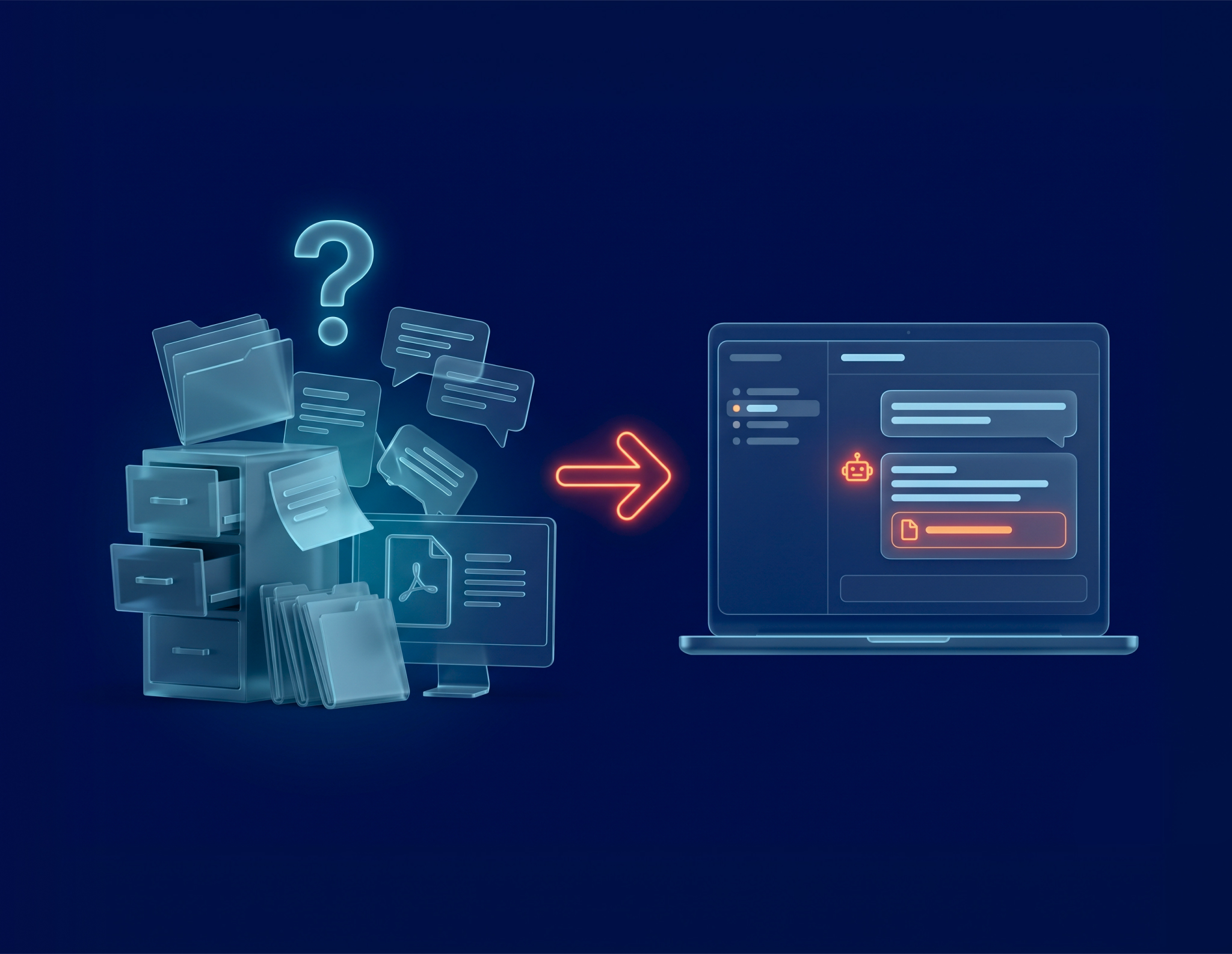
How Do You Measure an Agent?
We set two kinds of measures. Business measures cover handling time, throughput, correction rate, or cost per task. Behavioral acceptance criteria use representative cases to check whether the agent reached the correct answer, recommendation, action, or escalation often enough for its risk level.
How Long Does Delivery Take?
A prototype, proof of value, and pilot are alternative starting scopes. Your team can begin at the stage supported by the evidence you already have.
Production deployment is scoped after the pilot meets its acceptance criteria. Timing depends on integration complexity, action risk, security, and regulation. A multi-system or regulated program may take 6-12 months overall, including the pilot and production rollout.
When Is Custom the Wrong Choice?
A chatbot is primarily a conversational interface. Deterministic automation follows explicit rules. An AI agent can interpret changing context, select the next step, use approved tools and systems, and adapt its execution while escalating exceptions or high-impact actions. Choose an existing product when its workflow and connectors already meet the requirement, or deterministic automation when the path is stable and rules can handle it. Custom development makes sense when the workflow has enough value, company-specific context, or cross-system work to justify ongoing engineering ownership.
How Do You Protect Enterprise Data?
We design access around the systems, roles, and records involved in the selected workflow. Depending on the environment, that may include role-based access, encryption, controlled hosting, retention rules, and limits on what reaches a model provider. For organizations evaluating AI agents for financial services, we also define how sensitive inputs, outputs, and write actions are recorded and reviewed.
What Should You Look for in a Development Partner?
Look for one directly relevant case with a verified outcome and a clear explanation of what the partner built, integrated, and continues to support. The same evidence standard should apply to the proposed workflow, evaluation plan, production controls, and ownership model.
What Determines the Cost?
The cost of AI agent development services depends on the workflow around the model: source quality, integrations, write actions, evaluation requirements, security, regulation, and post-launch support. We estimate pilot and production work separately so the initial decision does not hide the cost of operating the agent. We estimate additional workflows separately after production acceptance, so each new use case carries its own scope and budget.


How can we help you?

We’ll review your goals and suggest the right solution — technical, scalable, and tailored to you.
What do you need extracted, structured, or automated?


