CLIENT STORY
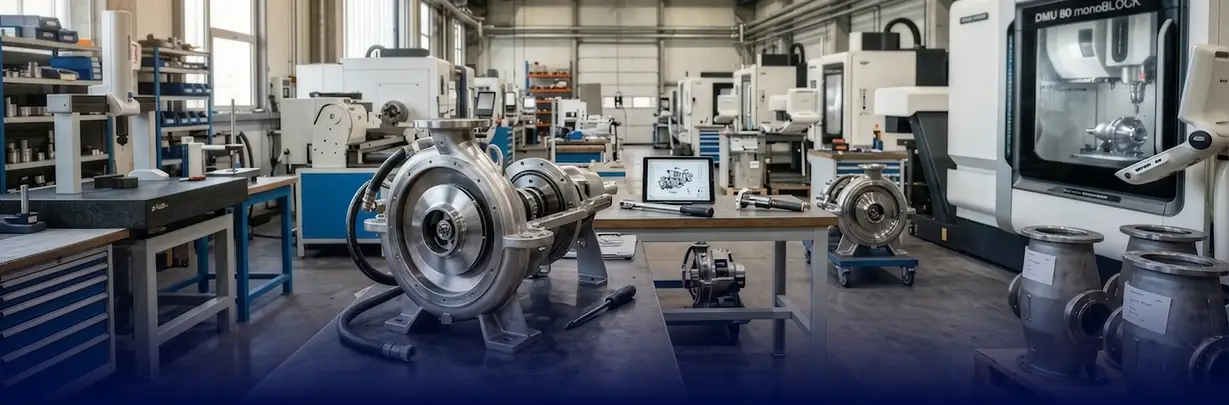
A European manufacturer of industrial pumps for the energy, water treatment, and chemical sectors, running three plants and 14 production lines that together produce more than 2,500 pump configurations — different housings, seals, and impeller sizes built to each customer’s specification. That variety keeps CNC machining and assembly equipment running near-continuously, and the company wanted maintenance on that equipment to run on what it was actually doing, not on a calendar.
| Service: | AI Agent Development |
|---|---|
| Industry: | Manufacturing |
| Year: | 2026 |
| Location: | EU |
| Cooperation type: | Project |
Read summarized version with


"We had SCADA on every line and a SAP system full of repair history, but nobody could look at one screen and say which machine was about to fail. We found out when it already had." — Plant Operations Director
"Before, a CNC spindle would seize and we'd scramble — pull a technician off another job, delay the order behind it. Now the system tells us weeks out, and we schedule the fix around production instead of around the breakdown." — Maintenance Manager
The Challenge: Maintenance Decided by Calendar, Not by Machine
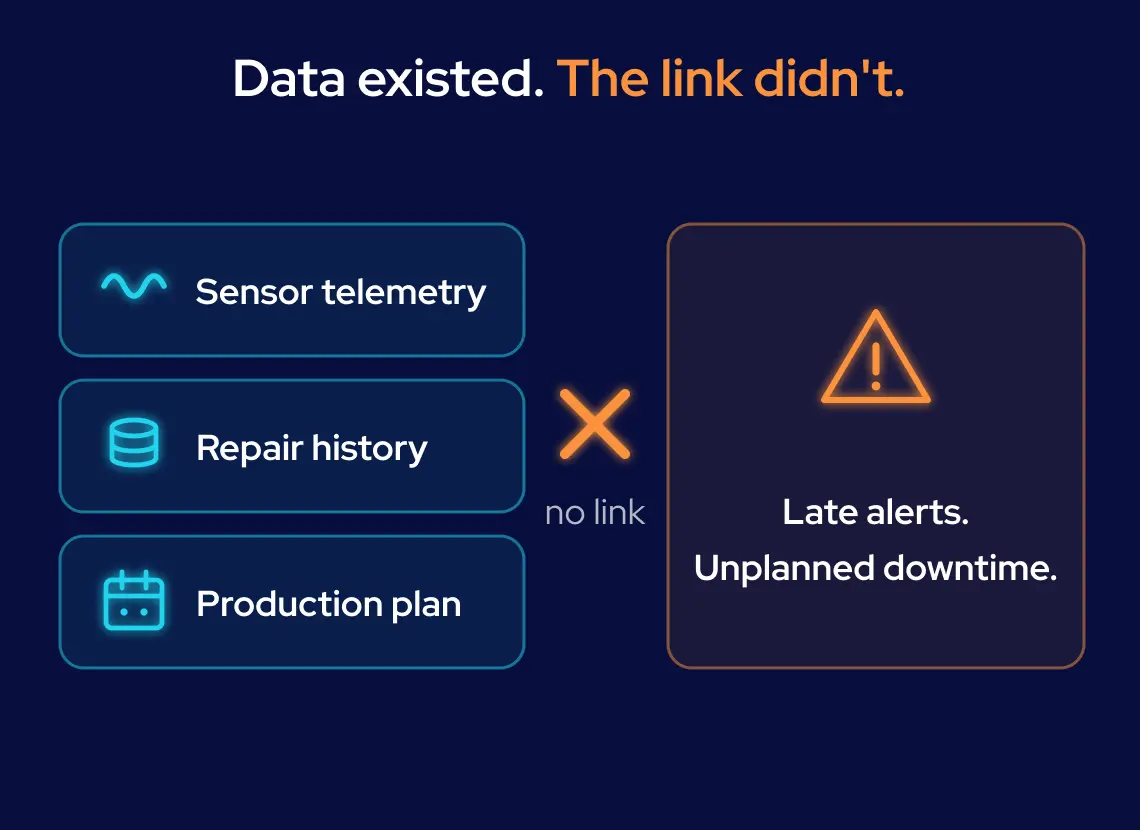
Across three plants, equipment data lived in separate systems — SCADA exposed live sensor readings, SAP held repair history and parts, Siemens Opcenter MES held production schedules — with no single view connecting them. Maintenance followed the calendar until a spindle or assembly unit failed. Then the plant absorbed idle production time, rushed repairs, and orders that missed a promised ship date.
Its sensor readings and repair records already contained the clues needed to predict failures. What it lacked was a way to connect the two and act on the answer before a line went down.
Two AI Agents Coordinating Maintenance Around Production Schedules
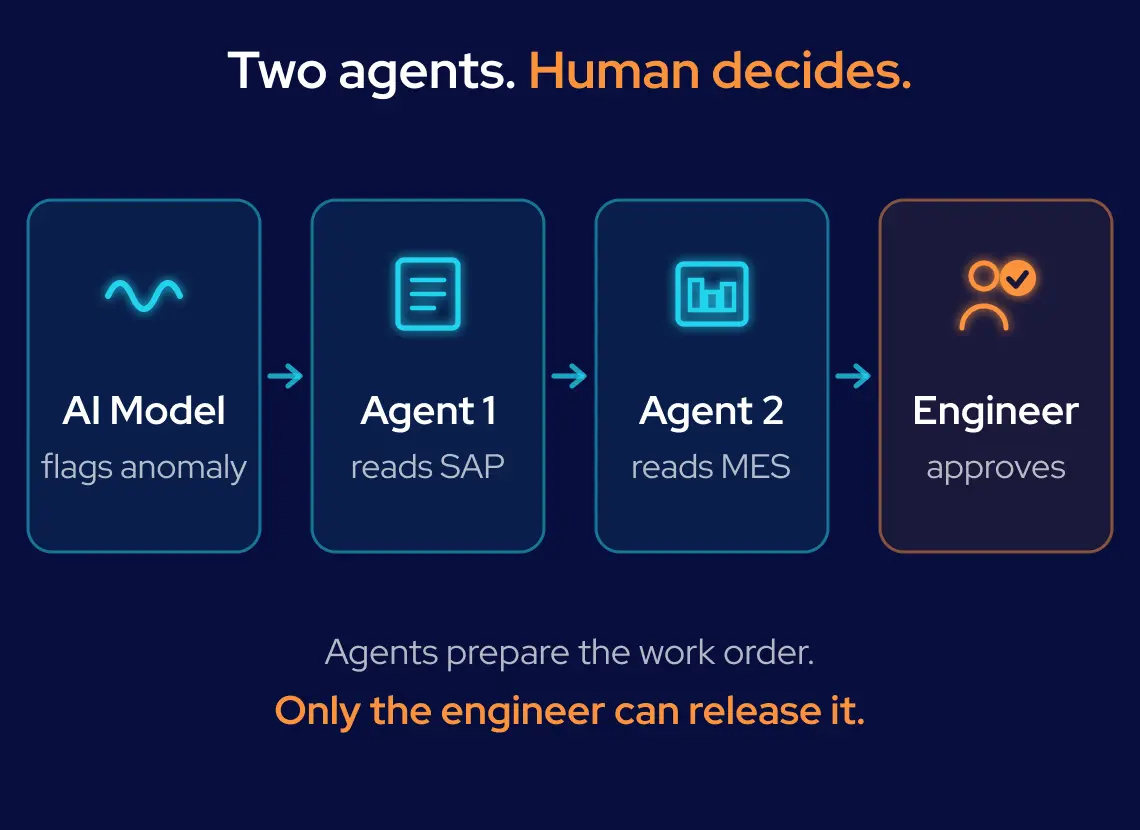
GroupBWT built an agentic predictive maintenance system on top of the manufacturer’s existing SAP ERP, Siemens Opcenter MES, SCADA, PLC, and IoT infrastructure, without replacing the client’s core plant systems. Underneath it, an anomaly-detection model watches equipment telemetry. Two AI agents pick up each finding, but neither can reach beyond the systems needed for its part of the job.
Maintenance planning agent. When the monitoring model flags an anomaly, this agent opens SAP to check parts and existing work orders. It then pulls the service instructions, checks the maintenance roster, and drafts a work order that names the suspected failure and required parts.
Production scheduling agent. Before anyone approves that work order, this agent checks Siemens Opcenter MES for open orders, deadlines, and spare capacity on parallel lines. It weighs the workable repair windows and recommends the one least likely to disrupt a customer commitment.
The two agents share a common case record, so each step keeps the original alert, the proposed action, and the production constraints attached. Agents can query SAP and MES and prepare recommendations; none can stop equipment, release a work order, or change a schedule without an engineer’s approval. The audit log captures what each agent did, what it recommended, who approved it, and which system change followed.
The system runs on SAP ERP, Siemens Opcenter MES, SCADA, PLC, and the plant’s existing IoT sensors.
"The hard part wasn't the failure prediction — it was making the scheduling agent's trade-offs trustworthy enough for an engineer to act on them. That meant showing the equipment risk, affected orders, available capacity, and expected production impact behind every recommendation." — Dmytro Naumenko, CTO, GroupBWT

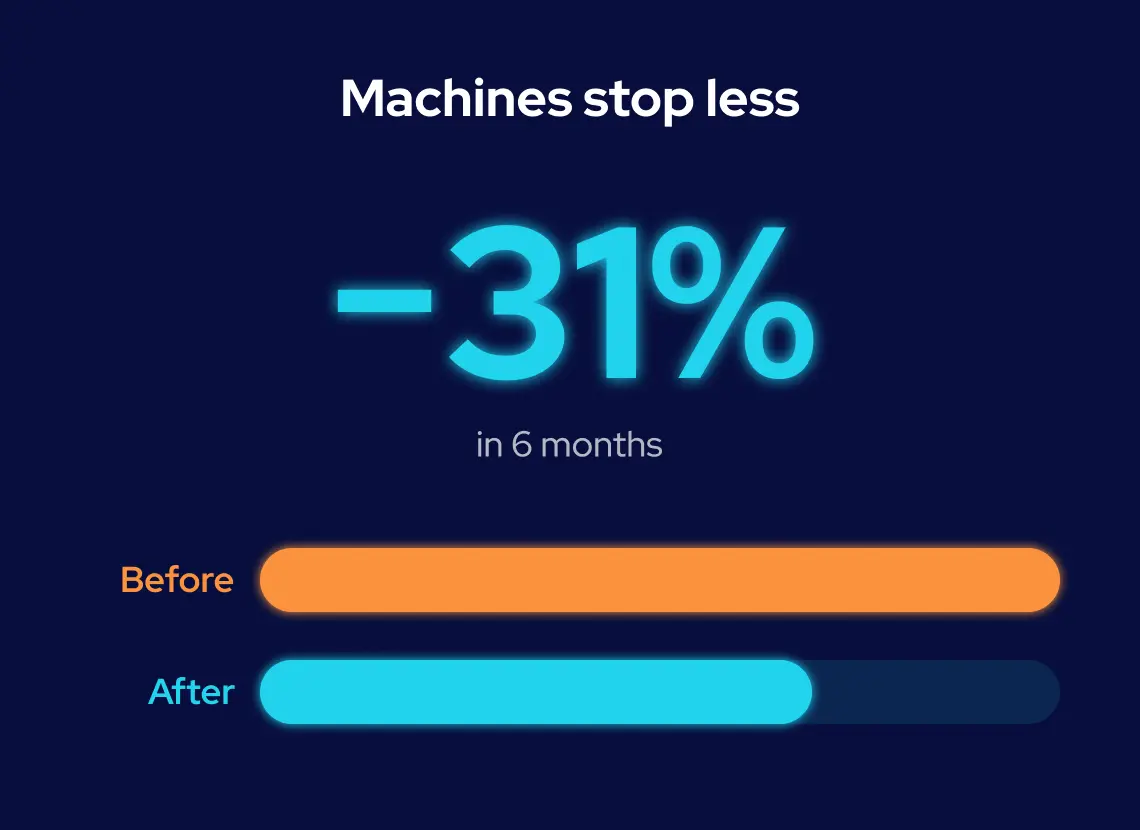
31% Fewer Unplanned Downtime Hours Within Six Months
- GroupBWT’s two agents turned equipment alerts into repair work that could fit the production schedule. Across the 14 monitored lines, this cut unplanned downtime hours by 31% against the previous six-month period.
- Condition-based maintenance replaced part of the fixed schedule, cutting maintenance spend by 18% and emergency repairs by 27%.
- Six months in, the rollout had reached its downtime and maintenance-cost targets. The client then approved an extension into quality control and production planning across all three plants.
Looking to move maintenance from reactive to predictive?
We connect your existing SCADA, MES, and ERP data into AI agents that prepare maintenance work and coordinate repairs, with your engineers approving every change. We start with a feasibility review on your own equipment data.




You have an idea?
We handle all the rest.
How can we help you?