

Data Extraction
Why Extract Data from Video & Multimedia Sources in 2025
In 2025, companies will utilize advanced methods to extract big data from video files, including AI, machine learning, and custom...

GroupBWT builds software to flag video events, inspect images for defects, and extract data from documents. Your team receives those results directly in the tools it already uses.








A specific job in your business determines the visual automation system we build.
Your operational limits, data security, and existing workflows determine the fit of an off-the-shelf tool or our computer vision software development services.
Ready-Made Tool: Your images need to fit the product’s supported objects, configuration options, and training features. Custom Build: Your unique products, materials, and lighting conditions guide how we adapt and calibrate models.
Ready-Made Tool: Products differ in available APIs and connectors; those connections need to support your receiving software. Custom Build: We build connections to your ERP, CRM, or quality systems and verify that results reach staff.
Ready-Made Tool: Available hosting depends on the vendor’s cloud, private-network, and on-premises support. Custom Build: We agree the processing design around your approved servers, local networks, and data privacy requirements.
Ready-Made Tool: Review results, corrections, and model updates through the options available in the product. Custom Build: We add review rules and controls for the errors that matter to your operation.
We agree with your team what deployment, monitoring, and staff guidance the scope includes.
GroupBWT is a computer vision development services company connecting visual checks to business software. The results your team needs to receive guide the supporting AI and data work we scope.
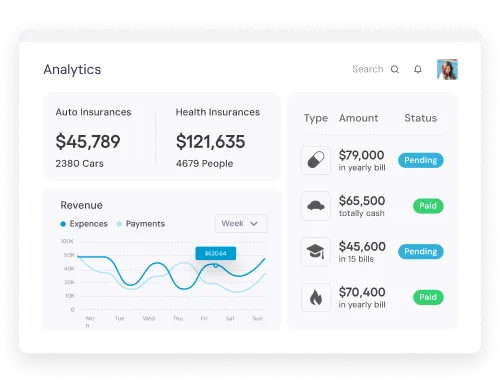
We can route damage photos and extracted details into claim-review software. An unclear-image flag can prompt the adjuster to request another view. Final settlement is still a human expert’s decision.
Published projects show how we connect photo analysis and document checks to working applications. Each result below applies to the system described, not every vision model or deployment.
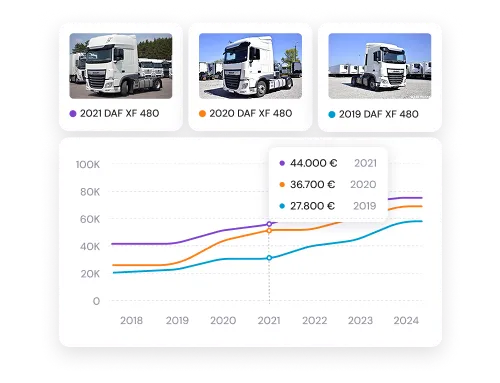
GroupBWT built photo analysis to identify truck parameters absent from listing text, alongside daily collection from 18 advertising platforms and a pricing interface. By combining those components, GroupBWT helped a rental operator increase selling prices by 6% and reduce new-truck purchase prices by 14% in the published vehicle-pricing case. Those are whole-platform outcomes, not gains attributable to photo analysis alone. The case includes screenshots of the pricing interface.
GroupBWT built document reconciliation and underwriting agents above a lender’s existing OCR pipeline. By automating document reconciliation and financial calculations, GroupBWT reduced review time on exception applications by up to 75% in the published loan exception-review case. That result covers the exception-review workflow, not OCR accuracy; analysts retained final credit decisions.
GroupBWT connected uploaded-photo search, database records, report delivery, and an existing third-party facial-recognition service. Through that integration, GroupBWT enabled photo-based searches taking up to one minute in the published photo-search integration case. That system’s reported search time measures neither recognition accuracy nor a guaranteed latency. The case includes interface screenshots.

What Our Clients Say

What do you like best?
Their deep understanding of our needs and how to craft a solution that provides more opportunities for managing our data. Their data solution, enhanced with AI features, allows us to easily manage diverse data sources and quickly get actionable insights from data.
What do you dislike?
It took some time to align the a multi-source data scraping platform functionality with our specific workflows. But we quickly adapted and the final result fully met our requirements.

What do you like best?
It was incredible how they could build precisely what we wanted. They were genuine experts in data scraping; project management was also great, and each phase of the project was on time, with quick feedback.
What do you dislike?
We have no comments on the work performed.

What do you like best?
GroupBWT is the preferred choice for competitive intelligence through complex data extraction. Their approach, technical skills, and customization options make them valuable partners. Nevertheless, be prepared to invest time in initial solution development.
What do you dislike?
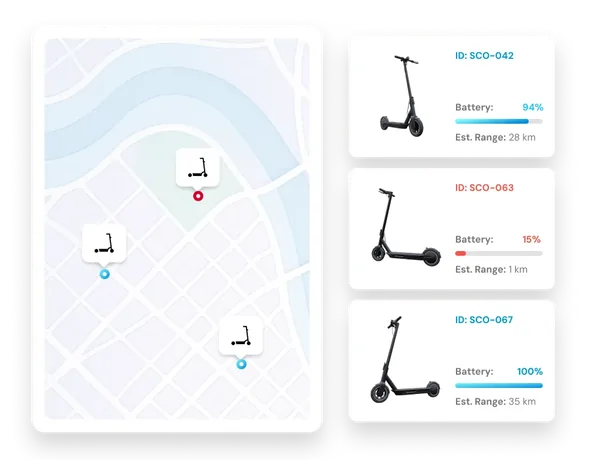
GroupBWT provided us with a solution to collect real-time data on competitor micro-mobility services so we could monitor vehicle availability and locations. This data has given us a clear view of the market in specific areas, allowing us to refine our operational strategy and stay competitive.

What do you like best?
The company's dedication to understanding our needs for collecting competitor data was exemplary. Their methodology for extracting complex data sets was methodical and precise. What impressed me most was their adaptability and collaboration with our team, ensuring the data was relevant and actionable for our market analysis.
What do you dislike?
Finding a downside is challenging, as they consistently met our expectations and provided timely updates. If anything, I would have appreciated an even more detailed roadmap at the project's outset. However, this didn't hamper our overall experience.

What do you like best?
GroupBWT excels at providing tailored data scraping solutions perfectly suited to our specific needs for competitor analysis and market research.
What do you dislike?
Given the complexity and customization of our project, we later decided that we needed a few additional sources after the project had started.
What do you like best?
What we liked most was how GroupBWT created a flexible system that efficiently handles large amounts of data. Their innovative technology and expertise helped us quickly understand market trends and make smarter decisions.
What do you dislike?
The entire process was easy and fast, so there were no downsides.
What do you like best?
Their deep understanding of our needs and how to craft a solution that provides more opportunities for managing our data. Their data solution, enhanced with AI features, allows us to easily manage diverse data sources and quickly get actionable insights from data.
What do you dislike?
It took some time to align the a multi-source data scraping platform functionality with our specific workflows. But we quickly adapted and the final result fully met our requirements.
What do you like best?
It was incredible how they could build precisely what we wanted. They were genuine experts in data scraping; project management was also great, and each phase of the project was on time, with quick feedback.
What do you dislike?
We have no comments on the work performed.
What do you like best?
GroupBWT is the preferred choice for competitive intelligence through complex data extraction. Their approach, technical skills, and customization options make them valuable partners. Nevertheless, be prepared to invest time in initial solution development.
What do you dislike?
GroupBWT provided us with a solution to collect real-time data on competitor micro-mobility services so we could monitor vehicle availability and locations. This data has given us a clear view of the market in specific areas, allowing us to refine our operational strategy and stay competitive.
What do you like best?
The company's dedication to understanding our needs for collecting competitor data was exemplary. Their methodology for extracting complex data sets was methodical and precise. What impressed me most was their adaptability and collaboration with our team, ensuring the data was relevant and actionable for our market analysis.
What do you dislike?
Finding a downside is challenging, as they consistently met our expectations and provided timely updates. If anything, I would have appreciated an even more detailed roadmap at the project's outset. However, this didn't hamper our overall experience.
What do you like best?
GroupBWT excels at providing tailored data scraping solutions perfectly suited to our specific needs for competitor analysis and market research.
What do you dislike?
Given the complexity and customization of our project, we later decided that we needed a few additional sources after the project had started.
What do you like best?
What we liked most was how GroupBWT created a flexible system that efficiently handles large amounts of data. Their innovative technology and expertise helped us quickly understand market trends and make smarter decisions.
What do you dislike?
The entire process was easy and fast, so there were no downsides.
Image-analysis frameworks support AI development computer vision services at GroupBWT, with selection guided by your visual task and deployment needs.
PyTorch, TensorFlow, OpenCV, YOLO, Vision Transformers (ViT).


AWS, Microsoft Azure, Google Cloud Platform (GCP), NVIDIA TensorRT, ONNX.


Python, Apache Spark, Pandas, PostgreSQL, MongoDB, Power BI.


RESTful APIs, gRPC, Docker, Kubernetes.


A structured workflow focused on practical performance and risk management.
Task Review & Scoping
We review sample data alongside your visual workflow and agree the result the software needs to produce. If an existing model underperforms, we investigate the errors before recommending targeted changes or a rebuild.
Image Data & Correct Labels
Your domain experts confirm the correct answers as we clean and label sample images. We keep representative images separate from training and tuning, using them for held-out tests across the camera angles and lighting agreed for your workflow. Your nominated reviewer checks the results against agreed acceptance targets. We measure missed defects and false alarms separately.
Development for Your Cameras & Lighting
We develop and calibrate for your camera angles and site lighting, with your speed requirements in mind. Completion depends on the agreed error measures and delivery checks inside your workflow.
Software & Camera Integration
Our connections send model outputs straight to operational software. They attach defect images to quality records or fill ERP form fields.
Launch Checks & Release Controls
We check the available memory and bandwidth and the limits on processing before launch. Staff receive clear setup guides and controls with every release. If conditions change, those controls let staff pause or revert versions.
Performance Checks as Conditions Change
Results may change after lighting, packaging, or camera changes. Reviewed image samples inform whether the model needs an update within the agreed support scope. Automated checks flag changes for investigation.




What Do You Need to Discuss Feasibility?
Start with ordinary images. Describe difficult conditions and the mistakes to prevent. That initial conversation does not require a massive dataset. We assess model feasibility and training requirements from differences across images.
What Do You Check Before Keeping Our Cameras?
We check the camera resolution, frame rate, angles, and lighting for the operational detail your task needs. Their feeds must support that check for the existing cameras to stay. The scope specifies necessary repositioning, lighting changes, or upgrades before installation.
Which Costs Are Outside the Software Build?
We estimate costs for the visual task’s complexity, data preparation, software integration, and deployment environment. We quote build costs apart from the equipment, hosting, and ongoing support in the proposal. A bounded proof of concept typically starts as an independent initial phase.
What Will the Pilot Test?
We test one specific use case on your data. Your team agrees what will count as success. The errors and technical limitations we find guide our recommendation on proceeding and on the scope of wider implementation. The bounded first stage lets you assess the investment before you commit to a larger build. We agree how long that pilot takes and what it costs from its scope, rather than make a universal promise.
What Must Be Available to Estimate the Schedule?
We consider data availability and system access when estimating timing. How fast can labeling proceed? We use those answers to estimate the timeline. Your team agrees the stages with us, including review points and the dependencies for each stage. An initial pilot tests feasibility within a bounded scope. Its timing is agreed once we have reviewed the data and operating conditions. Production integration is estimated separately from the pilot.
How Do You Compare Errors With Our Targets?
On unseen real-world test images, we measure missed defects separately from false alarms. We compare both measures with the agreed acceptance targets. The errors that matter most are determined by your workflow. Meeting the targets need not remove human review. A person can keep reviewing ambiguous results.
What Will You Give Us at Handover?
Your scope names the vision model you receive, configured or custom-trained, plus the application or API connecting its outputs to your workflow and a review interface where human checks are required. Your agreed deployment documents, operating instructions, and onboarding support are included at handover. Custom deliverables and third-party models, libraries, and services are distinguished in the contract. Their licensing and ownership terms appear in the contract as well.
What Rights Will Our Contract Give Us?
You receive full ownership and transferred rights to all custom software deliverables, guaranteed in the contract. Your intellectual property rights cover the agreed custom code. The respective licenses of open-source libraries and third-party services continue to apply.
Can Our Current Applications Receive the Results?
Yes, your receiving applications get visual AI outputs directly via APIs. With the findings, an alert supplies source images, timestamps, and decision logs. Real-world network conditions form the setting for our full integration tests.
What Support Do We Get After Release?
Your support agreement names who handles feed disruptions, reported errors, and system updates. New packaging or changed camera angles can shift performance; automated monitoring flags those shifts. Model re-training stays within the agreed support scope.


How can we help you?

We’ll review your goals and suggest the right solution — technical, scalable, and tailored to you.
What do you need extracted, structured, or automated?