
AI
Enterprise-Ready Generative AI Solutions: How to Move From PoC to Production
The demo usually looks cleaner than the future system. A team points a language model at five friendly documents. Three...

From AI strategy and data readiness to production deployment and measurable business value.






Many organizations spend their AI budgets on disconnected experiments without establishing how the technology will change a real workflow. We address two common reasons these programs stall: the workflow remains unchanged, or the underlying data is not ready for the intended use case.


GroupBWT provides generative AI consulting services and solutions from the first business case through rollout. That scope includes data readiness, infrastructure, governance, redesigned workflows, and workforce training.
Our Generative AI Development Services turn an approved use case into a production system. We build the application, connect it to existing tools and data, test it against agreed requirements, and prepare it for rollout.
RAG development connects a model to approved company knowledge with retrieval, source, and access controls. We design and build the ingestion and retrieval pipeline around source volume, update cadence, permissions, and response-time requirements.
Your current workflows and systems shape a practical, multi-year adoption roadmap.
Before development starts, the team agrees on the KPIs and the exact points where the project moves forward or stops.
Your budget stops funding disconnected experiments.
You get a Board-ready strategy tied to your P&L, so the budget goes to initiatives with a credible business case.
An audit of your existing workflows identifies the friction points where GenAI can deliver the fastest return on investment.
Each scenario is then compared against agreed criteria for technical feasibility, data readiness, expected business value, and implementation risk.
You invest only in use cases with a credible business case.
Operations and finance often reveal the clearest early returns. We put those practical wins first, then prepare for longer-term bets.
Data testing shows whether the sources can support the use case before model selection begins. RAG development then connects approved company knowledge to the system with source controls and access rules.
The Retrieval-Augmented Generation (RAG) pipeline fits the environment you already run. The database and retrieval components follow the source volume, update cadence, access rules, and response-time requirements.
Answers can draw from approved company sources instead of relying only on the model’s internal knowledge. This makes the source of an answer easier to check and can reduce unsupported responses without requiring a custom foundation model.
Generative AI (GenAI) software consulting services compare proprietary and open-weight models against your latency and cost requirements.
The resulting deployment architecture can range from scalable public cloud to private on-premises or air-gapped environments.
You get a model and deployment setup that fit the workflow without paying for capacity or controls the use case does not need.
We evaluate models against agreed quality, cost, latency, and security requirements.
Compliance guardrails can include automated audit logging, role-based access controls, and PII redaction pipelines.
Technical controls are mapped to the security, privacy, and governance requirements identified with your legal, compliance, and cybersecurity teams. The client’s responsible teams determine which requirements apply to the use case and jurisdiction.
Where audit logging and access controls are included in the agreed scope, legal and cybersecurity teams can review how the system is used and who can access it.
The 10-20-70 principle guides how GroupBWT allocates transformation effort. Most of that effort goes into the people, processes, and cultural changes that determine whether teams use the system.
The affected workflow is rebuilt from end to end. Each role then gets training based on the tasks it will perform with AI.
The system creates value only when people use it.
Clear roles and hands-on practice help your workforce use AI in daily work, where adoption can translate into sustained EBIT growth.

Services That Prepare Generative AI Delivery
Build the reliable pipelines, models, and quality checks that supply approved information to Generative AI workflows.
Define ownership, access, lineage, and controls for the information a Generative AI system may retrieve or process.
Build the applications, APIs, and workflow integrations that put an approved Generative AI capability into daily use.
Structure content from documents, platforms, and business systems before it enters retrieval or model workflows.
Implement governed ingestion and storage when AI workloads depend on large, changing repositories.
Establish trusted baselines and operational measures for checking whether an AI-enabled workflow improves the intended result.

Not Sure Where to Start with GenAI?
Let GroupBWT identify the top 3 high-impact areas in your business where AI can actually drive revenue or cut costs. No technical jargon, just a quick 15-minute use-case mapping call.
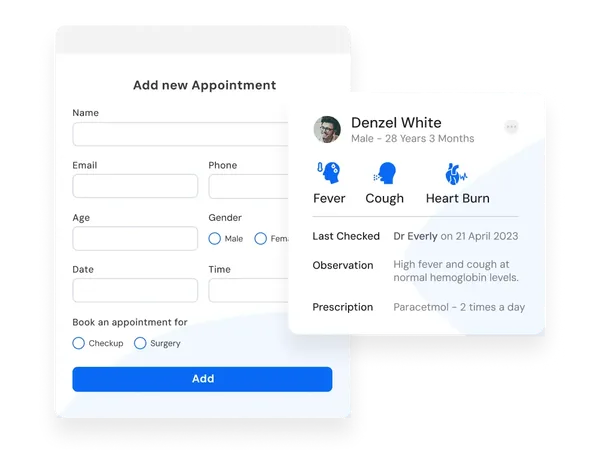
Clinical, administrative, and operational content carries strict access and review requirements. GroupBWT designs Generative AI workflows around approved sources, role-based access, and clear human decision points so sensitive information remains within the agreed boundary.
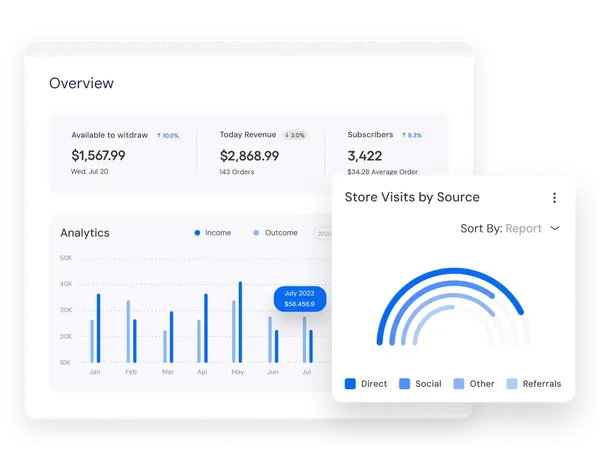
Generative AI can support research, reporting, document review, and service operations when each output stays tied to approved financial records. We define the data controls, evaluation criteria, and review steps required before the workflow moves into production.
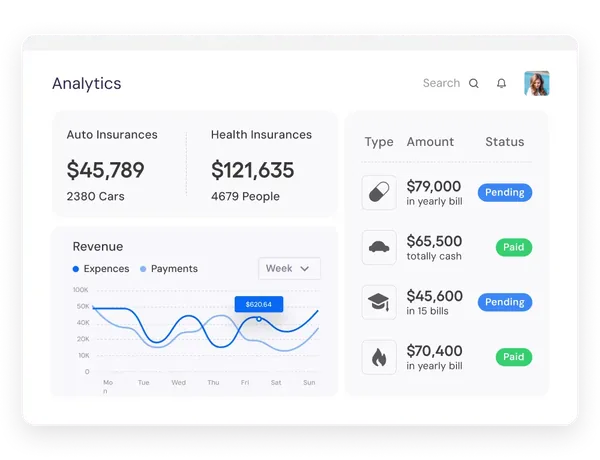
Policy, claims, underwriting, and service records need consistent definitions before Generative AI can support case review or customer communication. GroupBWT maps the workflow, data boundary, and human approval points so the system uses approved evidence and routes uncertain cases to a specialist.
GroupBWT connects strategy, model decisions, and deployment through Go/No-Go checkpoints. Each checkpoint surfaces financial and technical risks before the client approves further investment in scaling.
Proprietary and open-weight models are evaluated against the quality, response-time, cost, deployment, and data-handling requirements agreed for the use case.
Proprietary Models
We evaluate proprietary models from providers such as Anthropic, OpenAI, and Google against the agreed workflow. Anthropic Claude appears in delivered work, while every other provider and model still requires project-specific validation before selection.


Open-Weight Models (For Private/On-Premise)
We also evaluate open-weight models when the project needs more control over hosting, adaptation, or operating cost. Candidates from ecosystems such as Hugging Face or Mistral are validated for the agreed use case rather than treated as default choices.


Approved enterprise content is organized so the system can retrieve relevant source material and make its answers easier to verify.
Data Storage
PostgreSQL appears in delivered data systems. Depending on source shape and retrieval needs, we can also assess document or search technologies such as MongoDB and Elasticsearch before validating the final storage layer.


Data Frameworks
Document ingestion and retrieval components connect approved sources to the model and keep source updates manageable. We select frameworks such as Python and FastAPI only when they fit the chosen architecture and operating requirements.


Deployment and implementation services cover public-cloud, private-cloud, on-premises, and isolated environments, subject to the architecture and integrations selected for the project.
Hyperscalers
Our delivered cloud work includes Amazon Web Services (AWS), Google Cloud, and Microsoft Azure.


Private Deployments
For on-premises or isolated environments, we assess container and infrastructure tools such as Docker, Kubernetes, and Terraform against the client’s hosting, orchestration, and operating requirements.


Access controls, redaction, monitoring, and evaluation checks reduce data-exposure risks and make output problems visible.
Access & Identity
Our delivered systems include role-based access control (RBAC), which limits each user and service to approved information. We also design encrypted connections when the selected architecture requires them.


Guardrails & Privacy
Our delivered AI work includes redaction of personally identifiable information (PII). This reduces unnecessary exposure of restricted data before it reaches downstream workflows.

Monitoring & Auditing
Monitoring makes changes in output quality, model behavior, usage, and operating cost visible to the responsible teams. Depending on the environment, the stack can include tools such as Prometheus and Grafana after project-specific validation.


Four reasons enterprise teams bring GroupBWT into Generative AI delivery.
GroupBWT connects model decisions to the data, workflows, security controls, and adoption work required for production use.
01
We Define Business Value
Before implementation, we agree on the business outcome the system must change. Your acceptance criteria connect each use case to operating cost, revenue, cycle time, service quality, or risk.
02
We Define Data Boundaries
The architecture defines where data is stored and what may reach an external model API. Your deployment can keep selected workloads in client-controlled cloud, on-premises, or isolated infrastructure.
03
We Define Model Criteria
Model comparisons use your cost, response-time, accuracy, and security requirements. A modular integration architecture reduces provider dependence and makes the work required for a model switch, including integration changes and regression tests, explicit.
04
We Define Adoption Plans
AI is fitted into the work each role already performs. Your rollout includes task-specific training and clear human decision points, so adoption becomes part of delivery rather than an afterthought.






What Our Clients Say

What do you like best?
Their deep understanding of our needs and how to craft a solution that provides more opportunities for managing our data. Their data solution, enhanced with AI features, allows us to easily manage diverse data sources and quickly get actionable insights from data.
What do you dislike?
It took some time to align the a multi-source data scraping platform functionality with our specific workflows. But we quickly adapted and the final result fully met our requirements.

What do you like best?
It was incredible how they could build precisely what we wanted. They were genuine experts in data scraping; project management was also great, and each phase of the project was on time, with quick feedback.
What do you dislike?
We have no comments on the work performed.

What do you like best?
GroupBWT is the preferred choice for competitive intelligence through complex data extraction. Their approach, technical skills, and customization options make them valuable partners. Nevertheless, be prepared to invest time in initial solution development.
What do you dislike?
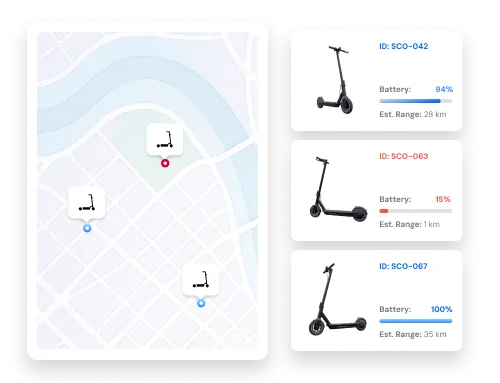
GroupBWT provided us with a solution to collect real-time data on competitor micro-mobility services so we could monitor vehicle availability and locations. This data has given us a clear view of the market in specific areas, allowing us to refine our operational strategy and stay competitive.

What do you like best?
The company's dedication to understanding our needs for collecting competitor data was exemplary. Their methodology for extracting complex data sets was methodical and precise. What impressed me most was their adaptability and collaboration with our team, ensuring the data was relevant and actionable for our market analysis.
What do you dislike?
Finding a downside is challenging, as they consistently met our expectations and provided timely updates. If anything, I would have appreciated an even more detailed roadmap at the project's outset. However, this didn't hamper our overall experience.

What do you like best?
GroupBWT excels at providing tailored data scraping solutions perfectly suited to our specific needs for competitor analysis and market research.
What do you dislike?
Given the complexity and customization of our project, we later decided that we needed a few additional sources after the project had started.
What do you like best?
What we liked most was how GroupBWT created a flexible system that efficiently handles large amounts of data. Their innovative technology and expertise helped us quickly understand market trends and make smarter decisions.
What do you dislike?
The entire process was easy and fast, so there were no downsides.
What do you like best?
Their deep understanding of our needs and how to craft a solution that provides more opportunities for managing our data. Their data solution, enhanced with AI features, allows us to easily manage diverse data sources and quickly get actionable insights from data.
What do you dislike?
It took some time to align the a multi-source data scraping platform functionality with our specific workflows. But we quickly adapted and the final result fully met our requirements.
What do you like best?
It was incredible how they could build precisely what we wanted. They were genuine experts in data scraping; project management was also great, and each phase of the project was on time, with quick feedback.
What do you dislike?
We have no comments on the work performed.
What do you like best?
GroupBWT is the preferred choice for competitive intelligence through complex data extraction. Their approach, technical skills, and customization options make them valuable partners. Nevertheless, be prepared to invest time in initial solution development.
What do you dislike?
GroupBWT provided us with a solution to collect real-time data on competitor micro-mobility services so we could monitor vehicle availability and locations. This data has given us a clear view of the market in specific areas, allowing us to refine our operational strategy and stay competitive.
What do you like best?
The company's dedication to understanding our needs for collecting competitor data was exemplary. Their methodology for extracting complex data sets was methodical and precise. What impressed me most was their adaptability and collaboration with our team, ensuring the data was relevant and actionable for our market analysis.
What do you dislike?
Finding a downside is challenging, as they consistently met our expectations and provided timely updates. If anything, I would have appreciated an even more detailed roadmap at the project's outset. However, this didn't hamper our overall experience.
What do you like best?
GroupBWT excels at providing tailored data scraping solutions perfectly suited to our specific needs for competitor analysis and market research.
What do you dislike?
Given the complexity and customization of our project, we later decided that we needed a few additional sources after the project had started.
What do you like best?
What we liked most was how GroupBWT created a flexible system that efficiently handles large amounts of data. Their innovative technology and expertise helped us quickly understand market trends and make smarter decisions.
What do you dislike?
The entire process was easy and fast, so there were no downsides.



Will our confidential business data be used to train public AI models?
Whether project data may be used for provider training depends on the selected service, its terms, and configuration. This boundary is clarified before implementation. Sensitive workloads can remain in client-controlled infrastructure, while any external model service is configured according to its available data-retention and training controls. The final design specifies what data may leave the client environment, which provider receives it, and which safeguards apply.
Who owns the custom AI code and intellectual property (IP)?
IP ownership and licensing terms are defined in the engagement agreement.
How do we keep AI operational costs (API and cloud bills) predictable?
Expected Total Cost of Ownership is modeled before scaling, with token volume, infrastructure, and external API calls tracked as usage changes. Caching, rate limits, and model routing are considered where they fit the workload. Actual costs still depend on usage, provider pricing, and the selected architecture.
What happens if a better AI model is released next month?
A new model is evaluated against the workflow’s existing quality, latency, security, and cost requirements. Provider-specific APIs, safety controls, and model behavior may require integration changes and regression testing before a switch.
How do we ensure our employees actually adopt these new AI tools?
Technology only works if people use it. Following BCG’s principle, most transformation effort goes into people, processes, and cultural change rather than model selection alone. Each team sees where AI assists and where a person stays in control. Hands-on training then makes that new routine familiar.


How can we help you?

We’ll review your goals and suggest the right solution — technical, scalable, and tailored to you.
What do you need extracted, structured, or automated?