CLIENT STORY
Across the client’s 45 US clinics, more than 900 physicians were ending visits with charting still waiting. The EMR was not the bottleneck. The work around it was. Notes, vitals fields, and follow-up tasks still landed on doctors after the patient left. Clinical control stayed non-negotiable. A doctor still had to review and sign off before anything entered the record.
| Service: | AI Agent Development |
|---|---|
| Industry: | Healthcare |
| Year: | 2026 |
| Region: | USA |
| Cooperation type: | Project |
Read summarized version with


We were losing two to three hours of every doctor's day to documentation after each visit, and we needed a system that could draft that note while a physician still reviewed and signed off before anything reached the record. — Chief Medical Officer
Doctors who used to finish charting well after clinic hours are closing most of their notes the same day now, and they're the ones telling us it feels different, not just an efficiency report. — VP of Clinical Operations
The Challenge: Care Time Lost to Paperwork
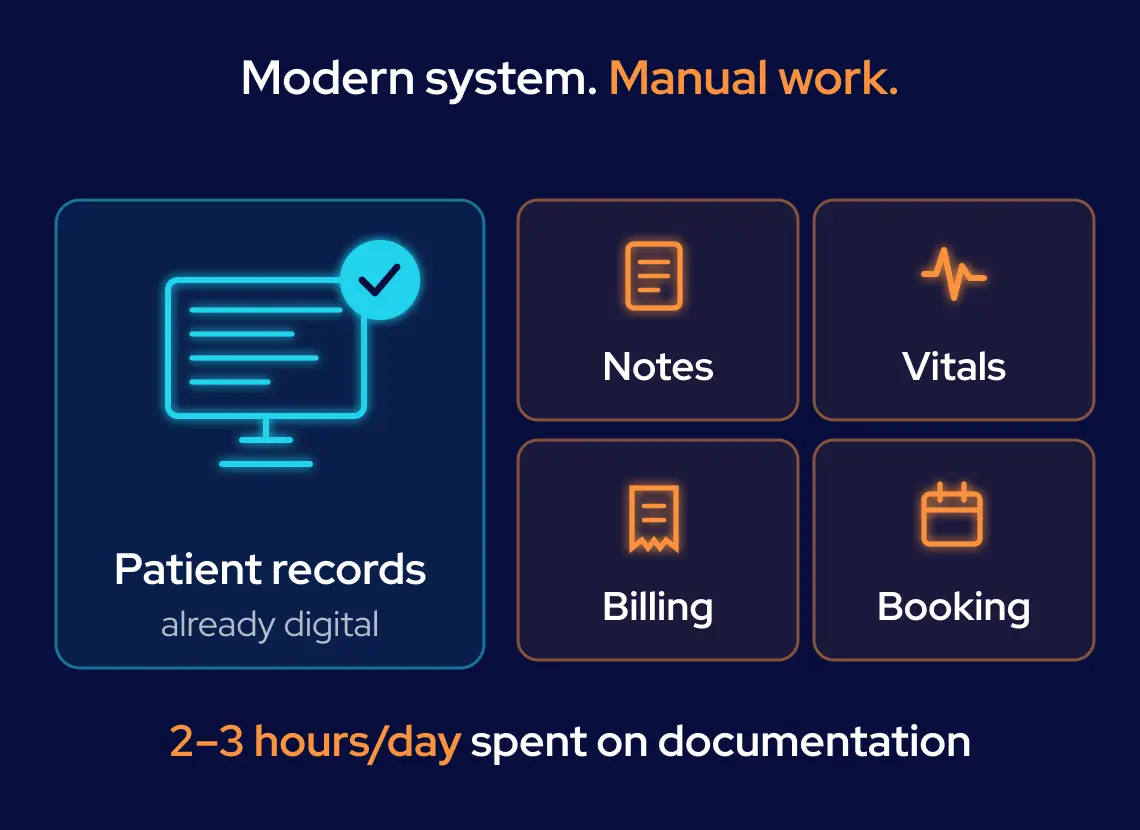
Even with a modern EMR system in place, most of the clinical documentation still ran through manual entry. Physicians across the network’s 45 clinics spent two to three hours after each day’s appointments finishing notes, and medical records that should have closed the same day were instead carrying over, pushing into the next day’s schedule.
The administrative side carried its own load. Front-desk staff were stretched across booking, phone calls, and email for patients who often spoke different languages, and medical coding needed a second pass of review before a claim could go out. None of this was one broken system — it was manual work stacked on manual work, growing faster than the team could absorb it.
Any fix also had to work inside HIPAA and inside the trust physicians placed in their own judgment: the network was clear from the outset that no recommendation could reach a patient’s record without a physician reviewing and approving it first.
Five AI Agents Working Alongside Every Physician
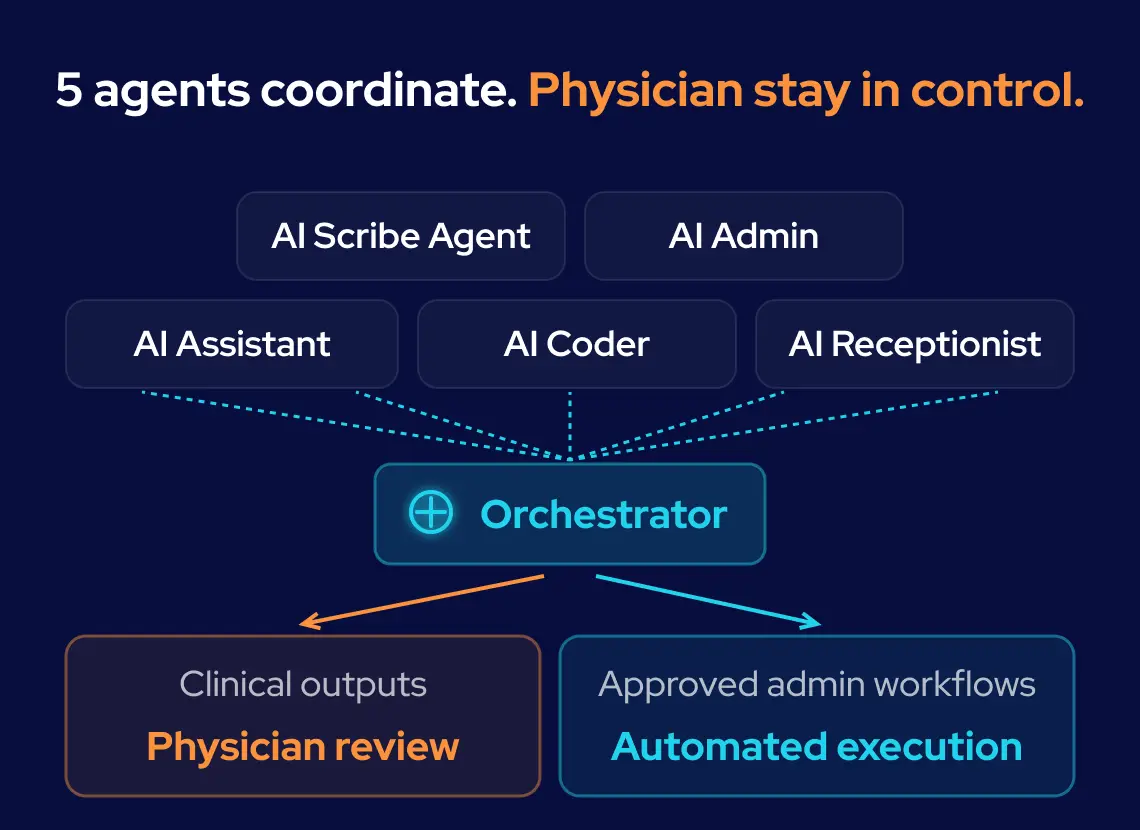
GroupBWT built an AI Healthcare Agents platform integrated with the network’s existing EMR system, so physicians kept working inside the tool they already knew. Each agent owned a narrow handoff – notes, vitals, coding, scheduling, or internal admin – and clinical changes still waited for physician review before reaching the record.
AI Scribe Agent. Captures the consultation while it is happening. It shapes the conversation into the network’s clinical-note format, then leaves a draft EMR entry for the physician to review instead of writing from memory after hours.
AI Medical Assistant. Captures vitals during the visit and pulls the relevant patient history into view. It updates the chart beside the physician, so those fields are not waiting after the appointment.
Coding, Scheduling, and Admin Work Running in the Background
AI Medical Coder. Reviews the finished clinical note, proposes ICD (diagnosis) and CPT (procedure) codes, and checks them against the network’s coding rules before a claim goes out, cutting the manual second-pass review that used to sit between a finished note and a submitted claim.
AI Receptionist Agent. Handles patient-facing scheduling — answers calls and messages, books and reschedules visits, and sends automatic reminders — supporting conversations in up to 19 languages so language differences stop routing every call to a bilingual staff member.
AI Admin Assistant. Handles the network’s internal coordination — meeting scheduling, document routing between departments, and recurring internal requests — that used to sit with front-desk and back-office staff, freeing that team to focus on patients rather than inbox triage. The Receptionist handles patient booking. The Admin Assistant keeps the clinic’s calendars, documents, and internal requests from sitting in a shared inbox.
The handoff now starts before the doctor leaves the exam room. The Scribe Agent starts the note draft. The Medical Assistant fills the chart beside it. After sign-off, the Coder suggests billing codes from the approved note, the Receptionist books the follow-up, and the Admin Assistant sends the paperwork to the right internal team. Every one of those steps stops for physician review before it changes anything in the EMR.
All five agents run through a single orchestrator that sequences this handoff and holds each recommendation for physician review before anything changes in the EMR. Voice control lets physicians interact with the Scribe and Assistant agents hands-free during a consultation.
Tech stack: existing EMR system, unified multi-agent orchestrator, voice interface.
The oversight requirement shaped every agent we built here — a physician had to be able to see why the coder proposed a code or why the scribe drafted a note, not just approve a black box.

Up to 3 Hours a Day Back for Every Physician
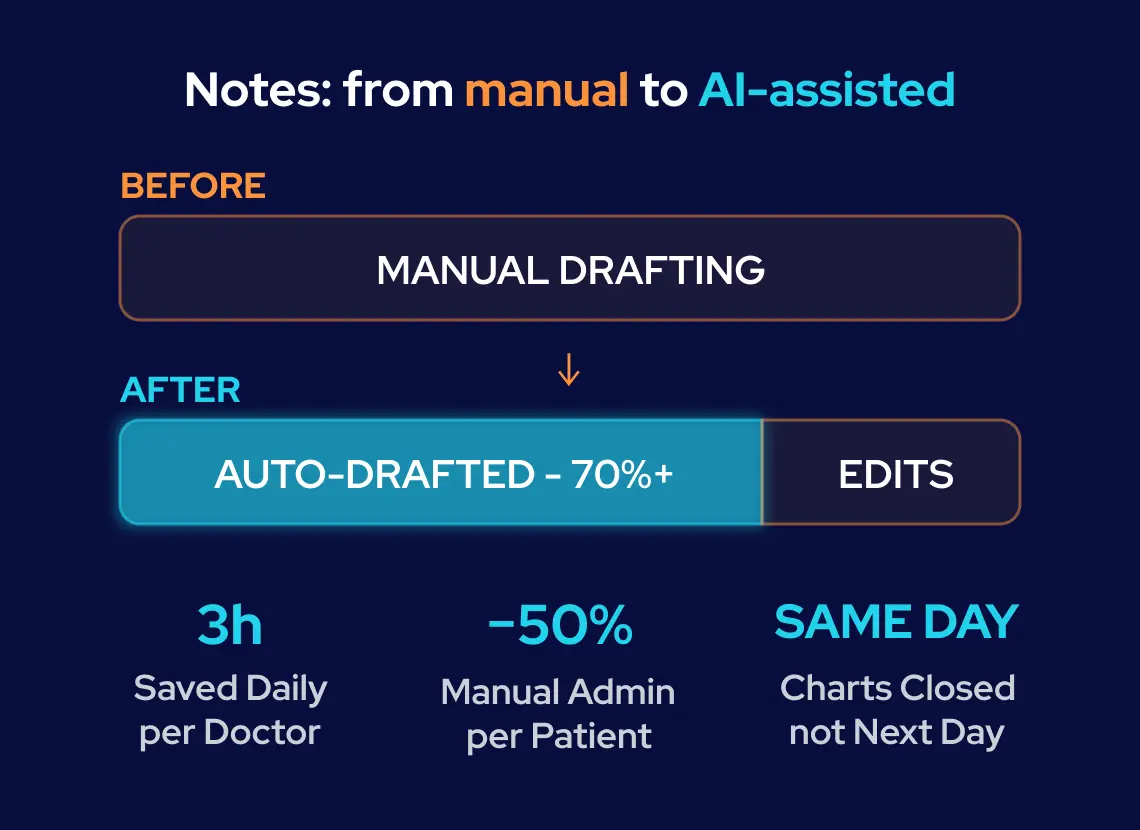
By having the Scribe Agent draft structured notes during the visit, physicians cut daily documentation time by up to three hours. Faster case closure meant records that used to carry into the next day were now finished the same day.
Shifting coding review and patient scheduling to dedicated agents lowered manual administrative tasks per patient by 50% across the network.
With the Scribe Agent drafting notes directly from the consultation, more than 70% of clinical records now need only minor physician edits. Physicians reported higher day-to-day satisfaction once administrative load dropped, without any change to how patient data was reviewed or secured.
Looking to Cut Clinical Documentation Time Like This?
Keep your current EMR, keep physician sign-off, and remove the charting hours that pull doctors out of patient care.



You have an idea?
We handle all the rest.
How can we help you?