
AI
AI Knowledge Assistant Architecture: A Practical Vision for Internal Company Q&A
Introduction An AI knowledge assistant is an internal bot that answers employee questions from your own company documents — policies,...
Automate your workflows with LLM applications built around your data, systems, and security requirements. GroupBWT’s LLM development services cover RAG, enterprise search, document intelligence, fine-tuning, private deployment, knowledge systems, and LLMOps.






Let software handle repetitive knowledge work and data extraction. Document review and processing times fall by up to 85%, leaving teams more time for strategic growth.
Remove manual effort from workflows that consume too many resources across the enterprise. When fewer steps depend on people, costly errors decline and outside agencies are needed less often. Cost per task drops as operations scale.
Search structured records and unstructured files for the context your teams need. That real-time synthesis helps leaders assess risks and reach decisions sooner.
Personalize buyer experiences and produce SEO-ready marketing assets at scale. International campaigns can launch in days rather than months. Put company knowledge to work on growth.
Conversational assistants can resolve up to 74% of queries immediately, across multiple languages. Customers get consistent answers that follow your policies, with shorter response and wait times.
Test pricing scenarios, spot new markets, and review complex contracts up to 4x faster. Update workflows as regulations change and protect your long-term market position.
GroupBWT’s LLM development services cover the lifecycle from feasibility and model strategy to integration, security, monitoring, and ongoing optimization.
First, we assess the readiness of your data and workflows. We then map an LLM rollout around technical limits, budget, and the business goal.
GroupBWT determines whether the use case requires an existing foundation model, RAG, fine-tuning, a privately deployed open-weight model, or, only when justified, a model trained specifically for the domain. This decision keeps custom LLM development services aligned with the work the system must perform rather than defaulting to training from scratch.
Some jobs need a model to follow house language or return a fixed format. When prompts and retrieval still miss the required behavior, reviewed examples become the training material. The base may be proprietary or open-weight.
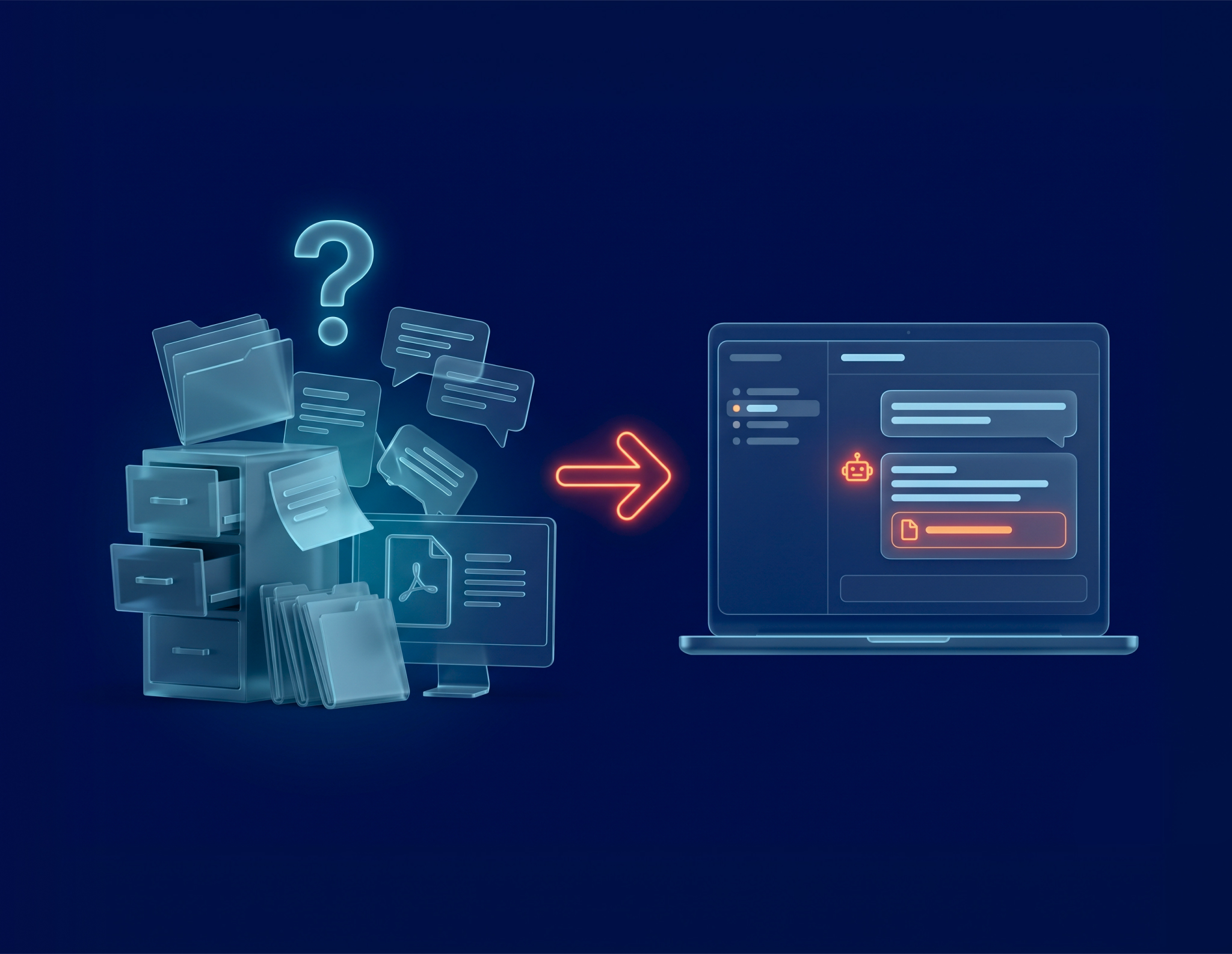
The application looks up approved material in company files, databases, and wikis before it responds. Answers stay grounded in those sources and include precise attribution.
Your teams keep their familiar tools while APIs connect custom AI models to your CRM, ERP, and internal systems.
Agents add orchestration, tools, state, permissions, and action controls on top of the LLM layer. We build them to handle support requests and back-office routines through multiple controlled steps. This keeps agent orchestration distinct from the underlying LLM application.
We provide ongoing model monitoring, secure private deployment, hallucination tracking, and continuous data-pipeline updates to keep your systems secure and accurate.

Related Services for Enterprise LLM Delivery
Build the authenticated APIs, interfaces, and workflow integrations that place an LLM inside the software your teams already use.
Prepare reliable pipelines that clean, structure, and refresh private data for retrieval, evaluation, and model operations.
Turn documents and other difficult source formats into structured inputs for document intelligence and enterprise search.
Combine documents, feeds, and other digital content in one layer before an LLM application searches or analyzes it.
Create a controlled storage layer for source material, evaluation records, and application data used by an enterprise LLM system.
Define ownership, access rules, lineage, and quality controls for the information that reaches retrieval and model workflows.

Have a Specific LLM Use Case in Mind?
Let’s estimate your project. Share your requirements. Our team replies within 48 hours with a first view of the architecture, likely schedule, and budget range. Request a project estimate.
The services above describe the engineering work we perform. These solutions describe what customers receive: working applications for conversations, documents, search, compliance, automation, and content operations.
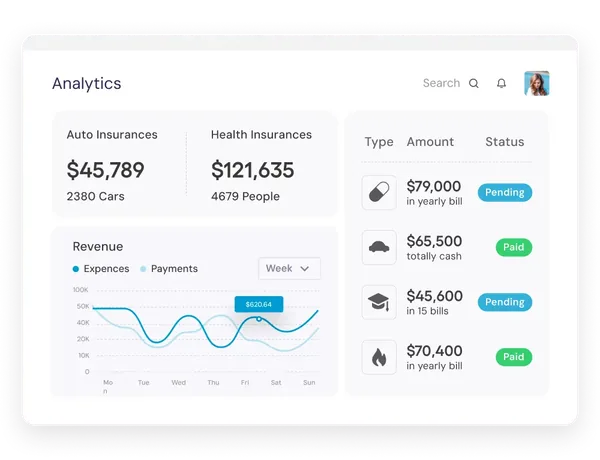
Connect policy, claims, underwriting, and service content so teams can retrieve the right source before reviewing a case or responding to a customer.
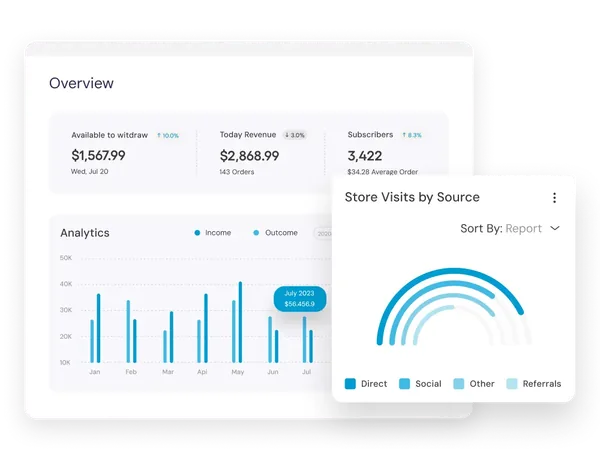
Bring filings, policies, transaction records, and internal guidance into controlled LLM applications that help analysts find evidence while keeping final decisions with the responsible specialist.
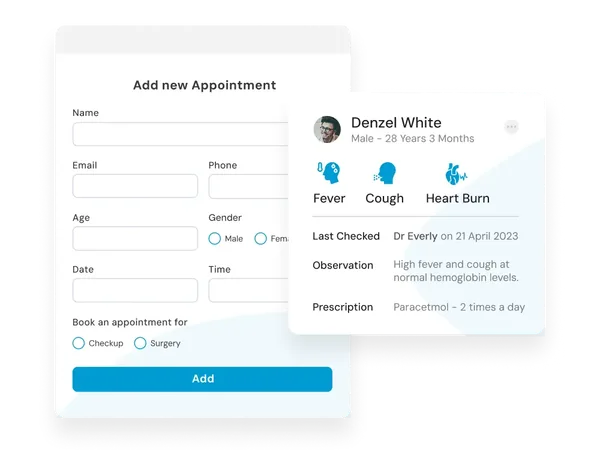
Ground assistants in approved clinical, operational, and administrative content so staff can find current guidance while access rules restrict sensitive information.
We move from business fit and data readiness to strategy, model selection, and deployment, with evaluation at every stage preparing the system for the next.
We select orchestration tools, vector databases, observability systems, and cloud infrastructure around each application’s data, security, and production requirements.
LangGraph
Industry standard for complex, stateful multi-agent workflows.
LangChain & LlamaIndex
Prototyping, prompt management, and advanced RAG.
CrewAI
Role-based agent collaboration frameworks.
Pinecone
Scalable, fully managed cloud vector database.
Qdrant & Weaviate
High-performance search with hybrid indexing.
Milvus & pgvector
Enterprise-grade open-source vector engines.

LangSmith & Langfuse
Complete trace logging, debugging, and prompt history.
Ragas
Continuous production-grade answer quality evaluation.
Kubernetes & Docker
Secure, auto-scaling containerized deployment.


AWS, Google Cloud (GCP) & Microsoft Azure
Secure VPC cloud hosting.


PostgreSQL, MongoDB & Redis
Robust caching and transactional storage.


An LLM application moves into production only after the data, model behavior, access controls, and integrations have been tested together.
01
Discovery & Use Case Validation
We examine the target workflow and the state of its company data, then test whether the AI idea is feasible. You receive an architecture, cost estimate, and projected ROI timeline built around those findings.
02
Data Preparation & Custom Engineering
We clean, structure, and modernize your internal data pipelines. Next comes the context the application needs. We may build RAG over the company knowledge base or fine-tune an open-weight model for stable terminology and output behavior.
03
Enterprise Integration & Deployment
We connect the custom LLM to the CRM, ERP, and internal databases through authenticated APIs. Rollout follows the cutover plan agreed for those systems. We deploy models inside your private cloud (VPC) to guarantee data security.
04
LLMOps, Guardrails & Maintenance
We implement real-time observability, establish continuous evaluation harnesses, and enforce strict security guardrails against hallucinations. We monitor performance drift, optimize token costs, and provide ongoing 24/7 technical support.
We work as an LLM development company that carries systems beyond prototypes and into governed production workflows.



What Our Clients Say

What do you like best?
Their deep understanding of our needs and how to craft a solution that provides more opportunities for managing our data. Their data solution, enhanced with AI features, allows us to easily manage diverse data sources and quickly get actionable insights from data.
What do you dislike?
It took some time to align the a multi-source data scraping platform functionality with our specific workflows. But we quickly adapted and the final result fully met our requirements.

What do you like best?
It was incredible how they could build precisely what we wanted. They were genuine experts in data scraping; project management was also great, and each phase of the project was on time, with quick feedback.
What do you dislike?
We have no comments on the work performed.

What do you like best?
GroupBWT is the preferred choice for competitive intelligence through complex data extraction. Their approach, technical skills, and customization options make them valuable partners. Nevertheless, be prepared to invest time in initial solution development.
What do you dislike?
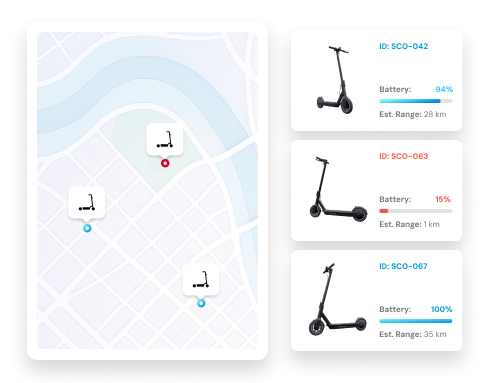
GroupBWT provided us with a solution to collect real-time data on competitor micro-mobility services so we could monitor vehicle availability and locations. This data has given us a clear view of the market in specific areas, allowing us to refine our operational strategy and stay competitive.

What do you like best?
The company's dedication to understanding our needs for collecting competitor data was exemplary. Their methodology for extracting complex data sets was methodical and precise. What impressed me most was their adaptability and collaboration with our team, ensuring the data was relevant and actionable for our market analysis.
What do you dislike?
Finding a downside is challenging, as they consistently met our expectations and provided timely updates. If anything, I would have appreciated an even more detailed roadmap at the project's outset. However, this didn't hamper our overall experience.

What do you like best?
GroupBWT excels at providing tailored data scraping solutions perfectly suited to our specific needs for competitor analysis and market research.
What do you dislike?
Given the complexity and customization of our project, we later decided that we needed a few additional sources after the project had started.
What do you like best?
What we liked most was how GroupBWT created a flexible system that efficiently handles large amounts of data. Their innovative technology and expertise helped us quickly understand market trends and make smarter decisions.
What do you dislike?
The entire process was easy and fast, so there were no downsides.
What do you like best?
Their deep understanding of our needs and how to craft a solution that provides more opportunities for managing our data. Their data solution, enhanced with AI features, allows us to easily manage diverse data sources and quickly get actionable insights from data.
What do you dislike?
It took some time to align the a multi-source data scraping platform functionality with our specific workflows. But we quickly adapted and the final result fully met our requirements.
What do you like best?
It was incredible how they could build precisely what we wanted. They were genuine experts in data scraping; project management was also great, and each phase of the project was on time, with quick feedback.
What do you dislike?
We have no comments on the work performed.
What do you like best?
GroupBWT is the preferred choice for competitive intelligence through complex data extraction. Their approach, technical skills, and customization options make them valuable partners. Nevertheless, be prepared to invest time in initial solution development.
What do you dislike?
GroupBWT provided us with a solution to collect real-time data on competitor micro-mobility services so we could monitor vehicle availability and locations. This data has given us a clear view of the market in specific areas, allowing us to refine our operational strategy and stay competitive.
What do you like best?
The company's dedication to understanding our needs for collecting competitor data was exemplary. Their methodology for extracting complex data sets was methodical and precise. What impressed me most was their adaptability and collaboration with our team, ensuring the data was relevant and actionable for our market analysis.
What do you dislike?
Finding a downside is challenging, as they consistently met our expectations and provided timely updates. If anything, I would have appreciated an even more detailed roadmap at the project's outset. However, this didn't hamper our overall experience.
What do you like best?
GroupBWT excels at providing tailored data scraping solutions perfectly suited to our specific needs for competitor analysis and market research.
What do you dislike?
Given the complexity and customization of our project, we later decided that we needed a few additional sources after the project had started.
What do you like best?
What we liked most was how GroupBWT created a flexible system that efficiently handles large amounts of data. Their innovative technology and expertise helped us quickly understand market trends and make smarter decisions.
What do you dislike?
The entire process was easy and fast, so there were no downsides.

How does a custom LLM differ from off-the-shelf AI like ChatGPT?
A general model arrives with broad language and reasoning capabilities, but it does not arrive with your current files, access rules, or internal terminology. A custom LLM trains on or connects securely to your private business data. This gives it the terminology, workflows, and policies used inside your company.
Should we use RAG or Fine-Tuning for our project?
RAG fits changing company data, such as documents or inventory, especially when every answer must cite a source. Fine-Tuning fits a stable tone, output format, or specialized industry language. Many enterprise systems need both methods.
Who owns the data, the code, and the final AI model?
You do. The contract states which intellectual property transfers at handover. That normally covers custom source code and prompts, plus transferable fine-tuned weights when the project creates them. We never reuse your proprietary data or models.
Where does the custom LLM run? Is our data safe?
To meet your security and compliance requirements, we run custom AI in your private cloud (VPC) or on-premise servers. That secured environment keeps sensitive business data contained, and third-party models do not train on it.
How do your LLM development services reduce incorrect answers?
We minimize hallucination risks through data grounding, RAG architectures, and built-in validation layers. The model is restricted to generating answers strictly based on your verified corporate files rather than guessing.
How long does it take to build a working prototype?
A focused Proof of Concept (PoC) or MVP often fits a 4-to-8-week window, but data access and integration scope can move that date. The early build tests the business case before the production commitment.


How can we help you?

We’ll review your goals and suggest the right solution — technical, scalable, and tailored to you.
What do you need extracted, structured, or automated?