

Data Engineering
RAG Data Pipeline: How to Build an End-to-End RAG Pipeline
A RAG data pipeline decides which company knowledge an AI assistant can use, cite, and defend. It turns policies, SOPs,...

Build production RAG systems that connect enterprise data to LLMs through governed retrieval, source attribution, evaluation, and secure integrations. Request a Free Data Audit. We build retrieval around your real data and workflows.






We test the proposed workflow against available data, security needs, operating cost, and acceptance criteria. You get a target design and build sequence for the workflow.
We build document Q&A portals, knowledge assistants, and support interfaces around approved sources. Access checks, citations, and no-answer behavior are part of the application rather than late additions.
We clean, split, tag, and refresh PDFs, spreadsheets, CRM records, wiki pages, and database content. Source versions and metadata help retrieval select the right passage.
Keyword and semantic search can be combined with metadata filters and reranking. We benchmark each choice against real questions instead of assuming one retrieval method fits every corpus.
Standard RAG retrieves context and answers. Agentic RAG can choose retrieval routes or tools dynamically, but any operational action needs separate permissions and approval. Conversational workflows that need more than retrieval alone may also require a custom chatbot interface.
Custom RAG development services cover release engineering, monitoring, refresh failures, retrieval regression, model changes, latency, and cost under the agreed support scope.

Repair unreliable pipelines and source models behind retrieval.
Define ownership, access, lineage, and control evidence for the information a RAG application can retrieve.
Structure records extracted from documents, platforms, and business systems.
Build governed ingestion routes for approved web, API, and operational sources that must stay current in the retrieval layer.
Normalize records from several sources into stable schemas before they enter search and generation workflows.
Implement the shared storage, ingestion, and governance layer when retrieval must work across large, changing repositories.
Set the architecture, governance, integration, and operating plan for a RAG initiative before committing to a full build.
Test retrieval behavior, model fit, and user flow on a bounded proof before deciding what should move into production.
Connect the approved AI design to business systems, access controls, deployment infrastructure, monitoring, and operating ownership.
Build the conversational layer for customer or employee workflows that need grounded answers, enterprise integrations, and monitored performance.
Engineer the wider generation pipeline around retrieval, structured outputs, orchestration, governance, and client-owned backend logic.
Add one senior AI developer or a delivery pod for RAG, LLM, chatbot, agent, deployment, and MLOps work within the agreed role and scope.
These RAG development services & solutions connect business knowledge to AI applications.
AI answers lack evidence
The Problem: A fluent answer can still be wrong when retrieval returns irrelevant passages, incomplete context, or conflicting documents. Our Solution: Responses use retrieved enterprise context and can include source citations. Evaluation then checks whether the evidence supports the answer and whether the citation points to the right passage.
Staff search disconnected systems
The Problem: The answer may sit in a PDF, CRM record, ERP screen, or internal wiki. Staff have to check each place. Our Solution: We prepare approved sources for one retrieval layer, so staff can search them with ordinary questions and inspect the source behind a result.
Knowledge changes after launch
The Problem: Policies, product details, and operational records keep changing after an assistant goes live. Our Solution: Refresh pipelines reprocess changed sources without retraining the language model. Monitoring shows when a connector or parser stops updating the index.
Permissions get lost in transit
The Problem: Copying content into a new index can separate it from the access rules held by the source system. Our Solution: We design identity and permission checks for the selected architecture. Retrieval tests confirm that denied users cannot receive restricted passages.
A good demo fails real questions
The Problem: A small prototype may work on curated prompts but miss the language, ambiguity, and incomplete evidence found in daily use. Our Solution: A representative evaluation set covers expected questions, weak evidence, permission boundaries, and no-answer cases before production approval.
Generic assistants miss business context
The Problem: Company terms, document versions, and workflow rules are context an off-the-shelf assistant may not know. Our Solution: Retrieval filters, metadata, and prompt rules reflect the approved vocabulary and source hierarchy instead of relying on model memory alone.

Check Whether Your Data Can Support RAG
Bring one workflow and the systems it depends on. We will discuss fit, obvious data or access risks, and the most useful next engineering step.
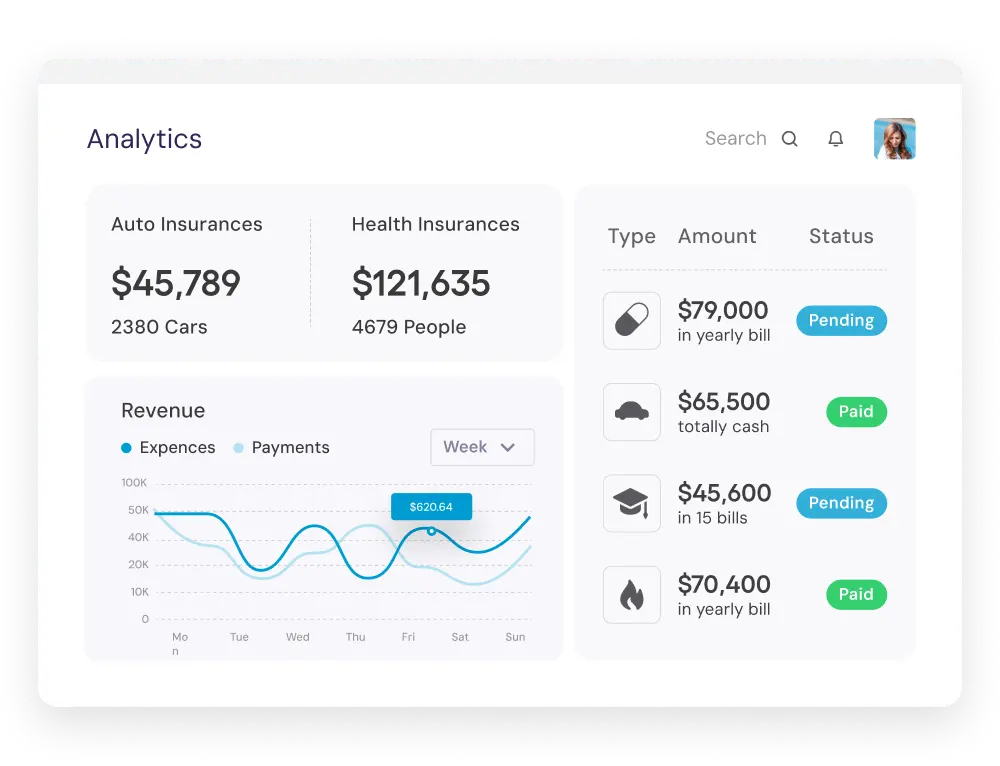
Search policy and claims evidence. Claims and service teams can retrieve approved policy wording, contract versions, and case records while citations keep each answer connected to the evidence a specialist must review.
Review financial records with source context. Analysts can search filings, policies, transaction records, and internal research while access controls limit retrieval and citations preserve the path back to the original source.
Retrieve approved clinical and operational guidance. Staff can search approved procedures, care guidance, and administrative records while role-based access limits sensitive content and citations support review before action.
OpenAI, Anthropic, Google Gemini, Meta Llama
Model access is selected against quality, latency, security, and hosting constraints.




Python and FastAPI
Controlled APIs expose retrieval and generation.


Vector and hybrid search
Index choice follows the required search methods, filters, scale, and operating model.


Enterprise connectors and APIs
Connectors refresh approved business content from collaboration tools, operational systems, and governed APIs.


AWS, Microsoft Azure, Google Cloud, Docker, Kubernetes
Deployment follows the client’s security boundary.


Tracing, metrics, and evaluation
Traces reveal retrieval, model, error, and latency behavior.


One question can search several approved repositories and return supporting passages. Staff spend less time opening systems one by one.
Refresh pipelines update indexed content when source material changes. The assistant can use new policies or records without another model-training cycle.
Citations make the source visible, but they are not proof by themselves. Evaluation checks whether the cited passage supports the generated claim.
Permission tests cover allowed and denied users against restricted material. Security teams can review the implemented boundary and its test results.
In one insurance implementation, GroupBWT built retrieval over version-controlled contracts and operational data, reducing average resolution time from 9.4 seconds to 3.0 seconds (single engagement, published case).
The system can use a faster model or simpler search path for routine questions, then reserve a more capable model or human review for harder cases. Cost follows the question and evidence risk instead of one expensive default.
Connected knowledge:
Operational result:
Product documents, policies, FAQs, and ticket history.
An agent sees a draft answer plus the passage behind it, then decides what to send.
SharePoint, Confluence, Google Drive, CRM, and ERP content.
Employees search approved material from one place; permissions still decide what each person can retrieve.
Agreements, amendments, policies, and statutory guidance.
Reviewers jump to the clause that matters and verify its version before acting.
Filings, earnings reports, policies, and transaction records.
During due diligence, an analyst can compare the generated response with the original evidence.
Inventory, specifications, pricing, and warranty rules.
The answer reflects what is stocked and covered now, rather than whatever the model remembers.
Customer support
Connected knowledge
Operational result
Internal knowledge search
Connected knowledge
Operational result
Contract review
Connected knowledge
Operational result
Financial research
Connected knowledge
Operational result
Product consultation
Connected knowledge
Operational result
01
Data engineering before prompting
A decade of extraction and pipeline work informs how we prepare complex repositories. The assistant retrieves from maintained pipelines, not a one-time upload.
02
Security designed into retrieval
The team maps permissions, model access, and deployment boundaries. Security reviewers receive an architecture and denied-access test results.
03
Integration with daily tools
RAG can sit inside a CRM, ERP, portal, Slack, or Teams. Staff gain a retrieval interface without replacing the operational systems they already use.
04
Acceptance by separate layers
GroupBWT tests retrieval, answer support, citations, access, latency, and cost separately. A strong aggregate score cannot hide a failed security or evidence check.





What do you like best?
Their deep understanding of our needs and how to craft a solution that provides more opportunities for managing our data. Their data solution, enhanced with AI features, allows us to easily manage diverse data sources and quickly get actionable insights from data.
What do you dislike?
It took some time to align the a multi-source data scraping platform functionality with our specific workflows. But we quickly adapted and the final result fully met our requirements.

What do you like best?
It was incredible how they could build precisely what we wanted. They were genuine experts in data scraping; project management was also great, and each phase of the project was on time, with quick feedback.
What do you dislike?
We have no comments on the work performed.

What do you like best?
GroupBWT is the preferred choice for competitive intelligence through complex data extraction. Their approach, technical skills, and customization options make them valuable partners. Nevertheless, be prepared to invest time in initial solution development.
What do you dislike?
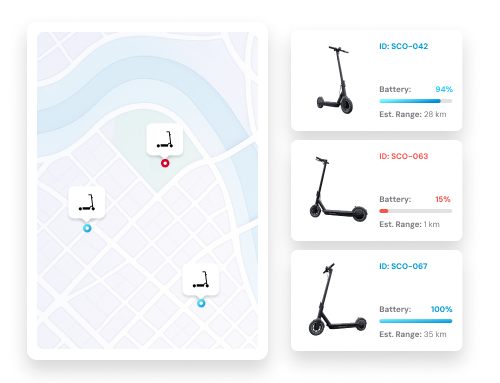
GroupBWT provided us with a solution to collect real-time data on competitor micro-mobility services so we could monitor vehicle availability and locations. This data has given us a clear view of the market in specific areas, allowing us to refine our operational strategy and stay competitive.

What do you like best?
The company's dedication to understanding our needs for collecting competitor data was exemplary. Their methodology for extracting complex data sets was methodical and precise. What impressed me most was their adaptability and collaboration with our team, ensuring the data was relevant and actionable for our market analysis.
What do you dislike?
Finding a downside is challenging, as they consistently met our expectations and provided timely updates. If anything, I would have appreciated an even more detailed roadmap at the project's outset. However, this didn't hamper our overall experience.

What do you like best?
GroupBWT excels at providing tailored data scraping solutions perfectly suited to our specific needs for competitor analysis and market research.
What do you dislike?
Given the complexity and customization of our project, we later decided that we needed a few additional sources after the project had started.
What do you like best?
What we liked most was how GroupBWT created a flexible system that efficiently handles large amounts of data. Their innovative technology and expertise helped us quickly understand market trends and make smarter decisions.
What do you dislike?
The entire process was easy and fast, so there were no downsides.
What do you like best?
Their deep understanding of our needs and how to craft a solution that provides more opportunities for managing our data. Their data solution, enhanced with AI features, allows us to easily manage diverse data sources and quickly get actionable insights from data.
What do you dislike?
It took some time to align the a multi-source data scraping platform functionality with our specific workflows. But we quickly adapted and the final result fully met our requirements.
What do you like best?
It was incredible how they could build precisely what we wanted. They were genuine experts in data scraping; project management was also great, and each phase of the project was on time, with quick feedback.
What do you dislike?
We have no comments on the work performed.
What do you like best?
GroupBWT is the preferred choice for competitive intelligence through complex data extraction. Their approach, technical skills, and customization options make them valuable partners. Nevertheless, be prepared to invest time in initial solution development.
What do you dislike?
GroupBWT provided us with a solution to collect real-time data on competitor micro-mobility services so we could monitor vehicle availability and locations. This data has given us a clear view of the market in specific areas, allowing us to refine our operational strategy and stay competitive.
What do you like best?
The company's dedication to understanding our needs for collecting competitor data was exemplary. Their methodology for extracting complex data sets was methodical and precise. What impressed me most was their adaptability and collaboration with our team, ensuring the data was relevant and actionable for our market analysis.
What do you dislike?
Finding a downside is challenging, as they consistently met our expectations and provided timely updates. If anything, I would have appreciated an even more detailed roadmap at the project's outset. However, this didn't hamper our overall experience.
What do you like best?
GroupBWT excels at providing tailored data scraping solutions perfectly suited to our specific needs for competitor analysis and market research.
What do you dislike?
Given the complexity and customization of our project, we later decided that we needed a few additional sources after the project had started.
What do you like best?
What we liked most was how GroupBWT created a flexible system that efficiently handles large amounts of data. Their innovative technology and expertise helped us quickly understand market trends and make smarter decisions.
What do you dislike?
The entire process was easy and fast, so there were no downsides.


Will our confidential data train a public model?
That depends on the model, hosting, and retention terms. We document what data leaves the client environment and design the connection around approved security requirements.
Can we restrict what each employee sees?
Yes, when the architecture checks the required permissions. Tests confirm that restricted passages stay out of unauthorized retrieval results.
How do you test whether an answer is supported?
We evaluate retrieval and generation separately. The checks cover whether the right evidence was retrieved, whether it supports the answer, whether the citation matches, and whether the system declines when evidence is insufficient.
What determines RAG development cost?
Cost depends on source count and quality, permission complexity, retrieval design, application integrations, model and hosting choices, evaluation depth, and support scope. We estimate it after those variables are known.
When is RAG not the right solution?
RAG is a poor fit when the workflow has no reliable source of truth, needs deterministic calculations that ordinary software should perform, or mainly requires actions across tools. We may recommend data repair, conventional search, workflow software, or an agent architecture instead.


How can we help you?

We’ll review your goals and suggest the right solution — technical, scalable, and tailored to you.
What do you need extracted, structured, or automated?