
AI
AI Consulting Costs in 2026: What You Pay For and How to Defend the Budget
The public 2026 guides from Leanware, Alice Labs, and Nicklpass tell a consistent early-stage story. A bounded diagnostic, assessment, or...

Stop funding experimental pilots that never leave the boardroom. GroupBWT helps enterprise and mid-market leaders design, build, and deploy production-grade systems inside core business operations, with clear P&L impact, vendor independence, and protected data.






Artificial Intelligence for your business: from initial idea to working results in 90 days
Our AI consulting service divides implementation into four phases. Each one has a defined deliverable, measurable KPI, budget boundary, and executive approval gate.
A strategy matters only when engineers can build from it. As an artificial intelligence consulting firm, the team takes the work from the first roadmap through custom agents and enterprise governance. The resulting system sits inside your existing operating stack, with its security and scaling needs accounted for.
Enterprise teams have already run plenty of generative AI pilots. Many never reach production. A promising boardroom demo then disappears from the financial results. Many AI consultancy services diagnose the problem; this section addresses its operational causes.
An agent needs access to the systems where the actual work happens. Spreadsheets, disconnected databases, and outdated ERP or CRM records provide only fragments of the context. The result is late or incomplete answers. The data foundation comes first, followed by access controls and direct APIs that place the model inside the tools your team uses.
A 100-page strategy deck still leaves your internal team to build and ship the software. Slides alone save no employee time and generate no revenue. The deliverable includes working code, with the same team designing, testing, and deploying the system in your operating environment. Support continues through operation, staff adoption, and measurement.
A cheap two-week demo can become expensive once real users arrive because token use, prompt design, and MLOps controls shape the monthly API bill. Without monitoring, that bill moves faster than usage forecasts. Operating cost enters the architecture from Day 1. Prompt caching, model routing, and token limits control each request’s cost as usage moves from 10 people to 10,000.

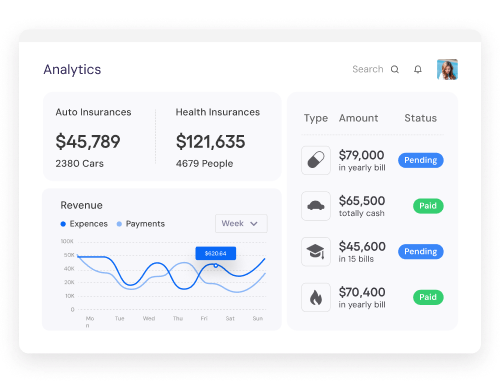
Claims, underwriting, and policy-service workflows are mapped to approved data, review steps, and measurable outcomes before the first production build begins.
01
AI Readiness Audit & Data Assessment (Weeks 1-3)
We assess your workflow, infrastructure, and data, then select one use case to test. You receive a ranked use-case matrix, data-readiness report, and 90-day technical roadmap. Feasibility, expected cost, and the ROI measure are documented before further investment.
02
Rapid Prototyping & Proof of Concept (Weeks 4-6)
Your data goes into an isolated sandbox, where the prototype has to work without a polished sample dataset. Stakeholders test the MVP against its stated performance indicators and record what fails. The result shows whether accuracy and adoption justify touching live systems.
03
Production Deployment & System Integration (Weeks 7-12)
Approval clears the team to connect the workflow with the ERP, CRM, and required database records. Automated checks watch the output. The software enters daily workflows with its security rules in place. The first users apply it only to selected tasks. Speed and cost are then checked against the agreed measures.
04
Enterprise Scaling, Governance & Ongoing Support (Ongoing)
After launch, API spend, compliance controls, and model performance remain under review. Automated cost controls sit alongside the compliance framework and ongoing technical tuning. Expansion to another department follows the same controls, while monthly expenses remain visible against actual use.
Successful enterprise AI transformation requires complete alignment across the C-suite. A CEO, CTO, COO, and CFO will not judge the same system by the same measure. As an artificial intelligence consulting company, the strategy is mapped to each role’s goals, risks, and performance measures. That exposes disagreements before delivery starts.
AI strategy and an AI roadmap serve different decisions. Strategy identifies which use cases justify investment; a roadmap specifies how an approved use case can be built. The comparison below separates their scope and deliverables.
AI Strategy:
AI Roadmap:
2-6 Weeks. High-speed diagnostic sprint.
4-6 Weeks. Rapid technical blueprinting.
Identify high-ROI use cases and evaluate data infrastructure readiness.
Design target architecture and map out a 90-day production timeline.
Data readiness audit, prioritized use-case matrix, executive business case.
Fully costed technical architecture, PoC specification, 90-day build plan.
Total clarity on project feasibility, total cost of ownership, and expected ROI.
Production-ready execution blueprint ready for immediate software build.
C-suite leaders seeking initial clarity before committing major capital.
Leadership teams ready to build and launch a specific high-value use case.
Senior AI builder oversight with zero theoretical bloat.
Direct code-level architecture design instead of generic strategy slides.
Duration & Pace
AI Strategy
AI Roadmap
Primary Objective
AI Strategy
AI Roadmap
Key Deliverables
AI Strategy
AI Roadmap
Target Outcome
AI Strategy
AI Roadmap
Ideal For
AI Strategy
AI Roadmap
Boutique Advantage
AI Strategy
AI Roadmap
Clear engagement models, predictable monthly cost structures, and strict ROI modeling remove commercial ambiguity. A fixed-scope sprint, embedded engineering team, and ongoing support carry different budgets. In each model, spend is measured against the agreed business outcome.
This model suits leaders who need a firm cost before the initial evaluation begins. The sprint has fixed scope, named deliverables, and a flat rate. Before a longer build, you see feasibility, ownership cost, and the proposed payback calculation.
This model suits organizations ready to build alongside their internal staff. A monthly retainer covers senior AI architecture, data engineering, and MLOps skills. Your team adds those capabilities without waiting through a full recruitment cycle or creating permanent roles.
This model suits production systems that need ongoing security, accuracy, and cost review. Managed operations cover model monitoring, prompt-cache tuning, hallucination tracking, and regulatory updates. Your system receives continued technical attention under the agreed service terms.
This model suits leadership teams that need financial evidence before releasing capital. Saved employee hours, operating-cost changes, and expected revenue lift are compared with token and infrastructure costs. You receive a financial model that connects technical scope to the agreed return measure.
Foundation models are selected for reasoning quality, context requirements, data sensitivity, latency, and cost rather than provider preference.
OpenAI, Anthropic Claude, Google Gemini & Llama




The workload stays on cloud and data platforms already covered by your security and governance controls. Capacity can then grow inside a known boundary.
AWS, Microsoft Azure, Google Cloud, Databricks & Snowflake


Orchestration and application frameworks connect models to approved data sources, tools, multi-step workflows, and production APIs.
Python, FastAPI, Elasticsearch & PostgreSQL








What Our Clients Say

What do you like best?
Their deep understanding of our needs and how to craft a solution that provides more opportunities for managing our data. Their data solution, enhanced with AI features, allows us to easily manage diverse data sources and quickly get actionable insights from data.
What do you dislike?
It took some time to align the a multi-source data scraping platform functionality with our specific workflows. But we quickly adapted and the final result fully met our requirements.

What do you like best?
It was incredible how they could build precisely what we wanted. They were genuine experts in data scraping; project management was also great, and each phase of the project was on time, with quick feedback.
What do you dislike?
We have no comments on the work performed.

What do you like best?
GroupBWT is the preferred choice for competitive intelligence through complex data extraction. Their approach, technical skills, and customization options make them valuable partners. Nevertheless, be prepared to invest time in initial solution development.
What do you dislike?
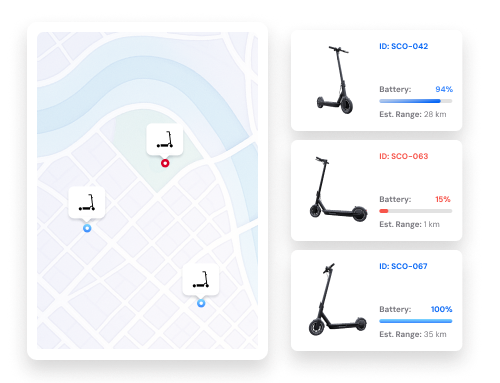
GroupBWT provided us with a solution to collect real-time data on competitor micro-mobility services so we could monitor vehicle availability and locations. This data has given us a clear view of the market in specific areas, allowing us to refine our operational strategy and stay competitive.

What do you like best?
The company's dedication to understanding our needs for collecting competitor data was exemplary. Their methodology for extracting complex data sets was methodical and precise. What impressed me most was their adaptability and collaboration with our team, ensuring the data was relevant and actionable for our market analysis.
What do you dislike?
Finding a downside is challenging, as they consistently met our expectations and provided timely updates. If anything, I would have appreciated an even more detailed roadmap at the project's outset. However, this didn't hamper our overall experience.

What do you like best?
GroupBWT excels at providing tailored data scraping solutions perfectly suited to our specific needs for competitor analysis and market research.
What do you dislike?
Given the complexity and customization of our project, we later decided that we needed a few additional sources after the project had started.
What do you like best?
What we liked most was how GroupBWT created a flexible system that efficiently handles large amounts of data. Their innovative technology and expertise helped us quickly understand market trends and make smarter decisions.
What do you dislike?
The entire process was easy and fast, so there were no downsides.
What do you like best?
Their deep understanding of our needs and how to craft a solution that provides more opportunities for managing our data. Their data solution, enhanced with AI features, allows us to easily manage diverse data sources and quickly get actionable insights from data.
What do you dislike?
It took some time to align the a multi-source data scraping platform functionality with our specific workflows. But we quickly adapted and the final result fully met our requirements.
What do you like best?
It was incredible how they could build precisely what we wanted. They were genuine experts in data scraping; project management was also great, and each phase of the project was on time, with quick feedback.
What do you dislike?
We have no comments on the work performed.
What do you like best?
GroupBWT is the preferred choice for competitive intelligence through complex data extraction. Their approach, technical skills, and customization options make them valuable partners. Nevertheless, be prepared to invest time in initial solution development.
What do you dislike?
GroupBWT provided us with a solution to collect real-time data on competitor micro-mobility services so we could monitor vehicle availability and locations. This data has given us a clear view of the market in specific areas, allowing us to refine our operational strategy and stay competitive.
What do you like best?
The company's dedication to understanding our needs for collecting competitor data was exemplary. Their methodology for extracting complex data sets was methodical and precise. What impressed me most was their adaptability and collaboration with our team, ensuring the data was relevant and actionable for our market analysis.
What do you dislike?
Finding a downside is challenging, as they consistently met our expectations and provided timely updates. If anything, I would have appreciated an even more detailed roadmap at the project's outset. However, this didn't hamper our overall experience.
What do you like best?
GroupBWT excels at providing tailored data scraping solutions perfectly suited to our specific needs for competitor analysis and market research.
What do you dislike?
Given the complexity and customization of our project, we later decided that we needed a few additional sources after the project had started.
What do you like best?
What we liked most was how GroupBWT created a flexible system that efficiently handles large amounts of data. Their innovative technology and expertise helped us quickly understand market trends and make smarter decisions.
What do you dislike?
The entire process was easy and fast, so there were no downsides.


Related Services
A model is only as current as the pipeline feeding it. Data engineering keeps those inputs usable once the system reaches production.
If an output is challenged, the team needs to know who owns the data, who had access, where it came from, and who reviews the answer.
Conflicting records and unclear data definitions make AI outputs difficult to trust. GroupBWT organizes data quality, storage, and lifecycle rules so teams can work from consistent information.
Some workflows do not fit a packaged product. A custom build connects the model to the people, permissions, and rules already shaping the process.
AI outputs need to reach the reports people use to make decisions. GroupBWT connects those outputs to dashboards and agreed business measures, so teams can compare the results with their operating targets.
Growing data volumes can exceed the capacity of existing processing jobs. GroupBWT builds distributed data systems around the required throughput, refresh cadence, and downstream use.
When a business question needs analysis before software is built, data science tests patterns and predictive approaches against the available evidence. Your team can use the findings to select what to model and measure.
What is included in AI consulting services, and how do they differ from standard software outsourcing?
With standard software outsourcing, you usually supply the specification. AI consulting has to define the business case and the engineering path. The engagement examines the process, sets the return measure, designs the target architecture, and builds the software into the operating environment where staff will use it.
How long does it take to move from an initial strategy to a live production pilot?
Within 90 days, the standard roadmap targets a system running in production. A 2-to-3-week audit comes first. The prototype (PoC) occupies weeks 4 through 6. Integration and MLOps deployment are targeted for week 12.
How do you guarantee data security, privacy, and compliance with regulations like the EU AI Act?
Security requirements are written before the first model call. Proprietary business data stays out of public-model training. Data can run through an encrypted private environment on Azure, AWS, or GCP. Access rules and hallucination monitoring sit beside controls mapped to the EU AI Act and applicable privacy requirements.
What is the average cost of AI consulting projects for mid-market and enterprise businesses?
Build scope and integration depth shape the initial cost. Data condition and post-launch ownership determine how much work follows. A consulting partner should explain which assumptions drive the estimate before delivery begins. A fixed-price AI Strategy Sprint puts a defined cost on the initial assessment. Build and deployment can use project pricing or a monthly engineering retainer. In either model, spend is tracked against the agreed ROI measure.
Is an in-house AI engineering team needed after the consulting engagement ends?
No. Searching for an AI consulting company near me may produce a convenient shortlist. Delivery fit still depends on much more than location. Domain fit, secure access, working-hour overlap, and ownership matter more. The system is built so existing staff can run its approved workflows. Deployment includes role-based training and documentation for the team. Managed AI operations (MSP) can cover model tuning, security updates, and cost review when you do not want to hire a specialist team.


How can we help you?

We’ll review your goals and suggest the right solution — technical, scalable, and tailored to you.
What do you need extracted, structured, or automated?