
AI
AI Knowledge Assistant Architecture: A Practical Vision for Internal Company Q&A
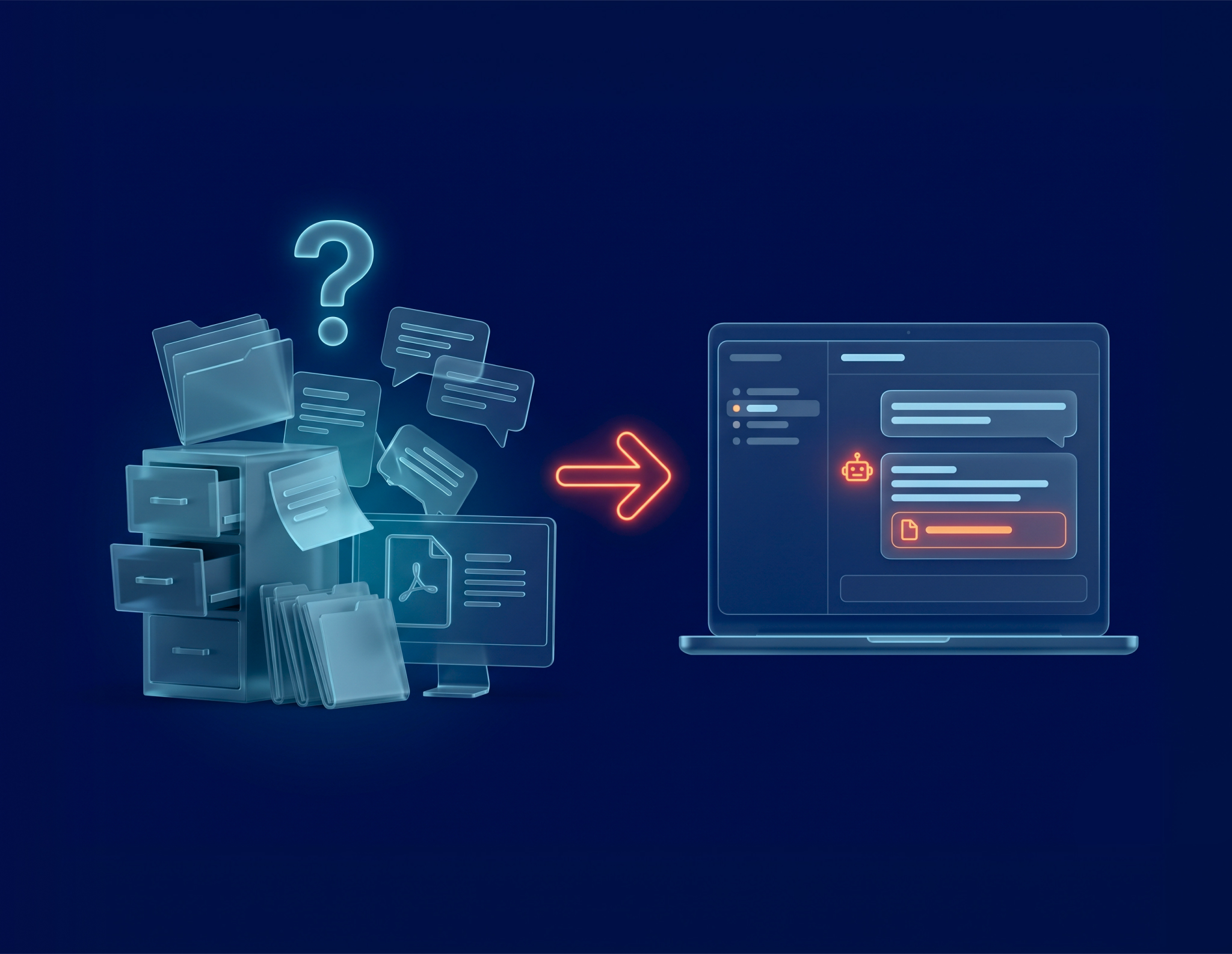
Introduction An AI knowledge assistant is an internal bot that answers employee questions from your own company documents — policies,...
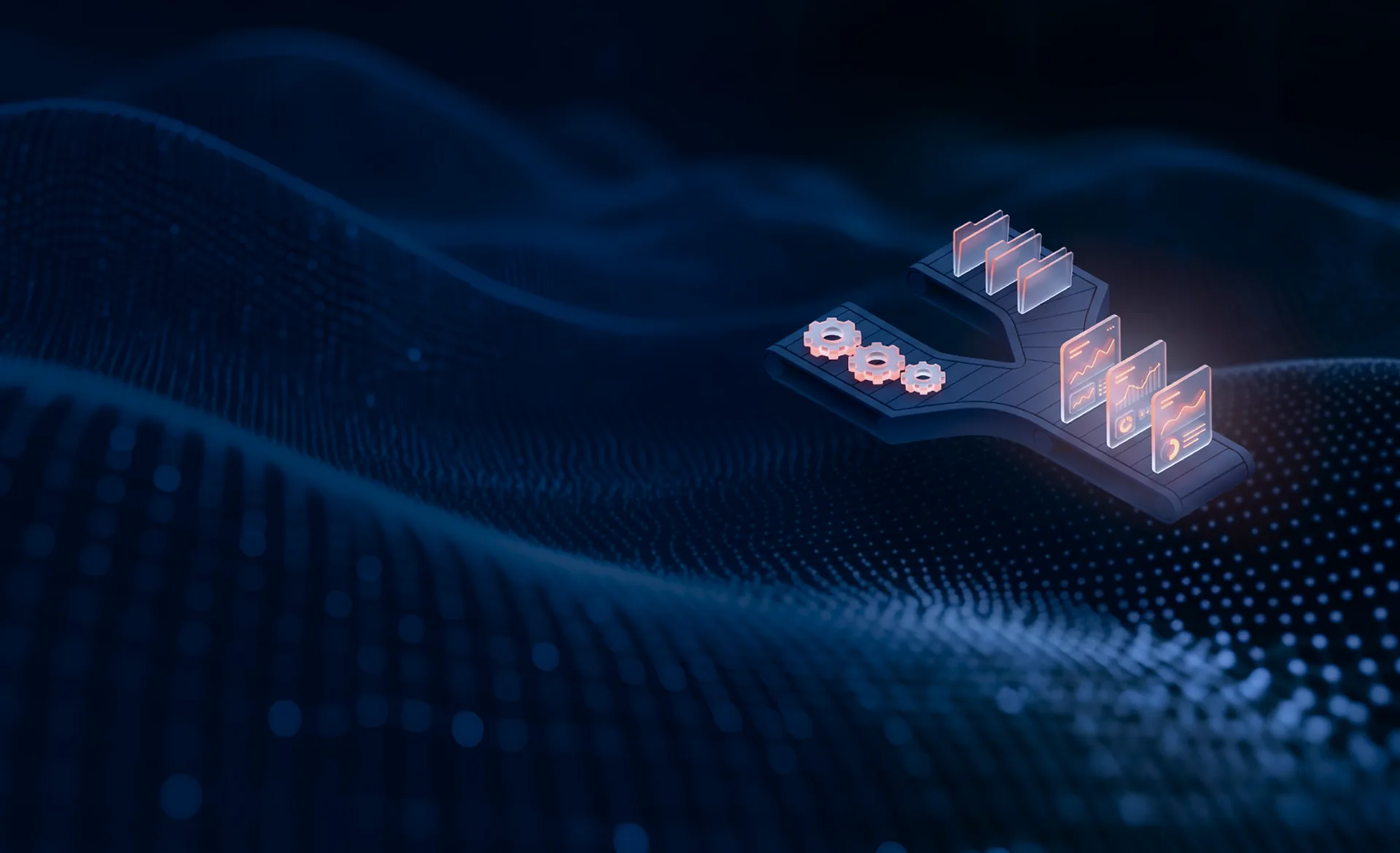
Your plant already produces the data you need — it just lives in systems never built to talk to each other. We connect them into one trusted, real-time foundation, so you see every plant’s live state on one screen instead of next-day reports. We pick the stack to fit your workload — Databricks or Snowflake, lakehouse or warehouse — never a vendor partnership.






Manufacturing data integration services connect ERP, MES, SCADA, PLC, and IoT sensor data into one governed foundation that BI, analytics, and AI all read from.
Unlike a generic iPaaS or one-off integration — which assume clean, documented sources — this is built for plant reality: proprietary protocols, undocumented controller logic, and aging equipment that off-the-shelf connectors stall on.
ERP, finance, and planning records become a live part of every dashboard, not a nightly export.
Machine, sensor, and equipment data in one place, so the floor and the boardroom read the same numbers.
We design the warehouse or data lake layer your analytics sit on — matched to your workload, not a vendor default.
Our business intelligence team builds one semantic layer your dashboards read from, so leadership’s numbers come from one definition, not five.
Streaming and batch pipelines built as production systems — retries, validation, monitoring — so one bad batch never takes the feed down.
Our data governance work validates every record before load, catching the failures specific to plant data — and keeps lineage and access under control as you scale.
Most manufacturers arrive with one of these scenarios already blocking a decision. Each is a job the integrated foundation turns from a manual scramble into routine.
Performance and OEE only reflect reality when machine, line, and shift data land in one model as events happen — not in a spreadsheet assembled the next morning. We stream shop-floor signals into one governed layer so a supervisor reads live plant performance inside the shift that creates it.
Predictive maintenance stalls at the data step far more often than the model step. The integration layer feeds clean, lineage-tracked machine and sensor signals into the foundation asset-health models that depend on — your data-science team trains on it, or we co-develop. We own the data foundation; the model layer sits on top of it.
A defect is only traceable when every reading is tied back to its source — the machine, the line, the timestamp it actually came from. When the integration layer preserves that lineage end to end, quality analytics run on a clean chain from sensor to report instead of a reconstruction pieced together after the fact.
When every plant defines “yield,” “uptime,” or “scrap” in its own way, leadership is comparing numbers that were never the same measurement. We map each site’s source of truth, then build one shared semantic layer so every plant and shift report is mapped into one set of definitions — so a cross-plant comparison finally measures the same thing on every site.
Sell-through, inventory, and supplier files usually arrive as separate exports stitched together by hand — slow, and a source of the errors that later break a report. We bring those feeds into one model and reconcile them automatically, so inventory and supply-chain views reflect what is actually on the floor rather than last week’s manual roll-up.
Energy, emissions, and utilization reporting only works when environmental and equipment telemetry sit in the same governed model as production data. Once those feeds are integrated and lineage-tracked, utilization and sustainability metrics come from the same trusted source as every other KPI — no separate, hand-built reconciliation each reporting cycle.
An acquisition that bolts on a second ERP and a different MES creates an overnight integration gap — two finance teams, two definitions of every KPI, no single P&L. We map a source of truth per plant, then fold the acquired site into one shared semantic layer, so it reports into the parent model without re-platforming either side.


Get a Free Integration Audit
Send us your top systems and the report that hurts most. Within a week, you get a map of how your sources connect today, the smallest first step that creates value, and a scope for the rest — no charge, no commitment.
Related GroupBWT Services
Every pipeline that moves your plant's data.
The governed store where your operational and machine data lands.
High-volume telemetry keeps queries ready as it scales.
The dashboards and definitions leadership reads from.
Lineage, quality, and access control across the platform.
Extract, transform, load — production systems, not one-off scripts.
Typical Integration Problem:
GroupBWT Integration:
Nightly exports put yesterday's numbers in today's meeting
Change tracking and managed connectors keep ERP records live in every dashboard
Proprietary protocols and undocumented logic turn each line into another point database
OPC-UA, Modbus, and MQTT through edge gateways, sub-minute streaming
Sensor data trapped on the floor; downtime traced after the shift, not during it
Downtime caught during the shift, not at next-day standup — event-driven queues at five-second cadence, full lineage sensor to report
Analysts spend hours stitching files by hand while errors creep in
Parallel loading with a validation framework that checks every file before load
Two finance teams, two definitions of "yield," no single number leadership can trust
Source-of-truth mapping per plant, then one shared semantic layer — the acquired site reports into the parent model without re-platforming either side
ERP & Business — ERP, finance, planning
Typical Integration Problem
GroupBWT Integration
Machine & Controller — PLCs and SCADA, legacy and modern
Typical Integration Problem
GroupBWT Integration
Sensor & Telemetry — production-line, equipment, GPS
Typical Integration Problem
GroupBWT Integration
Warehouse & Supply — sell-through, inventory, supplier files
Typical Integration Problem
GroupBWT Integration
Acquired Plants & Legacy Estates — different ERP, MES, and reporting standards from M&A
Typical Integration Problem
GroupBWT Integration
Our strongest manufacturing-adjacent work spans heavy equipment, multi-site industrial production, consumer goods, and supply chain — different products, identical integration problems: legacy controllers, undocumented logic, and machine streams that must join business records.
Coordination
Plant operations and reporting read from one model, so the floor and head office stop arguing over spreadsheets. For a multi-site industrial producer, we mapped a 6,000-table legacy warehouse and 20+ disconnected systems across 12 sites into one governed lakehouse design — so every site and shift works from one set of figures, without breaking a report they trust.
Modernization
A staged data warehouse migration: the new platform runs beside the old, and we retire the old only after validation — production reports preserved at every step.
One Team, One Stack
The same engineers own integration, warehouse, BI, and AI-ready data, so when a number looks wrong, there is no finger-pointing between vendors. One team on the whole stack also means leaner support — a change ripples through in one pass, not three change requests across three vendors.
Vendor-Neutral by Design
Big consultancies and platform partners lead with Snowflake, Databricks, SAP, or Fabric because that is what they sell. We choose the stack after we see your workload — what your reports need, what your controllers speak, what your team can run — not a sales quota.
Built for Your Plant
We fit the system to real constraints — messy legacy systems, low-bandwidth sites, strict audit needs, aging controllers — not a template.
Proven at Scale
For a heavy-equipment fleet, operators see asset status the moment it changes — a live map refreshing 50+ assets at five-second cadence. For a multi-site industrial producer, we are unifying minute-level PLC streams into a Databricks lakehouse with Unity Catalog lineage, so supervisors act on plant events the same shift, not the next morning.
AI-Ready by Default
The integration layer we build is the foundation AI depends on — clean, lineage-tracked data ready for model training, anomaly detection, and predictive maintenance. Most AI projects stall at the data step, not the model, so we make that step solid; your team builds on it, or we co-develop.
Long-Term Partner
We have run mission-critical platforms for three years and counting with a European cosmetics manufacturer, and for seven years with a supply-chain data operation serving Tier-1 retailers and brands.





What Our Clients Say

What do you like best?
Their deep understanding of our needs and how to craft a solution that provides more opportunities for managing our data. Their data solution, enhanced with AI features, allows us to easily manage diverse data sources and quickly get actionable insights from data.
What do you dislike?
It took some time to align the a multi-source data scraping platform functionality with our specific workflows. But we quickly adapted and the final result fully met our requirements.

What do you like best?
It was incredible how they could build precisely what we wanted. They were genuine experts in data scraping; project management was also great, and each phase of the project was on time, with quick feedback.
What do you dislike?
We have no comments on the work performed.

What do you like best?
GroupBWT is the preferred choice for competitive intelligence through complex data extraction. Their approach, technical skills, and customization options make them valuable partners. Nevertheless, be prepared to invest time in initial solution development.
What do you dislike?
GroupBWT provided us with a solution to collect real-time data on competitor micro-mobility services so we could monitor vehicle availability and locations. This data has given us a clear view of the market in specific areas, allowing us to refine our operational strategy and stay competitive.

What do you like best?
The company's dedication to understanding our needs for collecting competitor data was exemplary. Their methodology for extracting complex data sets was methodical and precise. What impressed me most was their adaptability and collaboration with our team, ensuring the data was relevant and actionable for our market analysis.
What do you dislike?
Finding a downside is challenging, as they consistently met our expectations and provided timely updates. If anything, I would have appreciated an even more detailed roadmap at the project's outset. However, this didn't hamper our overall experience.

What do you like best?
GroupBWT excels at providing tailored data scraping solutions perfectly suited to our specific needs for competitor analysis and market research.
What do you dislike?
Given the complexity and customization of our project, we later decided that we needed a few additional sources after the project had started.
What do you like best?
What we liked most was how GroupBWT created a flexible system that efficiently handles large amounts of data. Their innovative technology and expertise helped us quickly understand market trends and make smarter decisions.
What do you dislike?
The entire process was easy and fast, so there were no downsides.
What do you like best?
Their deep understanding of our needs and how to craft a solution that provides more opportunities for managing our data. Their data solution, enhanced with AI features, allows us to easily manage diverse data sources and quickly get actionable insights from data.
What do you dislike?
It took some time to align the a multi-source data scraping platform functionality with our specific workflows. But we quickly adapted and the final result fully met our requirements.
What do you like best?
It was incredible how they could build precisely what we wanted. They were genuine experts in data scraping; project management was also great, and each phase of the project was on time, with quick feedback.
What do you dislike?
We have no comments on the work performed.
What do you like best?
GroupBWT is the preferred choice for competitive intelligence through complex data extraction. Their approach, technical skills, and customization options make them valuable partners. Nevertheless, be prepared to invest time in initial solution development.
What do you dislike?
GroupBWT provided us with a solution to collect real-time data on competitor micro-mobility services so we could monitor vehicle availability and locations. This data has given us a clear view of the market in specific areas, allowing us to refine our operational strategy and stay competitive.
What do you like best?
The company's dedication to understanding our needs for collecting competitor data was exemplary. Their methodology for extracting complex data sets was methodical and precise. What impressed me most was their adaptability and collaboration with our team, ensuring the data was relevant and actionable for our market analysis.
What do you dislike?
Finding a downside is challenging, as they consistently met our expectations and provided timely updates. If anything, I would have appreciated an even more detailed roadmap at the project's outset. However, this didn't hamper our overall experience.
What do you like best?
GroupBWT excels at providing tailored data scraping solutions perfectly suited to our specific needs for competitor analysis and market research.
What do you dislike?
Given the complexity and customization of our project, we later decided that we needed a few additional sources after the project had started.
What do you like best?
What we liked most was how GroupBWT created a flexible system that efficiently handles large amounts of data. Their innovative technology and expertise helped us quickly understand market trends and make smarter decisions.
What do you dislike?
The entire process was easy and fast, so there were no downsides.

What systems are integrated in manufacturing data integration?
It connects everything that runs the plant and the business — ERP, finance, and planning; MES, SCADA, and PLCs on the floor; IoT and machine sensors; warehouse, inventory, and supplier files; quality and maintenance records — into one trusted source the floor and the office both read from. The hard part is rarely the modern tools; it’s the aging controllers, proprietary protocols, and undocumented logic that off-the-shelf connectors stall on.
What is the difference between manufacturing data integration and manufacturing analytics?
Integration is the foundation; analytics is what you build on top. Integration pulls data from every plant system into one clean, trusted source; analytics turns that source into dashboards, KPIs, and forecasts. Built on un-integrated data, analytics inherits every silo underneath it — so the integration layer decides whether the numbers can be trusted at all.
How does ERP, MES, and SCADA integration work?
Each layer speaks its own language: ERP and MES hold business and production records, while SCADA and PLCs emit machine signals over protocols like OPC-UA, Modbus, and MQTT. We pull the machine layer through edge gateways, streaming in under a minute, capture ERP and MES changes through managed connectors, and land it all in one governed model with full lineage from sensor to report. Every record is checked on the way in, so a missed reading or duplicate timestamp can’t quietly corrupt a number downstream.
What is real-time manufacturing data integration?
It means plant events reach your dashboards as they happen — through streaming pipelines, not a nightly export. A supervisor can act on a machine event during the same shift, instead of reading about it the next morning. We build these pipelines as real production systems, with retries, validation, and room for load spikes, so one bad batch never takes the feed down.
How does manufacturing data integration support predictive maintenance?
Predictive maintenance needs a steady, trustworthy stream of machine and sensor data tied back to its source — and that’s what the integration layer produces. We deliver that clean, lineage-tracked foundation; your data-science team trains the models on it, or we build them together. We own the data layer end to end; the models sit on top.
How does integrated manufacturing data support AI?
AI is only as reliable as the data under it. Once plant-floor and business data are unified, cleaned, and lineage-tracked, that foundation is ready to train models — anomaly detection, forecasting, predictive maintenance — with no fresh data-prep scramble for each project. The model earns trust because it learns from numbers the business already trusts.
How long does a manufacturing data integration project take?
It depends on how many systems you have, how old they are, and how well documented — but the shape is the same every time. We start with an audit, then connect the systems that unblock the most value first, so you see a result early instead of at the end of a long program. Old systems migrate in parallel and we retire them only after validation, so reporting never goes dark mid-project. We commit to a timeline once the audit shows what’s really there.
What affects the cost of manufacturing data integration services?
Cost tracks complexity, not a price list: how many systems, how many are old or undocumented, the data volume and speed you need, and how much governance the work takes. A four-system batch job and a 20-system real-time platform are worlds apart. We quote after the audit, so the number fits your actual estate — and that first audit is free.
How is this different from a tool like Informatica or Boomi?
Those are platforms you still design, run, and maintain yourself; we deliver the outcome — architecture, pipelines, and the people who operate them. A generic iPaaS assumes clean, documented sources, so on a plant floor it stalls on the proprietary protocols, undocumented logic, and aging controllers we are built to handle. And we are not tied to one platform — we pick Databricks, Snowflake, a lakehouse, or a plain warehouse to fit your workload, not because we resell it.
Why GroupBWT and not a big consultancy or local integrator?
Consultancies bill for headcount and hand the build to rotating juniors; local integrators rarely stay past go-live. One senior team designs, builds, and keeps running your platform, so the knowledge stays with your data, not with a contractor who leaves. If something breaks, you reach the engineers who designed it, not a ticket queue.
Where do we start if we have 20 systems and no documentation?
That is exactly what we are built for: dozens of systems, often 10 to 15 years old, with custom extensions and undocumented logic. We start with an inventory — every source mapped before we touch it — so you see what you have and where the risk sits, then pick the first integration that unblocks the most value. From there we migrate legacy ERP, MES, and SCADA in parallel and retire them only after validation, so reporting never breaks mid-modernization.
Do you support real-time manufacturing data integration?
Yes. In production today, a live operations map we built refreshes a heavy-equipment fleet’s 50+ assets at five-second cadence, so operators see a machine’s status the moment it changes. We are rolling out sub-five-minute PLC streaming across a 12-site lakehouse so supervisors act on plant events inside the shift, not the next morning. The cadence is set by the decision — a safety interlock needs sub-second, an OEE dashboard does not — and we engineer fault tolerance and load-spike headroom into both.


How can we help you?

We’ll review your goals and suggest the right solution — technical, scalable, and tailored to you.
What do you need extracted, structured, or automated?