Read summarized version with



Introduction
Last quarter, a fintech client in Chicago called us after their pricing pipeline went dark. The vendor they’d been using for two years changed its proxy rotation logic without notice. Fourteen days of stale pricing data made it into production models before anyone caught it.
That is what a scraping provider choice actually looks like when it goes wrong.
Mordor Intelligence puts the web scraping market at USD 1.03 billion in 2026, growing at 13.78% CAGR. That’s a mature vendor market — you’re not betting on startups that might disappear in 18 months. And 81% of US retailers already run automated price scraping, so the question isn’t whether to scrape. It’s who builds the system, who maintains it, and what happens when it breaks at 2 AM on a Tuesday.
We put together this list of the best web scraping companies used by US enterprises in 2026. Some are US-based, others operate out of Europe but serve American clients at scale. Eight providers. Three architecture types. Real trade-offs are included, even when those trade-offs make us look slower or more expensive than the competition.
For the deep infrastructure and compliance breakdown of these same eight providers, read our full enterprise comparison.
Data Engineering: From Raw Web to Data Product
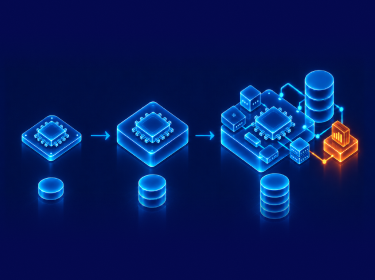
We develop and manage custom data solutions, powered by proven experts, to ensure the fastest delivery of structured data from sources of any size and complexity.
We offer:
- Custom Web Scraping & Development
- 15+ Years of Engineering Expertise
- AI-Driven Data Processing & Enrichment
What Changed About Picking a Scraping Partner in 2026
A year ago, most teams picked a scraping vendor based on speed and price. That still matters — and for a lot of teams, it’s still the right place to start. But some buyers now face regulatory and data quality pressure that didn’t exist when most of these contracts were signed.
The EU AI Act requires training datasets for high-risk AI to be documented, representative, and free of errors. Among web scraping companies in USA, the ones paying attention have already adjusted their pipelines.
If your scraping vendor can’t tell you which version of their extraction logic produced a specific record, you carry that risk. And if that data feeds an AI model, the risk has a price tag: Gartner estimates $12.9 million per year per enterprise in losses from poor data quality.
How We Picked These Eight
We looked at infrastructure architecture first — platform vs. framework vs. custom build. Then how deep the compliance tooling actually go (not what the sales deck says, but what ships with the product). Scaling speed from pilot to production mattered. So did control who owns the extraction logic and output schemas? And finally, whether the output plugs into a governed analytics pipeline without your team spending two weeks reformatting everything.
The list of web scraping services companies here is the same eight we covered in our infrastructure comparison. Same companies, different angle. That article goes deep on architecture. This one is built for the person making the vendor decision and needing a side-by-side before the next budget review.

The 7 Top Web Scraping Companies at a Glance
| Company | Type | Best For | Pricing |
| GroupBWT | Custom Infrastructure | Audit-ready pipelines, regulated industries | Project-based |
| Oxylabs | Full-Stack Platform | E-commerce data, SERP monitoring | Subscription + usage |
| Bright Data | Data Platform + IDE | Dataset marketplace, rapid prototyping | Subscription + per-result |
| Zyte | Managed Crawling | Anti-bot bypass, Scrapy teams | Subscription + usage |
| Apify | Developer Platform | Custom actors, serverless crawling | Usage-based |
| ScraperAPI | Proxy + Rendering API | Fast API-based extraction | Usage-based |
| Diffbot | Knowledge Graph API | ML-based entity extraction | Subscription |
The pattern across these web data scraping companies is hard to miss. The faster you get data, the less control you have over what metadata ships with it. Speed and governance pull in opposite directions, and every provider on this list made a design choice about which side to prioritize.

Also Read: eCommerce Data Scraping: Methods, Tools & Risk Strategy (2026)
Top Web Scraping Services Companies: The Full Breakdown
GroupBWT
We build scraping systems from scratch. Extraction logic, delivery pipelines, compliance tagging — all of it deployed inside the client’s cloud. No shared infrastructure. No multi-tenant platforms. If a source changes its page structure overnight, our schema-drift detection (automated monitoring that catches format changes before broken data reaches your pipeline) flags it before bad records get through.
Where it fits: If your legal team asks “can we prove how this record was collected?” and the answer needs to be yes, that’s our work. Finance and healthcare clients make up the bulk. Insurance is growing. We also work with AI teams whose training datasets need documented provenance under the EU AI Act. One insurance client cut their compliance audit prep from three weeks to two days after switching to our pipeline — that’s the kind of outcome we build for.
What makes it different: Every record carries metadata showing where it came from, what extraction logic produced it, and what the consent status was at collection time. We also tag each record by jurisdiction and enforce automatic expiration so stale data doesn’t sit in your pipeline past its legal shelf life. That provenance trail survives an audit years later — which means your team doesn’t spend weeks reconstructing how data was collected every time a regulator asks.
Where we’re slower: Time to first data runs in weeks, not hours. Initial investment is higher than any subscription on this list. If you need scraped data by Friday, we are the wrong call.
Oxylabs
Oxylabs grew from a proxy network into a full-stack scraping platform. Their Scraper APIs deliver parsed data from e-commerce and SERP sources. The residential proxy pool exceeds 100 million IPs, and they run KYC/KYB checks on proxy sourcing. Among top web scraping companies, Oxylabs is one of the most widely used platforms by US enterprises pulling high-volume structured data.
Where it fits: E-commerce pricing teams and SERP analysts pulling large volumes of structured data on recurring schedules.
What makes it different: The proxy network depth and API reliability are hard to match. The Web Scraper IDE allows visual extraction logic for teams who want configuration without code.
Where it falls short: Extraction logic lives on Oxylabs’ platform. Record-level audit metadata (lineage, consent state, selector versioning) requires your team to build and maintain those layers downstream.
Bright Data
Bright Data started as a proxy provider and kept building. Today the product includes a Web Scraper IDE, SERP APIs, and a marketplace selling pre-collected structured datasets for verticals like e-commerce and job listings. The IDE is visual, which means a product analyst can set up an extraction workflow without writing Python.
Where it fits: You have a new data source, you need structured output by end of week, and you don’t want to spin up a scraping project to get it. Or you just want to buy a ready-made dataset and skip the build entirely.
What makes it different: The dataset marketplace. Instead of building a scraper, you buy structured data. That makes Bright Data the fastest path from “we need data” to “we have data” on this list.
Where it falls short: Workflows and data live on Bright Data’s platform. Migration off-platform means re-engineering. Provenance for marketplace datasets depends on Bright Data’s internal processes, not your audit trail.
Zyte
Zyte used to be Scrapinghub — the company behind the Scrapy framework. They’ve since built a managed crawling layer on top: Scrapy Cloud for hosting and scaling your crawlers, plus Zyte API for automatic extraction when you’d rather not maintain parsing logic yourself. The anti-bot bypass tech is where they’ve invested the most.
Where it fits: Development teams already invested in Scrapy who want managed hosting and anti-ban technology without running their own infrastructure.
What makes it different: Anti-bot bypass. Zyte’s AI-powered extraction handles JavaScript rendering and bot detection more reliably than most developer frameworks for web data scraping companies in this tier.
Where it falls short: Governance and audit metadata sit outside Zyte’s scope. Your team owns the compliance layer.
Apify
Apify runs a serverless platform for web scrapers it calls “Actors.” Over 2,000 pre-built Actors sit on their marketplace. You can also deploy custom Node.js or Python scripts. The open-source Crawlee framework underpins the developer experience.
Where it fits: Technical teams building custom scrapers who want cloud execution, scheduling, and storage without managing servers.
What makes it different: Crawlee plus the Actor marketplace. You get full customization without touching a server. Developers tend to gravitate here because the open-source community around Apify is larger and more active than what you’ll find with other web scraping services companies in this tier.
Where it falls short: Enterprise compliance features are thin. Governance, lineage, and audit trails are your build, not theirs.
ScraperAPI
ScraperAPI does one thing well: send a URL, get rendered HTML back. Proxy rotation, CAPTCHA solving, JavaScript rendering — all handled behind a single endpoint. You don’t configure any of it.
Where it fits: Small teams or single-project setups where you need rendered web pages fast and don’t want to manage proxy lists.
What makes it different: Simplicity. One API call replaces proxy management, rendering, and anti-bot logic. Time to first data is minutes.
Where it falls short: Anything beyond single-page extraction — multi-step crawls, structured output parsing, complex logic — you’ll need other tools for. No compliance features at all.
Diffbot
Diffbot takes a different approach. Instead of CSS selectors or XPath rules, it uses machine learning to pull structured entities (articles, products, organizations, people) out of web pages. They also maintain their own Knowledge Graph with over 10 billion entities. Call it a scraper if you want; it’s really a Knowledge Graph API that happens to extract web data.
Where it fits: Competitive intelligence and lead enrichment teams that need structured entity data across diverse page layouts without maintaining selector logic.
What makes it different: ML-based extraction adapts when page layouts change. You don’t maintain selectors; Diffbot’s models adjust automatically.
Where it falls short: Less control over exactly what gets extracted. Pricing scales with API calls and can get expensive at volume. Data governance sits with you.
Three Architecture Models: What You Own After the Contract
All top web scraping companies fall into one of three architecture models. The model determines what you own after the contract is signed.
Full-stack platforms like Bright Data and Oxylabs get you data fast. They’ve built the proxy networks, the APIs, the visual IDEs — you rent all of it. The trade-off is that your extraction logic and your data live on their servers. Walk away and you’re rebuilding from scratch.
Developer frameworks like Zyte, Apify, ScraperAPI, and Diffbot give you control over code. You write the scraper; they run the compute. But governance, audit trails, and compliance metadata are your downstream problem.
Custom infrastructure is what we build at GroupBWT. Every component belongs to the client. The trade-off goes the other way: slower time to delivery, higher initial cost, full ownership of everything that touches the data.
| Factor | Full-Stack Platform | Developer Framework | Custom Infrastructure |
| Who owns the logic | Provider | You (code), provider (compute) | You, all of it |
| Deploy speed | Hours to days | Hours to days | Weeks |
| Compliance depth | Configurable | Manual (your build) | Embedded at extraction |
| Vendor lock-in | Medium | Low to medium | None |
| When it fits | You need volume fast | Your team writes scrapers | You need auditable data |
For top web scraping companies 2026, the architecture choice carries more weight than it did two years ago. EU AI Act documentation requirements and CCPA obligations made “compliance embedded vs. compliance bolted on” a real line item, not a nice-to-have. Ungoverned pipelines that were fine two years ago are now a budget risk for teams operating in regulated industries or building AI products.
What Scraping Actually Costs (Beyond the Invoice)
The subscription price is the wrong number to look at. What actually costs money: the compliance overhead your team absorbs after data lands, the engineering hours spent turning provider output into something a governed pipeline accepts, and the vendor lock-in tax you pay if you ever need to switch.
| Cost Factor | Platform (Oxylabs, Bright Data) | Framework (Apify, Zyte) | Custom (GroupBWT) |
| Initial spend | Medium (subscription) | Low to medium | High (scoping + engineering) |
| Time to first data | Hours to days | Hours to days | Weeks |
| Annual cost at scale | Moderate and predictable | Low upfront, variable | Higher upfront, drops over time |
| Compliance add-on | Medium (manual, downstream) | High (build from scratch) | Included in project scope |
| Vendor lock-in risk | Medium | Low to medium | None |
Platforms win on speed-to-value. Custom infrastructure wins on cost-per-audit-ready-record over a 12-month window. The real question is where the money hurts more — the upfront build or the downstream rework when your scraped data can’t pass an audit. Web scraping companies rarely show you the second number.
If you need data at scale this week, Bright Data or Oxylabs will deliver faster and cheaper. No question about it. If that data feeds AI models, touches regulated industries, or must survive a compliance review, custom infrastructure tends to pay for itself within the first year. If it doesn’t — a platform is likely the better call.
Picking the Right Partner
Your bottleneck tells you the answer.
Need raw volume and fast access? A full-stack platform handles that. Need custom extraction logic without managing servers? Developer framework territory. But if the bottleneck is trust — whether you can trace a record from source to output, prove which extraction logic produced it, and document consent state at collection — that’s a custom infrastructure problem. Platforms don’t solve it.
Here’s what web scraping companies won’t tell you in a sales call: no single model covers all three. Across the top web scraping companies 2026 brought to enterprise buyers’ attention, the right fit depends on which of those bottlenecks is costing you the most right now.
We do free architecture reviews. Web scraping companies USA enterprises rely on for regulated pipelines tend to offer this — it’s how both sides figure out scope before committing. If you’re unsure whether your current scraping setup will hold up under 2026–2027 compliance pressure, talk to our engineers and find out before your next audit does it for you.
Depends on what you’re solving. Among web scraping vendors serving enterprises, GroupBWT builds custom infrastructure with embedded compliance metadata, so if you’re in a regulated industry and auditors want to see how every record was collected, start there. Oxylabs and Bright Data run the most mature platforms for pulling high-volume structured data — e-commerce pricing, SERP monitoring, that kind of thing. Developers who want to write their own scrapers and just need somewhere to run them tend to pick Apify or Zyte.
It depends on what you’re scraping and how. The 2022 hiQ Labs v. LinkedIn ruling said scraping publicly available data doesn’t violate the Computer Fraud and Abuse Act — but that ruling is narrower than most summaries suggest. It doesn’t cover personal data (CCPA applies the moment you touch California residents’ information), it doesn’t override website terms of service (which courts have enforced separately), and it doesn’t address copyright claims. For enterprise teams, the practical move is to evaluate every source individually: check the ToS, document consent state at collection, and get legal sign-off before that data goes anywhere near an AI training pipeline. The EU AI Act adds its own documentation requirements on top of all of this.
ScraperAPI and similar API-based tools run $50 to $500 a month. That gets you proxy rotation and rendered pages. Oxylabs and Bright Data charge more — $1,000 to $10,000+ monthly depending on how much data you pull — because you’re getting a full platform behind it. Custom infrastructure is a different price conversation: GroupBWT projects start around $20,000 and scale with scope, since we’re building something you’ll own permanently. The number worth comparing across all three tiers is total cost of ownership, once you add compliance engineering and the risk of switching vendors later.
A scraping platform gives you managed proxies, APIs, and hosted crawlers on the provider’s servers. Custom scraping infrastructure gets built from scratch for your specific sources, your compliance requirements, and your delivery pipelines, then gets deployed in your own cloud. Most web scraping companies sell platforms. Custom builds give you the infrastructure itself. Custom is yours.
Start with provenance. Every record needs to carry its source URL, the extraction logic version that produced it, and whatever the consent state was at the time of collection. Then handle the opt-out layer: robots.txt, machine-readable terms of service, copyright flags. The EU AI Act made all of those non-optional for AI training data. After that, lifecycle management — setting expiration dates on records so stale data gets purged automatically, tagging each record by the jurisdiction it was collected in, and running re-consent checks so nothing sits in your pipeline past its legal shelf life. Only the custom infrastructure tier bakes all three into the extraction process from day one.
Read summarized version with
Data Engineering: From Raw Web to Data Product
We develop and manage custom data solutions, powered by proven experts, to ensure the fastest delivery of structured data from sources of any size and complexity.
We offer:
- Custom Web Scraping & Development
- 15+ Years of Engineering Expertise
- AI-Driven Data Processing & Enrichment