
Read summarized version with



Introduction
The US e-commerce market, $1.23 trillion, moved in 2025 alone, according to the US Census Bureau, 16.4% of all retail, growing 5.4% year over year. Behind every dollar sits a product listing on some marketplace or retailer site that the brand may not even know looks wrong. The problem isn’t the size of the market — it’s that no one inside your company can see what your product actually looks like across all of it.
Digital shelf monitoring is how you keep track of all of it. Your prices on Amazon, your stock status on Walmart, and whether your product images on a German retailer still match what you actually submitted last quarter. It covers search position and review scores, too. Imagine walking into every store that sells your product, every single day, and checking every shelf. That’s what this replaces.
Data Engineering: From Raw Web to Data Product
We develop and manage custom data solutions, powered by proven experts, to ensure the fastest delivery of structured data from sources of any size and complexity.
We offer:
- Custom Web Scraping & Development
- 15+ Years of Engineering Expertise
- AI-Driven Data Processing & Enrichment
The Introdustion to Digital Shelf Monitoring
Your product shows up in more places than you think. Amazon listings. Walmart product pages. Regional retailer sites you’ve never visited. Google Shopping results. TikTok Shop, maybe. The digital shelf is all of it — every online touchpoint where a shopper might find (or fail to find) your product. It means pulling data from those touchpoints repeatedly, whether that’s every hour or once a day.
What separates this from someone on your team spot-checking a few pages? Scale. A brand selling through 20 retailers might have 5,000 product pages live right now. Nobody is checking all of those manually. Not well, anyway.
Why Digital Shelf Monitoring Is Critical for Brands
98% of online shoppers read reviews before buying. That number alone should worry any brand manager who isn’t watching their ratings closely. Picture this: a competitor sits at 4.7 stars, you’re at 3.9 because a wave of negative reviews hit two weeks ago, and nobody caught it. That gap is costing you sales right now.
Then there’s visibility. First page of marketplace search? 75% more views than page two. And the difference between page one and page two can be something as fixable as a product title that doesn’t match what the retailer’s algorithm wants to see.

How Digital Shelf Monitoring Works
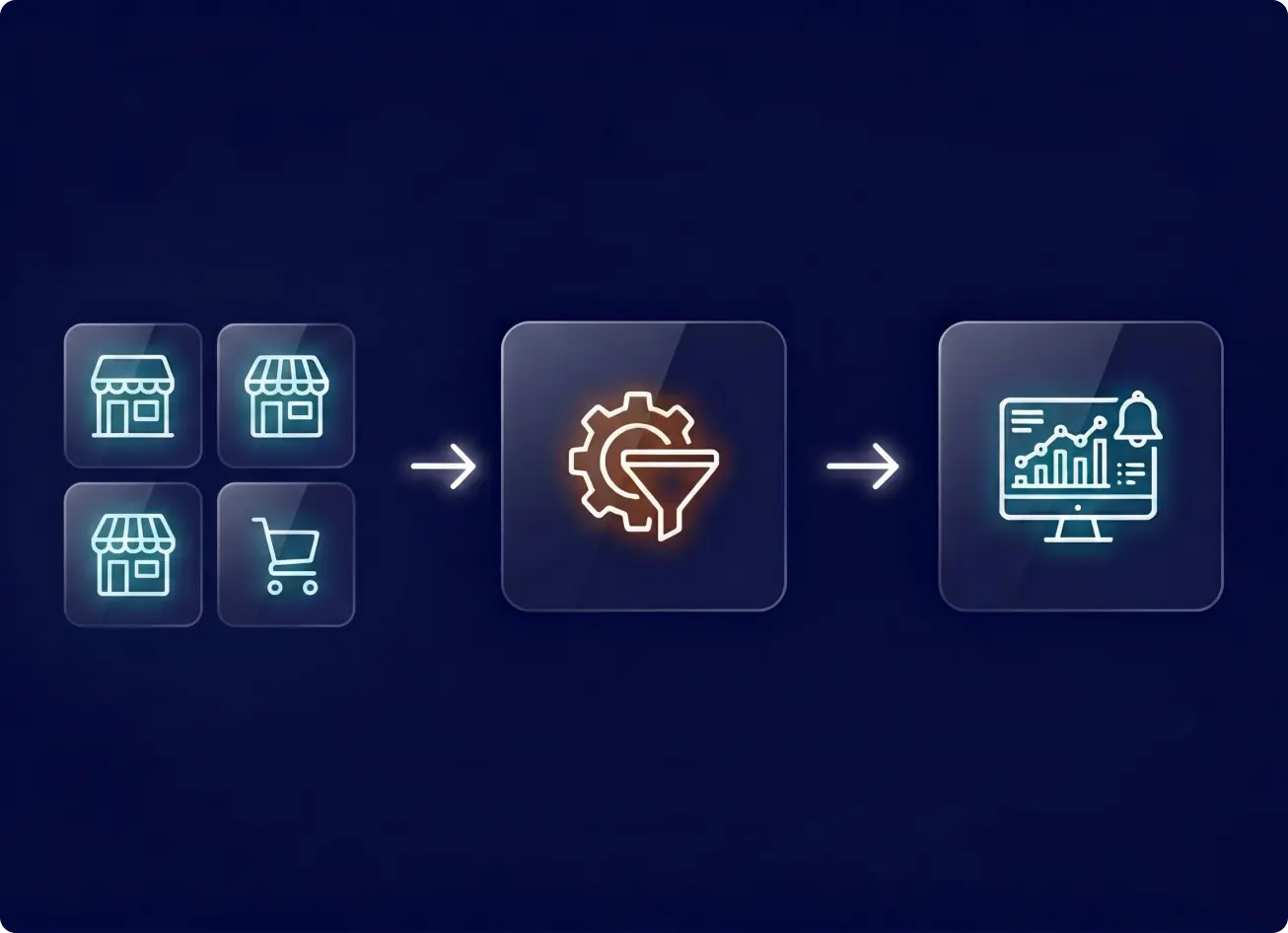
Simple idea, messy execution. You’re collecting data from dozens of online sources — sometimes hundreds — then cleaning it up and piping it into dashboards or business systems your team actually uses. The concept is straightforward, but every step below involves engineering trade-offs that get harder the more retailers and regions you cover.
Data Collection Across Marketplaces and Retailers
Nothing is standardized. Amazon identifies products by ASIN. Walmart uses its own item IDs. European marketplaces want EAN codes. Automated digital shelf monitoring systems have to juggle all of these, figure out that “Product X on Amazon DE” is the same item as “Product X on Amazon US,” and do it at scale across localized versions of each retailer.
That cross-platform matching alone is a significant data engineering challenge. But the real complexity comes from the platforms themselves. We ran a project collecting 959,000 product records per day from a single Korean marketplace. The platform’s security team updated their anti-bot protections every one to two weeks, which forced us through four complete architecture redesigns in 14 months just to keep the data flowing.
Tracking Product Listings and Availability
A product can be in stock in London and sold out in Manchester. Same retailer, same day. Monitoring picks up those location-level availability shifts and flags them before lost sales pile up — because out-of-stock on your best-selling SKU doesn’t just lose one order, it trains the customer to buy from someone else.
Monitoring Prices, Promotions, and Discounts
Prices on Amazon can change multiple times in a single day. For premium brands, the bigger headache is unauthorized discounts — sellers who slash prices without permission. We helped a global beautyа brand discover exactly this: unauthorized resellers across European channels were pricing their products 40% below recommended retail. By the time the brand found out through manual checks, the damage to their channel relationships had been building for months.
Collecting Reviews and Ratings
Star counts tell you something. But not enough. Are reviews trending negatively this week? Did a competitor suddenly get 200 five-star reviews that all read like they were machine-translated from Chinese? That’s the kind of signal review monitoring catches. We built a system for a consumer goods company that pulls 800,000+ reviews from over 50 platforms in five languages — and uses NLP to spot exactly those artificially translated competitor reviews.
Also Read: Web Scraping to Extract Customer Reviews | Tools, Methods, Compliance
Key Elements of Digital Shelf Monitoring
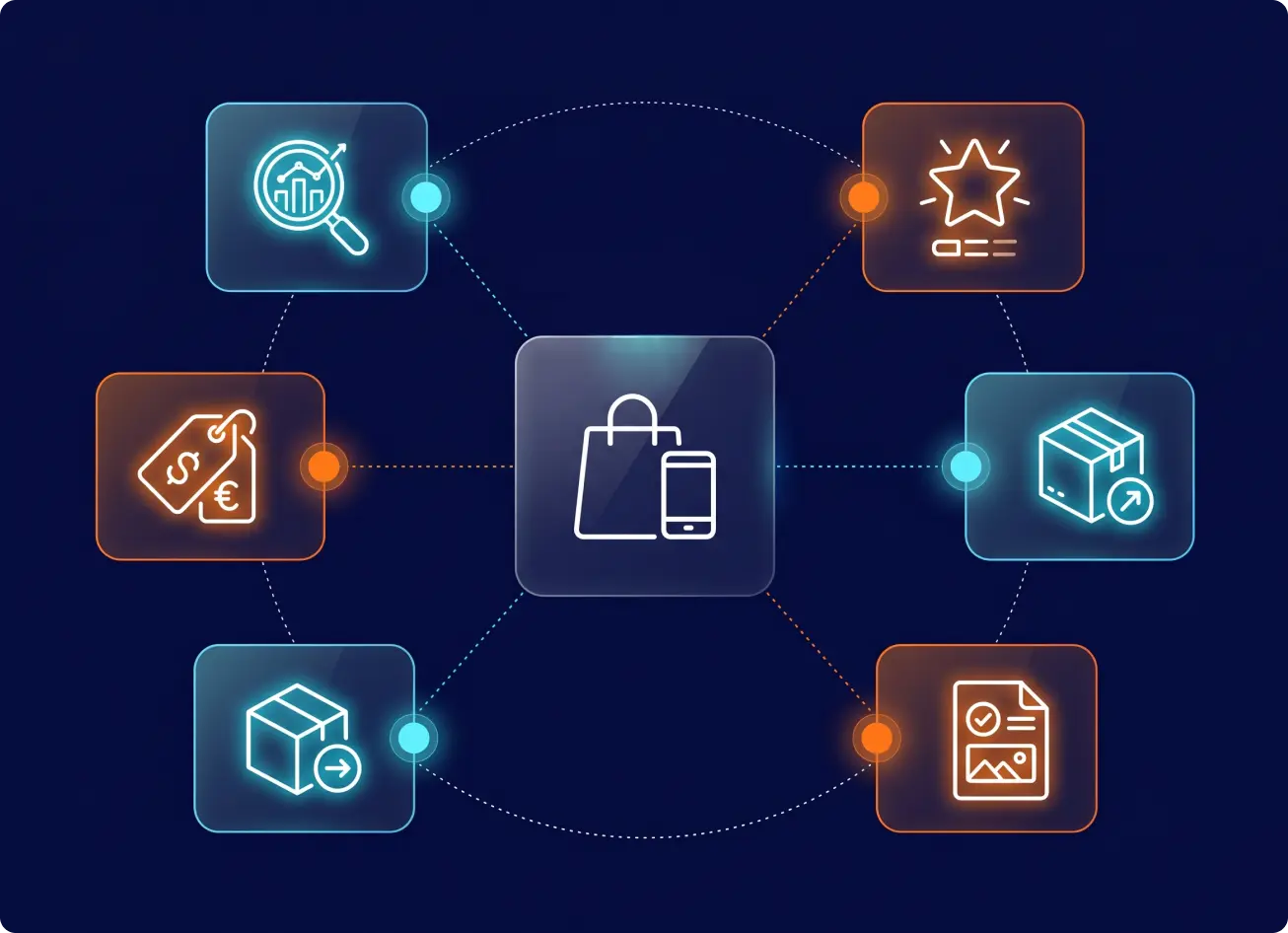
You can’t watch everything with the same intensity. Some signals need hourly checks; others, a weekly glance is fine. Pricing and stock availability are daily-to-hourly priorities — a missed MAP violation or a stockout on a top SKU costs real money within hours. Content quality and review trends can run on a weekly cadence, unless you’re in a launch window or a competitive category where things shift fast.
Product Visibility and Search Position Tracking
Eye-level shelf in a grocery store? That’s page one of the Amazon search. Page two might as well not exist. Share of search — the percentage of relevant queries where your product appears vs. competitors — is the metric that tells you whether you’re on that eye-level shelf or buried in the back.
Price and Promotion Monitoring
Fastest ROI of any monitoring element, hands down. The math is simple: catch an unauthorized discount in two hours instead of two weeks, and you’ve saved potentially tens of thousands in eroded margins. We run automated price tracking across 70+ retailers for one FMCG platform — MAP violations get flagged the same day they appear, not after a quarterly audit turns them up.
Stock Availability and Out-of-Stock Detection
Lose a sale once to out-of-stock? Annoying. Lose it repeatedly, and the marketplace algorithm starts burying your listing. The customer who switched to a competitor probably isn’t coming back either.
We built a grocery monitoring system that watches 110,000+ SKUs per location across 14 UK postal codes. National-level dashboards said everything was fine. The postal-code-level data told a completely different story — regional stockouts were invisible at the aggregate level.
Product Content and Listing Quality
Here’s something brands don’t expect: retailers change your content. They compress your carefully shot product images. They truncate descriptions to fit their template. A useful metric called Content Inclusion Score measures the gap between what you submitted and what the shopper actually sees on the page. Big gap? That’s where conversions leak.
Customer Reviews and Ratings Tracking
Five thousand reviews sounds impressive until you realize the most recent one is from six months ago. A competitor with 500 reviews — but 50 of them from the last week — looks far more trustworthy to the shopper scrolling through results right now.
Common Digital Shelf Monitoring Challenges
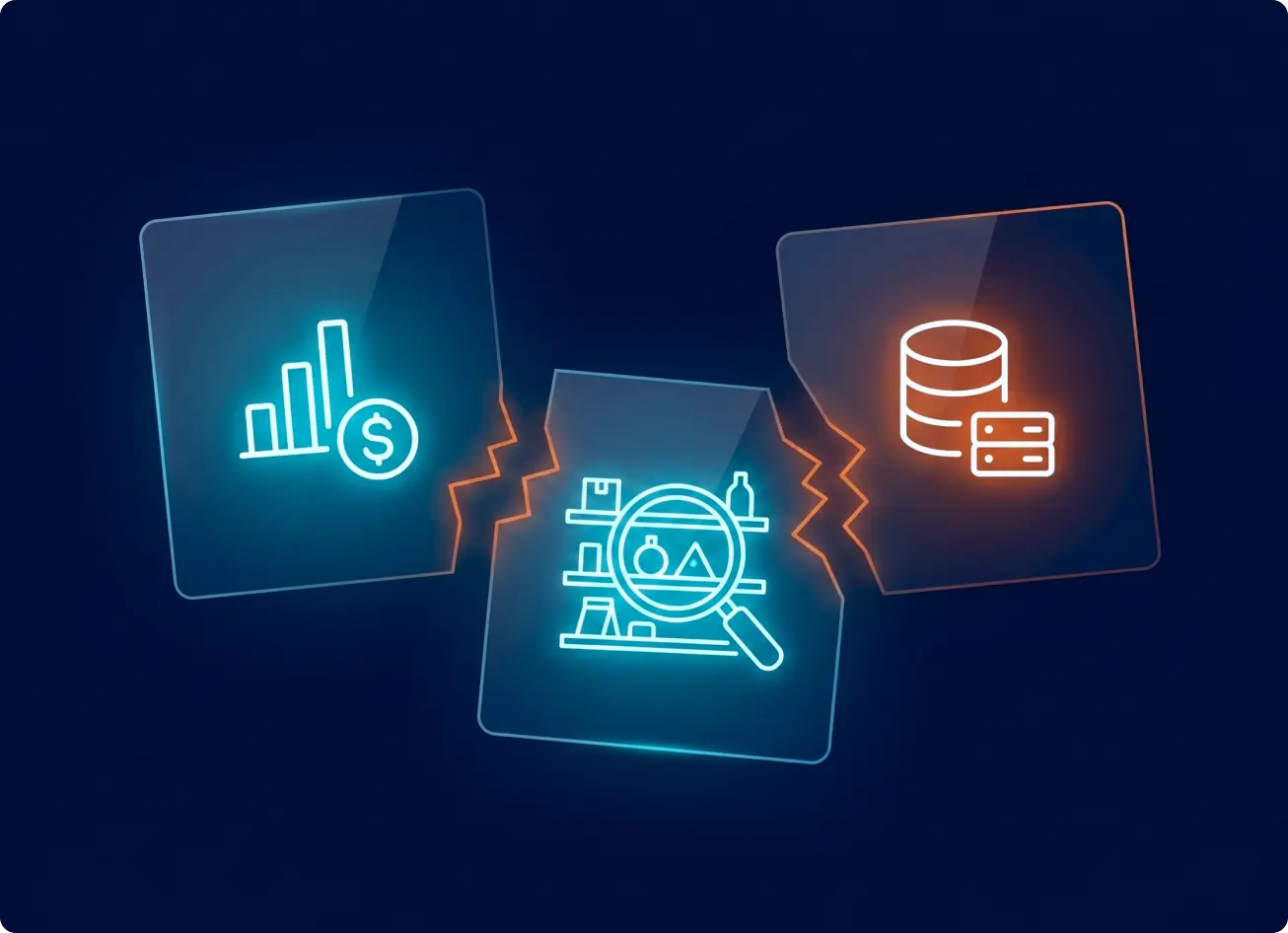
Fragmented Data Across Multiple Channels
According to Merkle/dentsu, 35% of organizations say integration gaps hold them back from acting on digital shelf signals. Not surprising when you consider what “integration” actually means here: Amazon sends data one way, Walmart another, a European marketplace might offer no API at all. Every source has different field names, different update schedules, and different ideas about what a “product ID” is. Getting a single coherent view out of that is real engineering, not a plug-and-play exercise.
Inconsistent Product Listings and SKUs
Same product, different ID on every platform. Without EAN, GTIN, or UPC matching, you’re comparing the wrong items — or missing listings entirely. We got one retail project to about 80% automatic matching through EAN codes, which sounds great until you realize the other 20% was all private label products that needed manual mapping. There’s no shortcut for that part.
Manual Tracking Limitations
Do the math. 500 SKUs across 15 retailers = 7,500 product pages. Every day. The spreadsheet approach works for a week, maybe two. Then someone goes on vacation, the intern misses a row, and suddenly you haven’t checked Walmart in three weeks.
Real-Time Monitoring Complexity
Amazon and Naver — South Korea’s dominant search and shopping platform, comparable to Google and Amazon combined for that market — both have dedicated security teams whose entire job is to stop automated data collection. They push updates every one to two weeks. A scraper that worked perfectly on Monday can break by Wednesday.
“People underestimate how adversarial this environment is. The marketplace is actively trying to block you. If your monitoring system can’t adapt within hours of a protection change, you’re flying blind until someone notices the data stopped flowing.”
— Oleg Boyko, COO at GroupBWT
Digital Shelf Monitoring vs Digital Shelf Analytics
These terms get used interchangeably. They shouldn’t.
Key Differences Between Monitoring and Analytics
| Aspect | Monitoring | Analytics |
| Core question | “What is happening?” | “Why, and what should we do?” |
| Focus | Data collection and tracking | Insight generation and action |
| Output | Dashboards, alerts, raw data feeds | Recommendations, predictions, automated actions |
| Example | “Price dropped 15% on Amazon UK.” | “Price drop correlates with competitor promotion; recommend matching offer on 3 SKUs.” |
Why Monitoring Alone Is Not Enough
Monitoring tells you what changed. “Price dropped 15% on Amazon UK.” Ok — but should you match it? Is it a flash sale that’ll end tomorrow, or a permanent repositioning? That’s where monitoring hits its ceiling.
According to business research insights, the digital shelf analytics market is projected to reach $4.48 billion by 2033, up from $1.68 billion in 2024 at a 12% CAGR. This is exactly the transition GroupBWT builds for clients: we start with a reliable monitoring pipeline — clean, high-frequency data collection across all target retailers — and then wire that data directly into repricing engines, supply chain alerts, and competitive dashboards that trigger action, not just reports. One manufacturer we worked with went from a weekly PDF report to real-time pricing adjustments across 70+ retailers within four months of that integration.
How Monitoring Data Powers Analytics
None of this works without clean, reliable monitoring data underneath. Stale price data? Your analytics engine will recommend matching a competitor’s price that changed two days ago. Incomplete stock signals? The demand forecast misses a regional pattern entirely. Monitoring is the foundation. Skip it, and analytics becomes expensive guesswork.
Tools and Technologies for Digital Shelf Monitoring
Web Scraping and Data Collection Tools
Most of this data comes from web scraping — automated programs that visit retailer pages and pull out structured product information. Ecommerce web scraping at this level requires more than basic scripts. Scrapy (Python) remains the workhorse framework for high-volume collection. But modern marketplaces render most content through JavaScript, which means headless browsers like Playwright and Puppeteer are no longer optional — they’re the baseline for any serious monitoring stack. On top of that, major retailers now deploy advanced bot detection that analyzes TLS fingerprints and browser signatures. Beating those protections requires anti-detect tooling that mimics real user sessions down to the cipher suite level. The gap between “works in a demo” and “works in production at scale” is where most teams get stuck.
Marketplace Monitoring Platforms
Profitero, DataWeave, and Salsify — these SaaS platforms give you a monitoring dashboard out of the box. If your retailers are mainstream and your data needs are standard, they’ll get you running quickly. Where they struggle: niche retailers that aren’t in their network, custom data fields the platform wasn’t designed to capture, or any situation where “one size fits all” doesn’t actually fit. That’s where dedicated retail scraping services close the gap.
Automation and Data Pipelines
At scale, automated digital shelf monitoring needs real infrastructure behind it. Job schedulers to orchestrate collection runs. Message queues to handle volume spikes. Error handling that doesn’t silently drop records. One client was spending $6,000 a month on proxies alone. After we redesigned the collection architecture around smart scheduling and targeted rotation, it dropped to $600. Same data, 10x less cost.
Cloud Infrastructure for Continuous Monitoring
Running a collection 24/7 is a cloud problem. AWS, GCP, or Azure — the specific platform matters less than the architecture. You need to scale up when hundreds of retailers update their catalogs overnight, then scale back down by morning. Kubernetes handles the orchestration for most production setups, spinning up parallel workers across retailers and regions, then tearing them down when the work’s done.
Use Cases of Digital Shelf Monitoring
| Use Case | Real-World Example | Scale |
| Price & promotion tracking | Weekly collection across 13+ European beauty retailers | 300K+ products/week |
| Competitive benchmarking | Daily monitoring of a Korean marketplace for coupon and pricing intelligence | 959K products/day |
| Review & ratings analysis | Cross-platform review aggregation with fake review detection via NLP | 800K+ reviews, 50+ platforms |
| Brand protection | Automated detection of unauthorized discounts below the suggested retail price | 40% average discount detected |
| Hyper-local assortment | Region-specific stock and pricing monitoring across postal codes | 110K SKUs/location, 14 locations |
| Dynamic pricing input | Hotel rate and availability monitoring across OTA channels | 335M records/month |
Benefits of Digital Shelf Monitoring for Businesses
Better Control Over Online Product Presence
When you can see every product page across every channel, problems don’t hide. Missing images, wrong prices, outdated descriptions — all of it surfaces before customers notice.
Faster Reaction to Market Changes
One enterprise monitoring system we built grew from processing 500 products per hour to 130,000 products per hour over 14 months. That 260x improvement in throughput meant competitive price changes that used to take 24 hours to detect were caught within minutes.
“Speed of detection is the whole game. A competitor drops prices on a Friday evening, expecting you won’t notice until Monday. If your monitoring catches it in an hour, you get the weekend to decide how to respond instead of losing three days of sales.”
— Alex Yudin, Head of Data Engineering of GroupBWT
Improved Customer Experience
The bar for a decent shopping experience is deceptively low: Is the listing accurate? Is the price right? Is the product actually in stock? Miss any one of those, and the customer notices immediately. Consistent monitoring is how you make sure the basics stay basic across every single channel.
Stronger Brand Consistency
Your product page on Amazon says one thing. Walmart says another. A regional retailer in France has product images from two years ago. Customers notice. Monitoring catches these inconsistencies so your brand tells the same story everywhere — which, frankly, is harder than it sounds when you’re on 30+ sites.
Best Practices for Effective Digital Shelf Monitoring
Define Key Metrics to Track
Trying to monitor everything from day one is a recipe for alert fatigue. Pick the metrics that hit revenue hardest: price compliance on your core SKUs, stock availability on the top 20% that drive 80% of sales, and search position for the keywords that actually convert.
Automate Data Collection
Manual checks always have gaps. Someone’s on PTO, a retailer gets skipped, a new marketplace launches, and nobody adds it to the spreadsheet. Automated digital shelf monitoring doesn’t have bad weeks. It runs on schedule, covers every channel, and catches the changes that slip past human reviewers. The setup takes effort upfront — but after that, it just runs.
Ensure Data Accuracy and Consistency
“Data accuracy is not a feature — it’s the entire point. We’ve seen clients make pricing decisions based on stale competitor data. They were reacting to prices that changed two days ago. The cost of inaccurate monitoring is worse than no monitoring at all.”
— Alex Yudin, Head of Data Engineering of GroupBWT
Integrate Monitoring with Business Workflows
A dashboard nobody opens is just an expensive screensaver. The real value shows up when monitoring data plugs directly into the tools your team already uses: out-of-stock alerts in Slack, competitor price changes feeding your repricing engine automatically, stock signals reaching the supply chain team before they have to ask.
How Digital Shelf Monitoring Supports E-commerce Growth
Improving Product Visibility
One of our FMCG clients discovered that 12% of their top-selling SKUs had dropped off the first page of Amazon search — not because of competition, but because a backend keyword field had been silently truncated during a catalog update. Our monitoring system caught the drop within 48 hours. Without it, the team wouldn’t have noticed until the next quarterly business review, and the estimated revenue impact was north of $200K per month in lost organic visibility across those SKUs alone.
Reducing Lost Sales Opportunities
Forrester’s 2025 digital commerce predictions put it bluntly: there’s a “fundamental disconnect” between how ready buyers are to shop digitally and how well most brands actually deliver on that expectation. Monitoring won’t fix everything, but it does close the most obvious gap — making sure products are actually findable, priced correctly, and in stock when the buyer is ready to click “add to cart.”
Enhancing Competitive Positioning
Most competitive intelligence still runs on quarterly reports. Imagine instead: you see a competitor drop prices on 50 SKUs across three retailers on a Tuesday morning. By Tuesday afternoon, you’ve already decided which ones to match and which to ignore. That’s the difference between monitoring-powered CI and the old way of doing it. Reliable competitor price scraping is what makes that kind of speed possible.
When to Move from Monitoring to Digital Shelf Analytics
Signs Your Business Needs Analytics
If your team is collecting data but still running pricing and assortment calls out of spreadsheets, that’s a sign you’ve hit the ceiling of pure monitoring. Your team spending more time pulling reports than acting on them? That’s a tell. Same goes for tracking 10,000+ SKUs across five or more channels — at that volume, eyes-on-data just doesn’t scale.
From Data Collection to Insights
The jump from monitoring to analytics means adding a layer that interprets the data. Trend detection, anomaly scoring, competitive positioning models — these turn raw signals into “do this now” recommendations.
Building a Data-Driven E-commerce Strategy
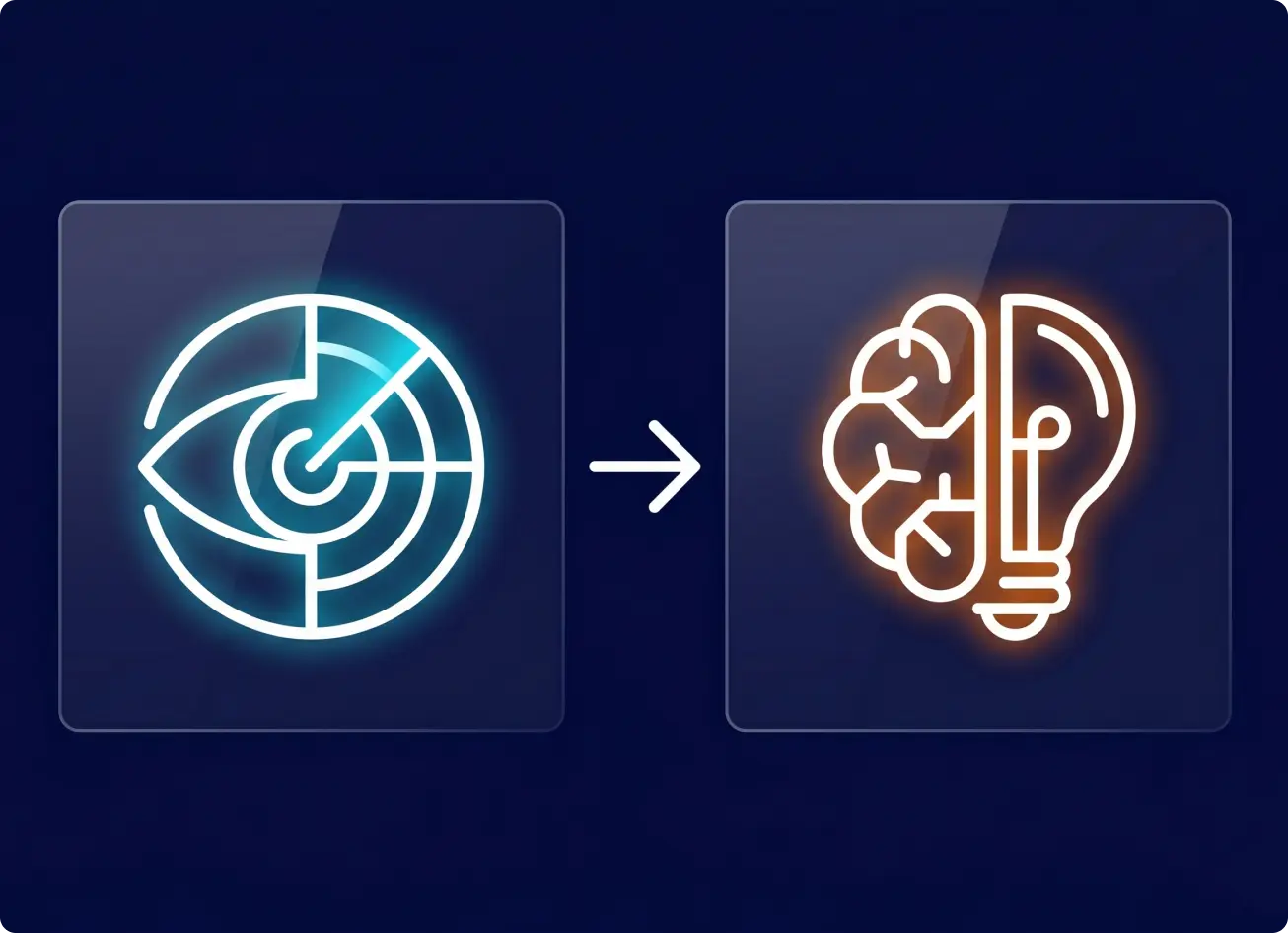
Monitoring gives you eyes. Analytics gives you judgment. The brands that win in e-commerce treat monitoring as the data foundation and analytics as the decision engine built on top. Start with reliable monitoring. Add analytics when the volume and complexity of your data outgrow manual interpretation. If you’re at that inflection point — collecting data but struggling to act on it fast enough — talk to GroupBWT’s team about building the monitoring-to-analytics pipeline that fits your retailer mix and SKU volume.
The brands winning in e-commerce run their shelf monitoring every day, automated, no gaps. The occasional spot-check doesn’t cut it anymore. AI-driven shopping assistants are already pulling product data on their own, comparing options for buyers without a human in the loop. Sloppy listings and stale prices get punished faster than they used to.
Start with monitoring. Get that foundation solid. Analytics comes after — when you’ve got enough data flowing that you need a system to make sense of it all.
SaaS platforms like Profitero or DataWeave typically run $3,000–$15,000/month, depending on SKU count and retailer coverage. A custom-built system has a higher upfront investment — engineering, infrastructure, proxy costs — but the per-unit economics improve fast at scale. One of our clients cut ongoing monitoring costs by 10x after moving from a SaaS tool to a custom pipeline because they needed coverage on niche retailers that the platform simply didn’t support.
Yes, and it’s often where the ROI is clearest. Fewer channels means you can monitor more deeply — hourly price checks, postal-code-level stock tracking, full content audits — rather than spreading thin across dozens of retailers with daily snapshots. Brands with 2–3 key channels often catch issues faster because the signal-to-noise ratio is much better.
It depends on your architecture. If you’re running a single scraping approach with no fallback, a block means data goes dark until someone fixes it manually — which can take days. Production-grade systems rotate between multiple collection strategies: headless browsers, API endpoints where available, and anti-detect tooling that adapts to new protections within hours. The question isn’t whether you’ll get blocked — it’s how quickly you recover.
For stable categories with predictable competitive dynamics, automated repricing fed by monitoring data works well — but set guardrails. Set guardrails: price floors so the system can’t go below your minimum, maximum discount caps, rules that exclude certain competitors from triggering automatic adjustments. That keeps the automation from overreacting to a flash sale or a pricing glitch. If you sell premium or MAP-sensitive products, add a human approval step for any price change above a set dollar threshold. It’s slower, but it’s the safer call.
This is one of the toughest problems in the whole monitoring pipeline. No universal product code means you’re stitching matches together from fuzzy title comparisons, image similarity checks, and attribute lookups — weight, volume, pack size, that kind of thing. On a good catalog, you’ll get 70–80% of matches automated. The rest? Manual mapping, or a rules engine you’ve trained on your specific product set. No tutorial or shortcut exists for that remaining 20–30%. But the good news: once you’ve built the mapping, it carries over to every future monitoring run.
Read summarized version with
Data Engineering: From Raw Web to Data Product
We develop and manage custom data solutions, powered by proven experts, to ensure the fastest delivery of structured data from sources of any size and complexity.
We offer:
- Custom Web Scraping & Development
- 15+ Years of Engineering Expertise
- AI-Driven Data Processing & Enrichment