

AI
AI Chatbot for Business: How Intelligent Automation Drives Growth Across Industries
An AI chatbot for business understands customer questions, retrieves accurate information from your data, and takes action — processes a...

Your competitors changed their prices this morning. Some of them did it twice. GroupBWT builds the data pipelines that let you see those changes as they happen, not in a spreadsheet someone updates on Thursday. We collect pricing data from the sources that matter to your business, clean it, and put it where your team actually works.


software engineers
years industry experience
working with clients having
clients served





Price monitoring spans a wide range — from tracking what competitors charge daily to enforcing MAP policies across entire reseller networks.
What separates a system that just collects numbers from one that actually drives decisions? It comes down to match accuracy, how quickly data reaches your team, and whether the whole thing still holds up when your market gets volatile.
Competitor Tracking
Watching what competitors charge across your product overlap. Some clients run hourly checks. Others need updates every 15 minutes, or even near-real-time feeds. How often depends on how fast your market moves.
MAP Monitoring
Minimum Advertised Price compliance tracking across reseller networks. If a reseller drops below your MAP, you'll know about it — along with where, when, and by how much. Keeps your brand pricing consistent without manual audits.
Dynamic Repricing
These are real-time decision engines that adjust your prices based on live market data. Amazon, for example, changes its prices roughly every 10 minutes. That kind of responsiveness doesn't happen without serious infrastructure behind it.
Promotional Tracking
Catching temporary price drops and flash sales across competitor channels before your team misses the window to respond. Feeds directly into your own promotional planning and counter-positioning.
E-commerce Repricing
Flags overpriced SKUs relative to Amazon, Walmart, and other marketplace listings. Helps you maintain competitive positioning across thousands of products at once — without anyone checking prices by hand.
Telecom Tariff Tracking
Monitoring of tariff changes across 50+ carrier websites in multiple countries. Captures plan variations, contract terms, and promotional rates as they shift.
Hotel Rate Parity
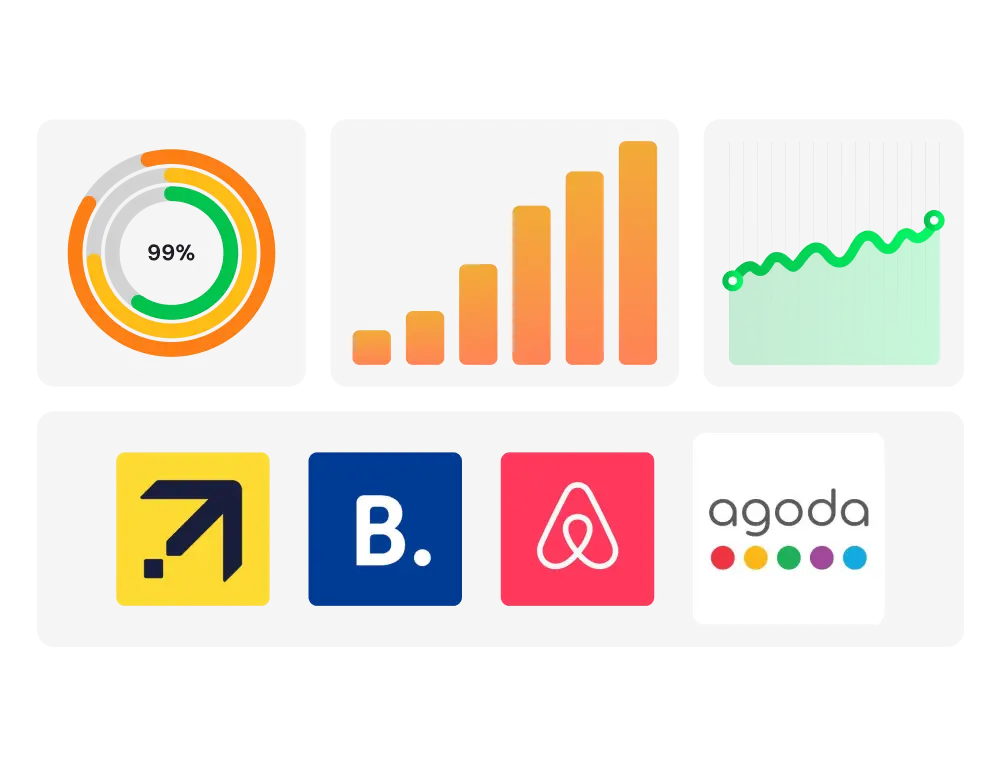
OTA rate monitoring to maintain price parity across Booking.com, Expedia, Airbnb, and direct booking channels for hotel chains and travel properties.
Procurement Intelligence
Supplier pricing comparison across regions and product categories. Tells you when to buy and gives you the numbers you need to renegotiate contracts.
The businesses reaching out to us typically hit one of these four walls. Each one represents a measurable risk to margin, market share, or team capacity.
Manual Tracking Doesn’t Scale
Spreadsheets work for 20 products and 3 competitors. They fall apart at 200 products and 15 sources. Someone spends hours updating the sheet, and by the time they’re done, half the numbers are already wrong. Our clients swap that out for automated pipelines. Minutes instead of days. Structured data instead of guesswork.
Pricing Errors Compound Fast
Cloud-based price monitoring users reduced pricing errors by 22% annually. One bad data point is all it takes. It triggers a repricing decision, the margin disappears on a top seller, and nobody notices until the weekly review. Automated validation catches that before it reaches your team.
Competitors Already Have This Infrastructure
If you’re not adjusting prices based on live data, competitors who are will set the pace in your category. The businesses investing in competitor price monitoring services are the ones defining market pricing, not reacting to it.
Speed Defines the Margin
About nine out of ten shoppers will compare prices before they commit to a purchase. They do it in seconds. Your pricing team? Days. That gap is where revenue leaks. Automated price monitoring services close it.


Get a Custom Price Monitoring Solution Built for Your Team
Same goal every time — eliminate manual work and deliver clean data fast. But the setup is never the same. We match sources, update cadence, and output format to how your team already works, so pricing data lands exactly where it’s needed.


Real-Time Data Collection
Crawlers pull pricing data on your schedule. Set the cadence to every 15 minutes, hourly, or daily — the infrastructure won’t flinch. It runs at whatever frequency you need, and nobody on your team has to babysit it.

Automated Extraction at Scale
Pages that rely on JavaScript rendering, CAPTCHA gates, geo-blocks — the extraction layer works through all of it. We’re talking 50,000+ pages. If something breaks mid-crawl, retry logic picks it up before your team even notices there was a problem.

Data Normalization & Matching
One source shows tax-inclusive pricing, another shows exclusive. Currencies differ. Product descriptions don’t match up. The pipeline sorts all of that out and standardizes the data before it ever hits your dashboard or pricing engine.

Historical Price Tracking
Every price point we collect gets stored. After a few months of collection, you’re sitting on a dataset rich enough to spot seasonal patterns. Run trend analysis on it. Feed it into demand forecasting models. It covers your full catalog.

Custom Dashboards & Reporting
Works with Tableau, Power BI, Looker — really, whatever BI platform your team already has in place. You pick the metrics. Dashboards refresh on their own. Nobody copies numbers between systems.

API Integration
Structured pricing data flows out through REST APIs, straight into your ERP, your e-commerce platform, or your repricing engine. The format matches what your internal systems already expect — no translation layer needed.
01
Source Mapping & Collection
Every target source gets mapped: which URLs to monitor, how often, what data points to extract. Custom crawlers are built for each source. What works on Amazon won’t work on a regional marketplace in Germany.
02
Price Extraction & Structuring
We pull prices from raw HTML, JavaScript-rendered pages, even images via OCR when that’s what it takes. Everything gets organized into the same fields: product name, current price, currency, stock status, seller, and timestamp.
03
Aggregation & Validation
Everything funnels into one pipeline. Duplicates get merged, sources get cross-checked. Something looks off? A $2 listing for a product that normally costs $200 gets flagged automatically, not after someone spots it by accident.
04
Processing & Data Delivery
Validated data triggers the rules you define: margin alerts, competitor promotions, and MAP violations. Clean, structured pricing data reaches your team via API endpoints or dashboards — built for your workflow.
Track what competitors charge, spot the changes that matter, and use real data to price smarter across every channel.
Multi-Channel Price Tracking
We pull live pricing from Amazon, Walmart, Shopify stores, and DTC sites — all into one searchable database.
Smart Product Matching
Same item, six different listings. Our engine cross-references names, attributes, and identifiers. First-pass accuracy tops 96%.
Alerts That Actually Matter
Set threshold rules by product or margin impact. Only meaningful price shifts trigger Slack, email, or SMS notifications.
Competitive Benchmarking
Interactive dashboards show who undercuts you, how often, and whether it's seasonal. Months of data, not guesswork.







What Our Clients Say

What do you like best?
Their deep understanding of our needs and how to craft a solution that provides more opportunities for managing our data. Their data solution, enhanced with AI features, allows us to easily manage diverse data sources and quickly get actionable insights from data.
What do you dislike?
It took some time to align the a multi-source data scraping platform functionality with our specific workflows. But we quickly adapted and the final result fully met our requirements.

What do you like best?
It was incredible how they could build precisely what we wanted. They were genuine experts in data scraping; project management was also great, and each phase of the project was on time, with quick feedback.
What do you dislike?
We have no comments on the work performed.

What do you like best?
GroupBWT is the preferred choice for competitive intelligence through complex data extraction. Their approach, technical skills, and customization options make them valuable partners. Nevertheless, be prepared to invest time in initial solution development.
What do you dislike?
GroupBWT provided us with a solution to collect real-time data on competitor micro-mobility services so we could monitor vehicle availability and locations. This data has given us a clear view of the market in specific areas, allowing us to refine our operational strategy and stay competitive.

What do you like best?
The company's dedication to understanding our needs for collecting competitor data was exemplary. Their methodology for extracting complex data sets was methodical and precise. What impressed me most was their adaptability and collaboration with our team, ensuring the data was relevant and actionable for our market analysis.
What do you dislike?
Finding a downside is challenging, as they consistently met our expectations and provided timely updates. If anything, I would have appreciated an even more detailed roadmap at the project's outset. However, this didn't hamper our overall experience.

What do you like best?
GroupBWT excels at providing tailored data scraping solutions perfectly suited to our specific needs for competitor analysis and market research. The flexibility of the platform they created allows us to track a wide range of data, from price changes to product modifications and customer reviews, making it a great fit for our needs. This high level of personalization delivers timely, valuable insights that enable us to stay competitive and make proactive decisions
What do you dislike?
Given the complexity and customization of our project, we later decided that we needed a few additional sources after the project had started.
What do you like best?
What we liked most was how GroupBWT created a flexible system that efficiently handles large amounts of data. Their innovative technology and expertise helped us quickly understand market trends and make smarter decisions
What do you dislike?
The entire process was easy and fast, so there were no downsides
What do you like best?
Their deep understanding of our needs and how to craft a solution that provides more opportunities for managing our data. Their data solution, enhanced with AI features, allows us to easily manage diverse data sources and quickly get actionable insights from data.
What do you dislike?
It took some time to align the a multi-source data scraping platform functionality with our specific workflows. But we quickly adapted and the final result fully met our requirements.
What do you like best?
It was incredible how they could build precisely what we wanted. They were genuine experts in data scraping; project management was also great, and each phase of the project was on time, with quick feedback.
What do you dislike?
We have no comments on the work performed.
What do you like best?
GroupBWT is the preferred choice for competitive intelligence through complex data extraction. Their approach, technical skills, and customization options make them valuable partners. Nevertheless, be prepared to invest time in initial solution development.
What do you dislike?
GroupBWT provided us with a solution to collect real-time data on competitor micro-mobility services so we could monitor vehicle availability and locations. This data has given us a clear view of the market in specific areas, allowing us to refine our operational strategy and stay competitive.
What do you like best?
The company's dedication to understanding our needs for collecting competitor data was exemplary. Their methodology for extracting complex data sets was methodical and precise. What impressed me most was their adaptability and collaboration with our team, ensuring the data was relevant and actionable for our market analysis.
What do you dislike?
Finding a downside is challenging, as they consistently met our expectations and provided timely updates. If anything, I would have appreciated an even more detailed roadmap at the project's outset. However, this didn't hamper our overall experience.
What do you like best?
GroupBWT excels at providing tailored data scraping solutions perfectly suited to our specific needs for competitor analysis and market research. The flexibility of the platform they created allows us to track a wide range of data, from price changes to product modifications and customer reviews, making it a great fit for our needs. This high level of personalization delivers timely, valuable insights that enable us to stay competitive and make proactive decisions
What do you dislike?
Given the complexity and customization of our project, we later decided that we needed a few additional sources after the project had started.
What do you like best?
What we liked most was how GroupBWT created a flexible system that efficiently handles large amounts of data. Their innovative technology and expertise helped us quickly understand market trends and make smarter decisions
What do you dislike?
The entire process was easy and fast, so there were no downsides


How does competitor price monitoring work?
Crawlers visit competitor websites and marketplaces on a schedule you set. They pull prices, availability, shipping costs, and seller info. All of that gets standardized into a consistent format. Then the system matches those products against your own catalog — so you can pull up a side-by-side comparison in a dashboard or query the data through an API. After initial setup, it runs without manual intervention. Validation layers flag anything that looks off before your team sees it.
What are the business benefits of price monitoring solutions?
They show up in three places: speed, coverage, and margin. Pricing decisions that used to take five days happen in hours. Catalog optimization scales from a hundred products to ten thousand. The bigger shift, though, is strategic. Your team stops reacting to competitor moves after the fact and starts planning around patterns they can actually see in the data. That’s where the real ROI shows up — in the compound effect on revenue, margin, and how efficiently your pricing team operates.
How does automated monitoring improve revenue compared to manual tracking?
Manual tracking caps you at maybe a hundred products. Automation scales that to ten thousand. The real return is coverage: more of your catalog is actively earning at any given moment, because decisions happen faster and are based on accurate numbers, not last week’s export.
How accurate is scraped pricing data?
Well-engineered systems achieve 95–99% accuracy on direct price extraction. Product matching ranges from 90–99% depending on catalog standardization. Factors like anti-scraping measures, dynamically loaded content, and geo-targeted pricing affect accuracy — each addressed through targeted engineering like headless rendering, proxy rotation, and multi-layer matching logic.
How long does it take to deploy a price monitoring system?
Standard deployments go live in 2–3 days. Complex setups with multiple data sources, custom matching logic, and BI integrations take 1–2 weeks. Phased rollouts are common for enterprise clients — starting with core sources and expanding coverage over time.
Can price monitoring integrate with existing business tools?
That’s how we build every deployment. REST APIs send data to your ERP, e-commerce platform, or repricing engine. We have connectors for Tableau, Power BI, Looker, and the other major BI tools. Alerts reach your team through Slack, email, SMS, or webhooks — whatever channel they’re already watching. The point is your team never copies data between systems.
What makes custom price monitoring better than SaaS tools?
SaaS works for standard use cases. Custom becomes necessary when you have non-standard sources, unusual data formats, complex matching logic, or proprietary integrations. A custom system adapts to your workflow instead of forcing your team to adapt to the tool. It also eliminates per-seat licensing — you pay for exactly what you need.


How can we help you?

We’ll review your goals and suggest the right solution — technical, scalable, and tailored to you.
What do you need extracted, structured, or automated?