
The Client Story
An EU-based travel startup was building an AI platform that scores cities across safety, gastronomy, transport, culture, and accommodation — pulling from thousands of reviews and local data points. The platform’s core engine, the Trend Machine (an AI scoring system that aggregates and ranks city data), needed continuous data from multiple sources to generate these scores.
The problem: nearly every conventional source was closed or overpriced. Two dominant OTA platforms rejected the startup’s API applications within the same week. The founders needed a team that could build the entire data acquisition layer without relying on any provider’s permission
| Industry: | OTA (Travel) |
|---|---|
| Year: | 2025 |
| Location: | EU |
"We evaluated three agencies. Two proposed workarounds still depended on API access. GroupBWT was the only team willing to build the data layer from scratch — no API dependencies, no waiting for approvals that might never come." — Co-Founder of travel startup
"The data layer became our competitive advantage. When competitors rely on one API provider, they're one policy change away from losing everything." — CEO of travel startup
The Challenge: Closed APIs and Anti-Bot Defenses
The Trend Machine needed fresh reviews, ratings, and local data — and almost none were available through conventional integrations.
No accommodation data. The two largest OTA platforms rejected the startup’s API applications, eliminating the accommodation layer.
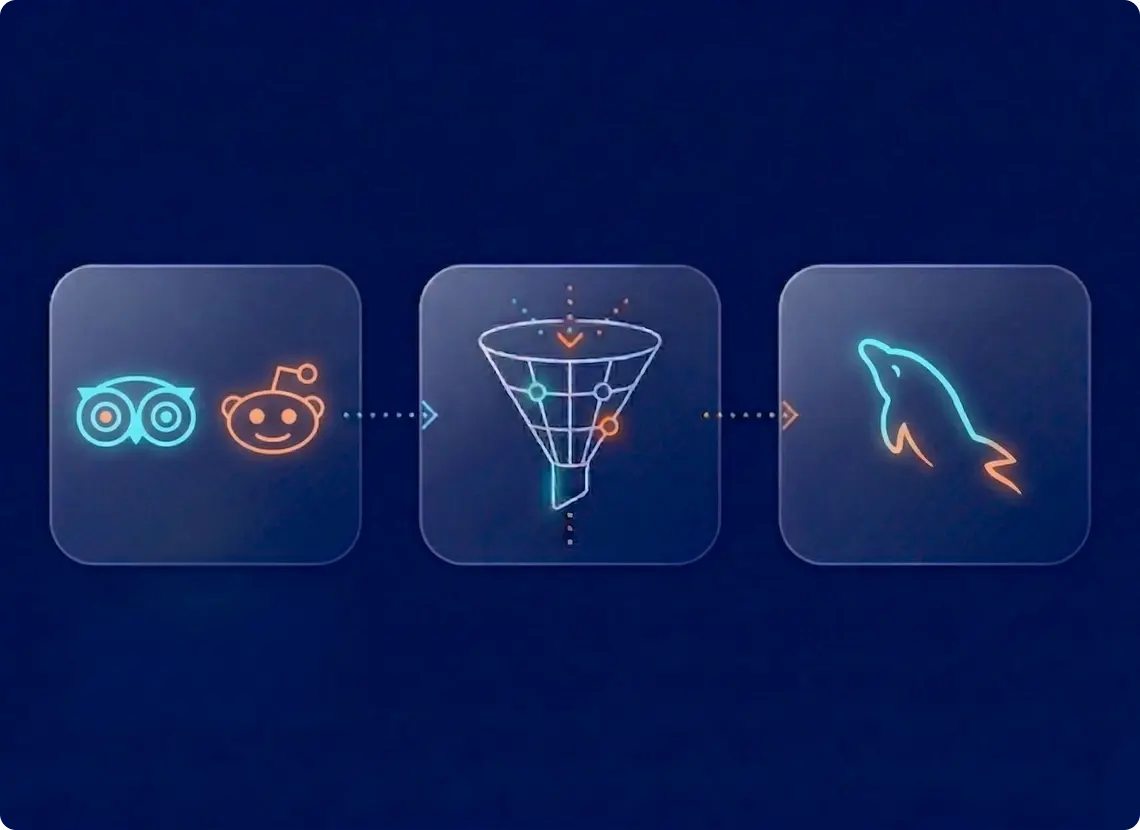
Rate-limited and overpriced social platforms. Reddit, X (Twitter), and travel forums — the richest sources of traveler opinions — were either behind costly API tiers or rate-limited on free access.
Anti-bot defenses. TripAdvisor, TasteAtlas, Numbeo, and TomTom had no public APIs. Their page structures changed frequently, breaking scrapers within weeks.
Freshness vs. cost. Daily updates across all categories would burn through proxy budgets. The pipeline needed a tiered refresh — frequent for fast-changing UGC, infrequent for stable indices.
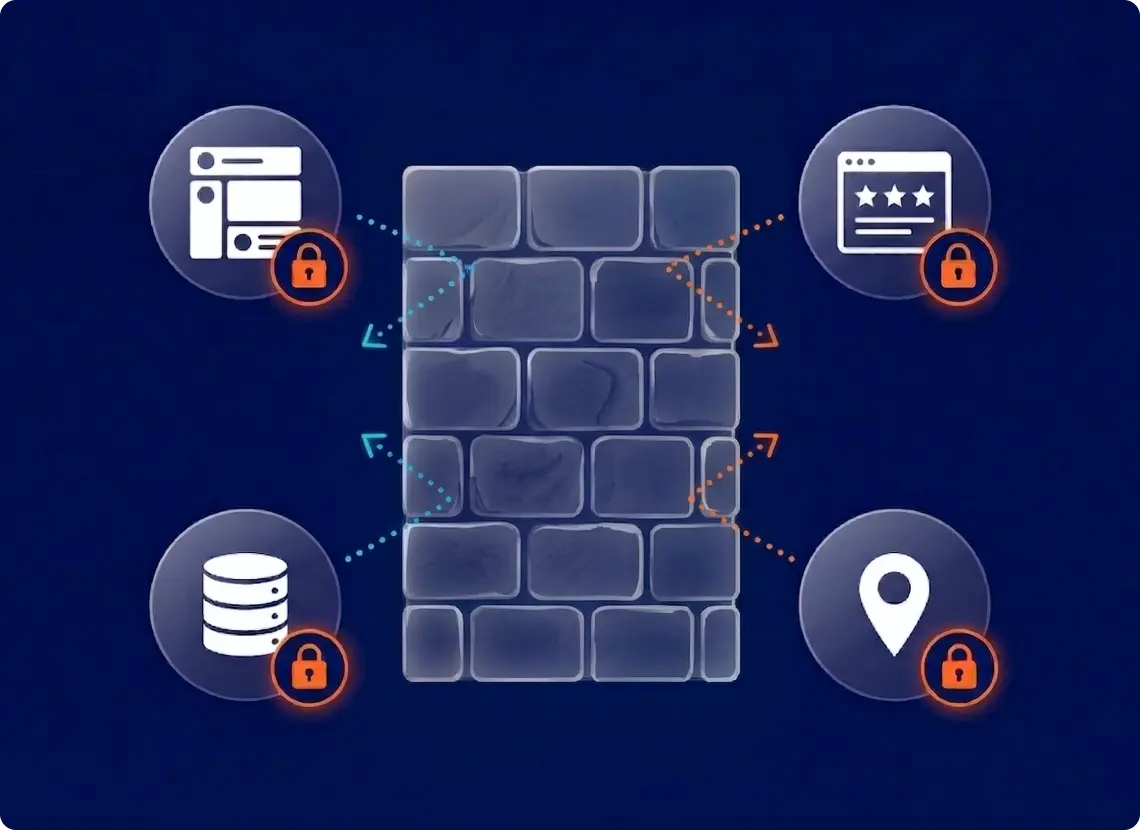
Multi-Source Scraping Without API Dependencies
Accommodation data without custom scrapers. Instead of building and maintaining scrapers against weekly anti-bot updates, we integrated a third-party module that pulls static listing data (photos, descriptions, amenities) per city — covering the accommodation layer without the overhead of real-time pricing scrapes.
Tiered API strategy for social platforms. The startup chose Twitter’s Basic API plan over the Pro tier, reducing social data costs by ~96%. We supplemented coverage with free-tier scraping from Reddit and travel forums.
Rotating proxies for protected sources. For sites with anti-bot defenses, we integrated a rotating proxy infrastructure. Where possible, we targeted structured data endpoints that returned JSON; for other sources, we required HTML parsing — each scraper was tailored to the source’s specific access pattern.
Tiered refresh scheduling. Stable indices (crime rates, airport connectivity) refresh quarterly. User-generated content runs on continuous incremental schedules. This kept the Trend Machine current without overrunning costs.
Tech Stack: Python 3.12 · Rotating proxies · Aurora MySQL · ElastiCache Redis
Scraping systems don't fail because the code is bad. They fail because the architecture doesn't account for how platforms change. We built this one to hold.

From API Lockout to Autonomous Data Pipeline
The system launched with 7 production scrapers feeding the Trend Machine across 30+ European cities.
~96% lower social data costs. The startup chose Twitter’s Basic API tier over Pro, and GroupBWT supplemented the reduced coverage with free-tier scraping from Reddit and travel forums — maintaining data quality at a fraction of the original budget.
4 of 7 data sources had no public API—scraping was the only way to access the data. Without it, the Trend Machine would have covered fewer than half the scoring categories.
6 months without engineering intervention. The scraping infrastructure has run autonomously since launch, freeing the startup’s team to focus on product growth instead of pipeline maintenance.
Zero dependence on third-party API access. The startup controls its own data acquisition layer — when one source went down post-launch, the pipeline rerouted without touching the rest of the system.
Service: Web Scraping | Next in series: Part 3 — Data Engineering →
Need a Multi-Source Scraping System?
Tell us about your data sources. In 2 days, we’ll tell you whether they’re scrapable and what it will cost.
Talk to Our Team →

Ready to discuss your idea?
Our team of experts will find and implement the best eCommerce solution for your business. Drop us a line, and we will be back to you within 12 hours.



You have an idea?
We handle all the rest.
How can we help you?