From Data Pipeline to Live Product: Building the Full-Stack Platform for an AI Travel Startup
Learn how GroupBWT turned an AI-powered data engine into a market-ready travel platform — SEO-indexed pages, registration-free conversion tracking, and embedded admin analytics, all within a 90-day MVP window.

Client Story
This is the final part of a series about building an AI travel platform from scratch in 90 days. If you’re reading this first — here’s the short version: an EU-based startup needed a platform that scores and ranks 30+ European cities for travelers, pulling data from 7 different sources. Parts 1–4 cover the data side — scraping, NLP, and the ETL pipeline. This part is about what the user actually sees.
The startup’s AI engine — internally called the Trend Machine — was already generating city scores and editorial content. But scores in a database don’t generate revenue. The founders needed a live product: pages that Google can find, a booking flow that earns affiliate commissions, a dashboard so the team can see what’s working — and four partner integrations to round out the experience. All within the same 90-day MVP window.
GroupBWT delivered the full product layer — from front end to admin analytics — within that timeline.
| Industry: | OTA (Travel) |
|---|---|
| Cooperation: | 2025 |
| Location: | EU |
"We had the data and the AI — but without a product people can actually use, none of it matters. GroupBWT turned our Figma mockups into a live platform in the same 90-day sprint." — Co-Founder
"The admin dashboard changed how we operate. We used to ask the engineering team for every metric. Now we see traffic, click-throughs, and data freshness in real time." — CEO
The Challenge: A Live Product, Not Just a Data Demo
The AI engine was already doing its job — scoring cities and generating editorial content from 7 data sources. But the founders needed a platform that turns those scores into something visitors can actually use, and that earns revenue. Four requirements defined the scope:
SEO as the primary growth channel. Organic search was the acquisition strategy. Every city page needed to load with full content visible to Google immediately — so it gets indexed and ranked, not buried.
Conversion without registration. The monetization model is affiliate commissions — users click through to booking partners. No accounts, no login walls. The flow needed to be frictionless and trackable without storing personal data.
Admin visibility from day one. The founders needed metrics — visits, click-throughs, data freshness — without asking developers. Analytics was a launch requirement, not a post-launch addition.
Partner integrations under time pressure. Weather data, city images, accommodation widgets, and tour listings — four separate API integrations, all shipping within the 90-day window.
Full-Stack MVP Built for SEO, Conversion, and Founder Control
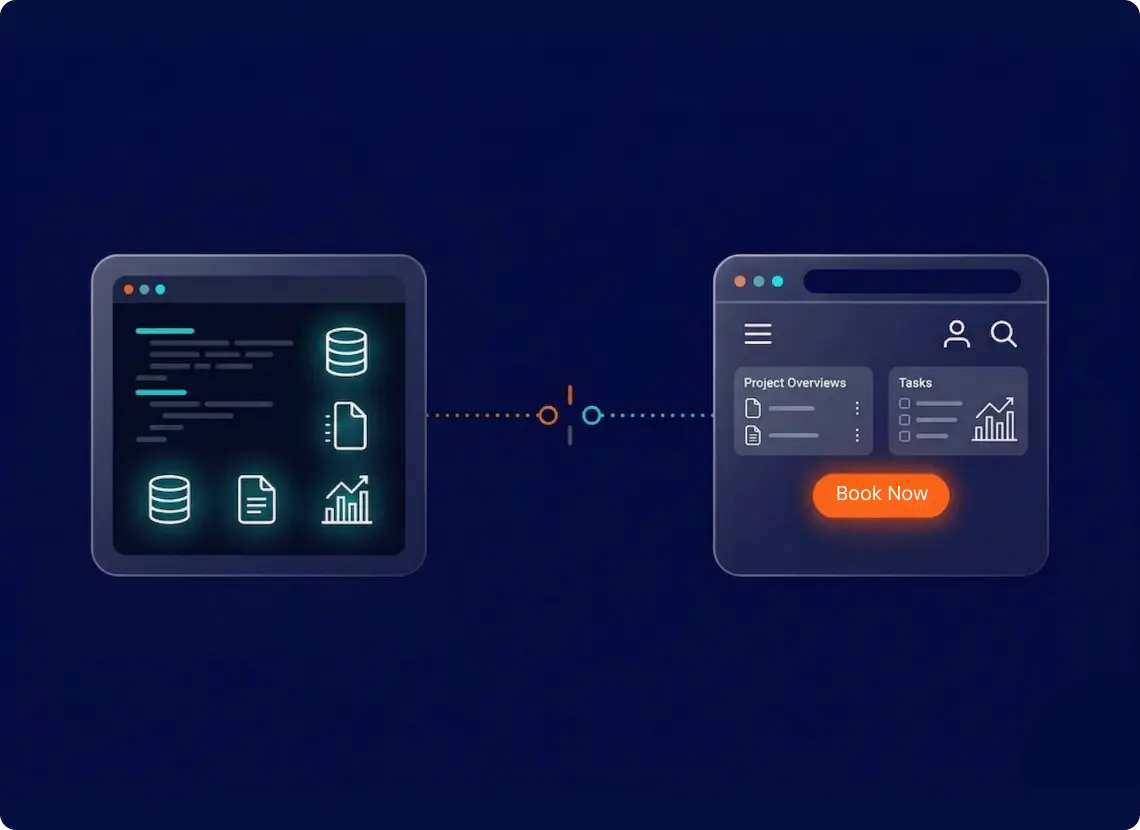
The platform is built in two parts — a public-facing website optimized for search visibility, and a backend that powers data delivery, partner connections, and the admin panel. The website pulls Trend Machine data through the backend API, turning city scores and editorial content into fully rendered, search-friendly pages.
1. Pages Google finds and ranks — automatically, for every new city. Organic search was the acquisition strategy from day one. That meant one hard requirement: Google had to see full page content immediately, not a blank screen filling in after load. All key pages — Home, City detail, Tour listings, Accommodation — are server-rendered. Structured metadata makes them eligible for rich search results. When the AI engine adds a new city, a findable, rankable page exists automatically — no manual SEO work per city, no developer involved.
2. A backend that handles itself — schedules, syncs, and all. A four-person team can’t afford to manually refresh scores or chase partner content updates. The backend (Laravel 12) handles API delivery, automated data tasks, and admin functionality in one system. Score refreshes, partner content syncs, and editorial updates run on schedule. The founding team manages content and controls the platform through one interface — without pulling in an engineer for every change.
3. Affiliate tracking without accounts, login walls, or personal data. The monetization model is affiliate commissions: a visitor reads a city page, clicks through to a booking partner, the startup earns a cut. No user accounts, no registration — that friction kills conversion. Every session is tracked anonymously, and partner redirects carry parameters that tie each click-through to a specific city page and score category. The team sees exactly which cities and categories drive bookings, without collecting personal data.
4. Four partner integrations — each one swappable without touching the rest. Weather data, city photos, accommodation booking (Stay22), and tour listings — four external APIs, all live at launch. Each is built as an isolated module: swapping a provider or updating an API doesn’t cascade into the rest of the platform. Privacy policy, cookie consent, and terms of service shipped at launch, not as afterthoughts.
Tech Stack: Next.js (SSR) · React · Laravel 12 · MySQL · Metabase
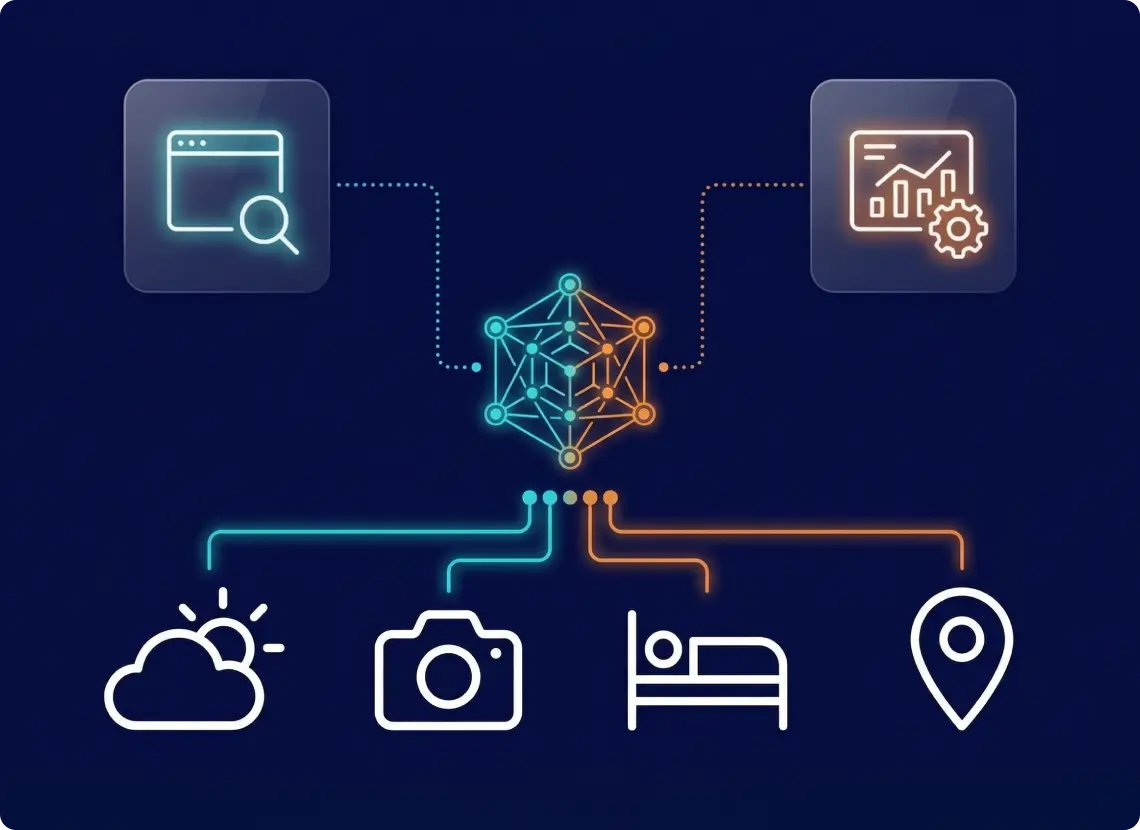
The architecture decisions in the product layer — pages that Google indexes instantly, tracking without user accounts, partner integrations you can swap out independently — those aren't just technical choices. They're what let a four-person founding team operate a platform that feels much bigger than it is.

From Mockups to Market-Ready in 90 Days
Indexed and ranking within days of launch. Google picked up city pages almost immediately after going live — a direct result of server-side rendering and structured metadata shipping on day one, not as a later fix. Every city the AI engine adds becomes searchable without any additional SEO work.
Conversion data before the end of week one. Anonymous session tracking gave the founders per-city, per-category click-through visibility right after launch. They identified which pages were driving affiliate clicks — and which weren’t — within the first week of traffic, without a single user account in the system.
The founding team runs the platform, not the engineers. Built-in dashboards eliminated reporting requests entirely. Traffic, partner performance, and data freshness are visible in real time. A four-person team operates a platform that behaves like it has a much larger team behind it.
Partner integrations that don’t create fragility. Each of the four integrations — weather, photos, hotels, tours — is isolated by design. One can be updated, replaced, or debugged without the others going down or requiring a redeployment.
This is the final part of a five-part series. Here’s what GroupBWT built — and where to read each story:
- Part 1 — MVP Development: From API rejection to market launch in 90 days
- Part 2 — Web Scraping: Hybrid scraping layer across 7 sources on a startup budget
- Part 3 — Data Engineering: NLP pipeline that turns raw reviews into scored city intelligence
- Part 4 — ETL Pipeline: Session-based orchestration with three refresh cadences
- Part 5 — Custom Software Development (this part): The product layer users actually see
The result: a four-person founding team went from Figma mockups to a live AI travel platform covering 30+ European cities — in 90 days.
Ready to Turn Your Data Into a Live Product?
You've got the AI model, the data pipeline, or the scoring engine — but no product users can actually visit and pay for. Your team is small, your timeline is tight, and every week without a live platform is a week without revenue or user feedback. If that sounds familiar — that's exactly the problem we solved here.



You have an idea?
We handle all the rest.
How can we help you?