

Telecom is a business of high stakes and razor-thin margins. While most industries talk about a “data-driven culture,” for a telecommunications provider, it is a matter of survival. Every day, a typical network generates petabytes of signaling events, session records, and billing transactions.
Yet, in our delivery work at GroupBWT, we’ve observed a consistent paradox: operators are drowning in data but starving for actionable insights. The missing link isn’t more storage or faster processors. It is the reduction of Decision Latency.
The Backbone Concept: What is Decision Latency?
Decision Latency is the total time elapsed from the moment a critical signal occurs in the network or market to the moment the operator executes a measurable, corrective action. To win, an operator must move towards a data-driven telecom model with a “closed-loop” architecture. This means the data must trigger an immediate response: a retention offer, a bandwidth reroute, or a fraud block.
“In telecom, the size of your data lake is a cost; the speed of your decision loop is your profit.”
— Eugene Yushchenko, CEO at GroupBWT
Why Telecom Operators Need Big Data Analytics Now
The 5G era has changed the physics of the industry. Big data analytics in telecommunication is no longer about “what happened” but about “what is happening right now”.
- The 5G and IoT Explosion: 5G increases event density. To manage network slicing without ballooning OPEX, companies use big data services to automate real-time processing.
- Hyper-Competition and Churn: Success requires a data driven decision for telecom that monitors the market pulse, identifying threats before they manifest in churn reports.
- Operational Efficiency: High-quality data-driven telecom strategies allow for “precision investment,” deploying infrastructure based on predicted demand heatmaps.
Key Use Cases: Reducing Latency Across the Value Chain
Churn Prevention via Quality of Experience (QoE)
Churn is often driven by “silent” issues. By implementing data driven analytics for telecom customers, we identify users experiencing poor throughput or high latency (low Quality of Experience or QoE) before they complain.
- The Decision Loop: Signal (QoE degradation) → Action (Automated outreach) → Result (Reduced churn).
ARPU Optimization through “Segment-of-One”
How firms lift their ARPU (Average Revenue Per User) has evolved. Real-time triggers based on consumption patterns allow for Next Best Action (NBA) offers. For example, a customer nearing their limit receives an add-on offer at the moment of highest intent.
Real-Time Revenue Assurance
Traditional fraud detection is too slow. With a Big data implementation from GroupBWT, we implement anomaly detection that blocks suspicious activity in seconds.
The External Data Edge: Strategic Market Intelligence
Internal data only tells half the story. To truly reduce decision latency, you must know what is happening outside your network. This is where telecom web scraping provides a unique competitive advantage.
If a competitor launches a fiber rollout, your window to act is small. Our web scraping company helps you stay ahead by turning fragmented web signals into actionable market maps.
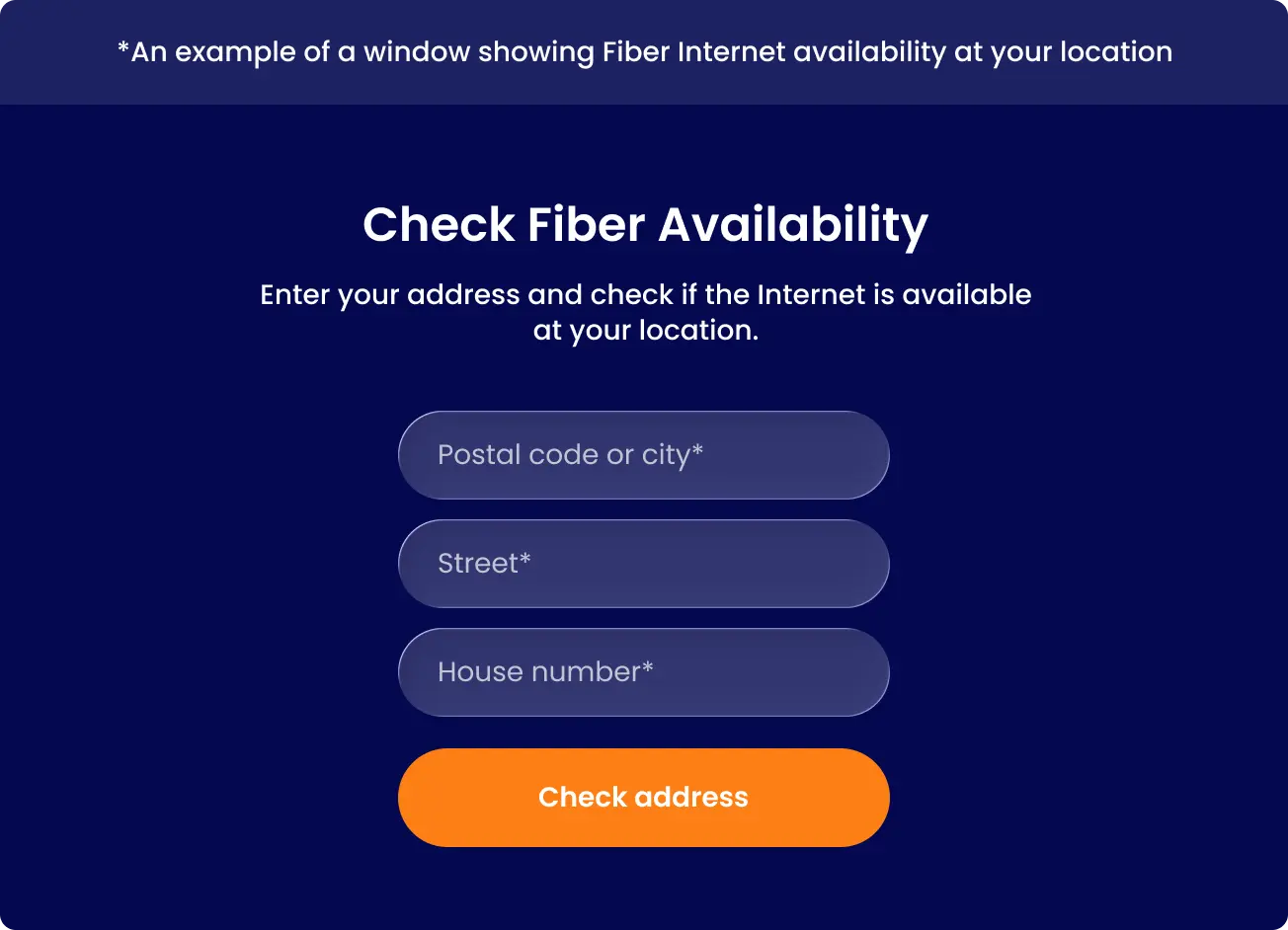
Case Study: Real-time telecom research in the German Fiber Market By providing a clean, address-level feed of competitor coverage, our client launched hyper-local marketing campaigns, resulting in a 22% increase in acquisitions. Learn more about how web scraping drives data-driven telecom market research to stay competitive.
Big Data Architecture: Building the Decision Engine
GroupBWT advocates for a “Loop-First” architecture. This requires a data driven decision for telecom that focuses on processing backwards from the required action.
- Ingestion & Identity Resolution: We bridge legacy OSS/BSS (Operations Support Systems and Business Support Systems) to create a “Golden Record”.
- The Processing Layer: We prioritize “Online Learning” where models update in real-time.
- The Action API: Insights are pushed to systems like ITSM (IT Service Management) for immediate repair tickets.
| Technology | Why it matters for Decision Latency | Common Pitfall |
| Real-time Streaming | Triggers actions in seconds. | Over-engineering simple batch cases. |
| Lakehouse Architecture | Speed of a warehouse + scale of a lake. | High storage costs without tiering. |
| Data collection solutions | Provides the “Market Pulse” reliably. | Underestimating maintenance. |
| Big data software testing | Ensures reliability of critical pipelines. | Skipping validation in high-velocity streams. |
Why “In-House Only” Often Stalls
Many operators find that data-driven telecom initiatives require engineering depth outside their core competency.
- The Maintenance Burden: In our experience, in-house teams often spend 80% of their time fixing broken data pipelines instead of improving models.
- Speed to Value: Partnering with GroupBWT means your data-driven telecom MVP starts on Step 5, not Step 1.
10-Week Roadmap to a Data Driven Decision for Telecom
If you are looking for Big data consulting, we recommend a fast-track MVP:
- Weeks 1-2: Loop Definition. Pick one KPI and one action endpoint.
- Weeks 3-8: Data Ingestion & Model Training with external context.
- Weeks 9-10: Integration. Push the “Save List” to the CRM and measure uplift.
The ROI Model: CFO-Ready Metrics
Investing in data-driven telecom must show clear financial returns. Example Case: For an operator with 1 million subscribers and 2% monthly churn, reducing churn by just 0.1% (1,000 saves/month) results in 12,000 saves per year. At an LTV (Lifetime Value) of $150, that is $1.8 million in saved revenue, delivering an ROI of 300%+.
Conclusion
The rise of data driven telecom enterprises is not about having the most data; it’s about having the most useful data at the right time. Stop reporting on the past. Start deciding the future with a data-driven telecom approach.
Contact GroupBWT today for a specialized audit of your decision loops.
FAQ
-
How does reducing Decision Latency differ from traditional Business Intelligence?
Traditional Business Intelligence focuses on monthly reporting of historical events, whereas modern systems prioritize reducing the time between a signal occurring and a corrective action being executed. Reducing Decision Latency allows an operator to move toward a “closed-loop” architecture where data triggers immediate responses like retention offers or bandwidth reroutes. By closing this loop, companies transform their data lakes from a cost center into a high-speed engine for profit.
-
What is the “Engineering Tax” and how can operators overcome it?
The “Engineering Tax” refers to the heavy maintenance burden where in-house teams spend 80% of their time fixing broken data pipelines instead of improving predictive models. To overcome this, GroupBWT advocates for a “Loop-First” architecture that prioritizes ingestion and processing backwards from the required business action. This approach enables “precision investment,” allowing infrastructure to be deployed based on predicted demand heatmaps rather than historical averages.
-
Why is external web scraping considered a critical edge for market intelligence?
Internal network data only reveals half of the competitive story, making it vital to monitor external signals to understand what is happening outside your network. Web scraping turns fragmented web signals into actionable market maps, providing a clean, address-level feed of competitor coverage and fiber rollouts. This real-time research allows providers to launch hyper-local marketing campaigns that can result in significant increases in new subscriber acquisitions.
-
How does “Online Learning” improve real-time revenue assurance and fraud detection?
In the 5G era, traditional fraud detection is too slow to protect razor-thin margins against high-velocity threats. By prioritizing an “Online Learning” processing layer, anomaly detection models update continuously as new data streams in from the network. This allows the system to operate at the speed of the network, blocking suspicious activity in seconds and ensuring reliability through dedicated software testing.
-
How can operators resolve data silos between legacy OSS/BSS and modern analytics?
The primary bottleneck for many initiatives is the isolation of legacy Operations Support Systems and Business Support Systems. By implementing identity resolution, operators create a “Golden Record” that joins individual network experiences with comprehensive billing histories. This unified insight is then pushed through an Action API to systems like IT Service Management (ITSM) to trigger immediate corrective measures, such as repair tickets.