Decision-grade reporting is reporting you can defend under pressure: every critical KPI is reproducible, explainable, and auditable back to a specific pipeline run. If you can’t replay the run, the number isn’t decision-grade—it’s a guess with a chart.
In practice, the biggest cost is the “reconciliation tax”: the hours (and leadership attention) spent proving whose dashboard is right. This leads to missed forecast windows, delayed month-end close, and reputational damage when Finance can’t explain a number twice in a row.
“If your forecast relies on last month’s averages, you’re planning with a built-in delay.”
— Eugene Yushenko, CEO, GroupBWT
This playbook is written for CFOs, COOs, and Growth/Ops leaders (especially without a data background) who need controls—not more tooling.
If you need a quick primer, start with our guide on ETL and data warehousing.

What you will walk away with
- A reliability standard you can enforce in weekly reviews (run ID, replayability, governance).
- A practical integration playbook (what breaks, how we fix).
- Checklists, a maturity table, and a reconciliation-tax calculator you can copy into a spreadsheet.
Definition block
- Decision-grade reporting is reporting where a KPI can be reproduced from logged runs, with versioned logic and an audit trail.
- ETL/ELT is a workflow that moves data from source systems into analytics storage and applies controlled transformations (before or after load).
- A data warehouse is a query-optimised analytics store designed for consistent cross-team reporting, history, and governed access.
- A semantic layer is a governed “API for metrics” that stops BI tools from redefining KPIs ad hoc.
- Data lineage is traceability from a dashboard number back to models, source datasets, and the run that produced it.
Decision‑grade reporting is built as one operating unit (pipeline + warehouse)
Treat your pipeline and warehouse as one control system: the pipeline creates reliability, and the warehouse makes reliability usable at scale. If either side is weak, reporting becomes inconsistent, audit trails break, and leadership loses confidence in the output.
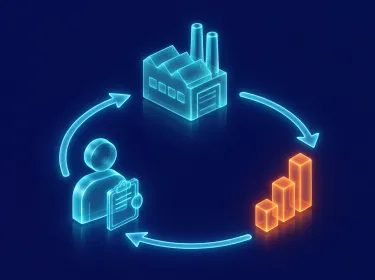
We call this the GroupBWT Decision‑Grade Data Loop: contracted ingestion → versioned transforms → governed metric definitions → auditable consumption. It’s intentionally boring, because boring is what survives audits.
ETL is the Reliability Layer for Cross-System Data
ETL is the reliability layer that removes ambiguity—duplicates, schema drift, inconsistent definitions, and timing gaps that cause conflicting reports. In modern cloud warehouses, the “T” often happens after load (ELT), but the reliability job is the same: make inputs repeatable and verifiable.
“The real frontier isn’t AI or the cloud. It’s data truth. Scraping systems don’t fail because the code is bad—they fail because requirements and controls are vague.”
— Alex Yudin, Head of Data Engineering, GroupBWT
GroupBWT Reliability Rule: if a metric cannot be reproduced from a logged pipeline run, it is not decision-grade.
How reliability is created in practice (no magic):
- Orchestration + run logs: every run has a run ID, timestamps, and a clear success/failure state.
- Transformations as code: business rules live in versioned SQL/Spark code (commonly dbt for SQL transforms, Spark/Databricks jobs for heavy transforms).
- Quality gates: tests that block bad data (nulls, duplicates, referential integrity, freshness).
- Observability + routing: alerts go to an owner with a playbook (fix forward, backfill, or roll back).

Plain‑English translation of dense terms (for CFO/COO/Growth/Ops):
- schema drift = a source system changed a column/type and your numbers can change silently
- semantic layer = the single place where KPI formulas live (so BI tools can’t “freestyle”)
- slowly changing dimensions = keeping historical versions of attributes so “as-of” reporting works
- event time vs processing time = when something happened vs when it arrived (and why yesterday’s revenue can shift)
A data warehouse is query-optimised memory for the business
A data warehouse is the foundation of analytics: it stores information optimised for queries, not transactions. Unlike operational databases (built to run apps), a warehouse is built to answer questions consistently across teams, time periods, and systems.
If you’re mapping domains (Finance, Sales, Ops) into one system, start from a clear enterprise data warehouse architecture before you debate tools.
The Extract → Transform → Load contract
Use your pipeline as a contract between source systems and decision‑making, with explicit accountability at each step:
- Extract: Pull from databases, APIs, logs, and files. This also includes web inputs via top-rated web scraping, vendor feeds, or content aggregation services. If your team is new to this, start with scraping in data science and be explicit about where LLM for web scraping is helpful (and where it’s too brittle).
- Transform: Clean inconsistencies, standardise formats, apply business rules, and filter noise.
- Load: Store structured, query-ready data into the warehouse for analysis.
When this approach does not fit (and why that’s not an engineering problem)
A “decision‑grade” setup is the right move when you need cross‑team trust, auditability, and scale. It’s a poor fit when:
- You have one small data source and no shared reporting needs.
- Your “metrics” change weekly with no stable definitions or owners.
- You cannot assign accountability for business rules (who decides what “active customer” means).
Trade‑off note: enforcing decision‑grade controls increases engineering effort and compute cost, and it slows early experimentation—deliberately—because every definition change becomes a reviewed, logged change.
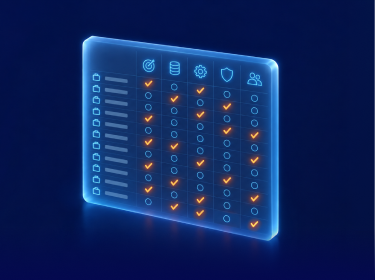
Decision-grade readiness checklist
- Metric ownership: each KPI has a named owner and written definition.
- Source map: you can list every system feeding reporting (DBs, APIs, logs, files).
- Latency target: you know what must be real-time vs daily/weekly.
- Change handling: you have a plan for schema changes and versioning.
- Data quality gates: duplicates, missing fields, and outliers have rules.
- Lineage: you can trace a dashboard number back to a pipeline run.
- Access controls: roles and permissions are defined for sensitive fields.
- Audit trail: key transformations are logged and reviewable.
- Recovery: failed runs have alerting + replay strategy.
- Cost model: you know what drives spend (storage, compute, refresh frequency).
- Definition layer: shared business definitions live in one place (not in dashboards).
- Decision workflow: you can name the decisions this system supports (pricing, risk, inventory, forecasting).
Interactive: reconciliation-tax calculator
This is the fastest way to quantify ROI without hand‑waving ((copy/paste into a spreadsheet)).
Reconciliation tax (monthly) = (analyst hours/week + leadership hours/week) × hourly rate × 4.3
Example:
| Input | Conservative | Typical |
| Analyst hours/week spent reconciling | 4 | 12 |
| Leadership hours/week in “numbers meetings” | 1 | 3 |
| Fully loaded hourly rate | $90 | $150 |
| Estimated monthly tax | $1,935 | $9,675 |
If you’re arguing about whether to invest, compare this to the cost of implementing contracts + tests + governance for your top 10–20 KPIs.

ETL and data warehousing integration
Integration is not “connectors.” Integration is: if one system changes, the impact is detected, routed to an owner, and fixed via a known playbook—without redefining the business.
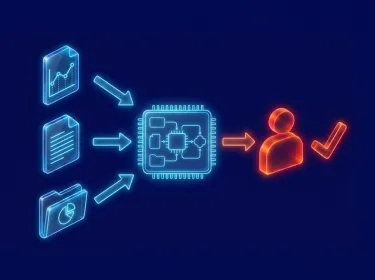
Mini‑scheme (in words): sources (apps/DBs/web) → ingestion (batch/stream) → raw zone (immutable) → transforms (SQL/dbt/Spark) → warehouse models → semantic metrics → dashboards → decisions. When a schema/definition/latency change happens, it triggers an alert → an owner triages → you fix forward or backfill → you re‑validate the KPI.
What usually breaks / how we fix it:
- Silent upstream changes (schema drift) → schema contracts + metadata diff checks + CI that blocks deploys until mappings/tests are updated.
- KPI logic scattered across dashboards → move definitions into the semantic layer + version them + review changes like code.
- “Real-time by default” → set latency targets per decision, then implement incremental loads/streams only where the ROI justifies the cost.
If you’re scaling this beyond a few sources, treat integration as big data pipeline architecture, not a one-off connector problem.
For web‑derived inputs, treat them like any other source system: retail teams often start with competitor pricing via Target scraping or broader retail data scraping, then add brand signals from reviews and social using web scraping for sentiment analysis. If you outsource extraction, benchmark providers against top data aggregation companies before you commit.
What “integrated” looks like in practice:
- One metric catalog used by Finance, Growth, and Ops simultaneously.
- One definition workflow: propose → review → approve → deploy.
- One lineage expectation: a dashboard number links to a model version and source freshness timestamp.
Difference between ETL and data warehouse
They solve different problems, and mixing them up leads to bad architecture decisions and wasted budgets. If you treat ETL and data warehouse as interchangeable, you’ll overpay for tools and under-invest in controls.
To clarify data warehouse and ETL concepts for stakeholders:
- ETL (Extract, Transform, Load) governs how data becomes consistent: validation, schema change handling, replay capability, and logged runs.
- The data warehouse governs how consistent data stays usable: history, performance, permissions, and concurrency.
Comparison for non‑technical stakeholders:
| Feature | Pipeline (reliability) focus | Warehouse (query + access) focus |
| Primary question | “Why is this number wrong?” | “Why is this dashboard slow/locked?” |
| Mechanism | Transformation logic, joins, quality gates | Partitioning, clustering, caching |
| Audit artefact | Run logs, lineage, code versions | Access logs, retention policies |
Data warehousing and ETL processes
Treat this as a 3‑layer manufacturing line. The goal is to make “truth” repeatable before you make it fast.
1) Contract layer (before code)
- KPI list: the 10-20 metrics that drive the business.
- Definition cards: written contracts (grain, inclusion/exclusion) versioned in git.
- Source inventory: a strict list of systems, APIs, and refresh expectations.
2) Control layer (in code)
- Schema drift detection: catch silent source changes with CDC schema tracking, contract tests, and metadata comparison.
- Quality gates: tests for nulls, duplicates, and referential integrity that block bad data before it hits the dashboard.
- Lineage: link outputs to a run ID and transformation version—typically at table/model/partition level; row‑level lineage is possible but often expensive and only worth it for high‑risk domains.
3) Consumption layer (where truth is used)
- Semantic layer: metrics defined once in code, not re‑implemented in Tableau or Power BI. In practice, this may be dbt metrics, LookML, or governed warehouse views; the key is a single source of metric truth.
- Standard dashboards: approved views for Finance and Ops (with run IDs shown, not hidden).

Core concepts for decision-makers
Below we translate ETL and data warehousing concepts into controls you can audit, so “data strategy” stops being a debate and becomes an operating system.
Two data warehousing and ETL concepts that frequently create surprises are:
- Slowly changing dimensions: you must choose what “as of” means (invoice date vs shipment date) and store history intentionally.
- Event time vs processing time: late-arriving events can change “yesterday,” so you need backfill rules and a clear recomputation window.
Common misconception to avoid: “Lineage down to every row is always required.” In distributed systems, you often start with table/model/partition‑level lineage and only move to row‑level where regulatory or fraud-risk justifies the cost.
ETL process in a data warehouse
For modern stacks (Snowflake, BigQuery, Databricks), the best practice is often ELT (Extract, Load, Transform): transformations happen after the data lands in the cloud warehouse. In this playbook, we still use “ETL” as shorthand for the end‑to‑end reliability workflow (contract → controls → consumption).
A robust pipeline inside the warehouse usually follows this pattern:
- Raw (immutable landing): keep data “as received,” partitioned by ingestion time so you can replay history.
- Staged (clean + standardised): standardise types, normalise keys, deduplicate, and capture schema drift.
- Modeled (business entities): create validated entities (Customers, Orders) with tests.
- Metrics (semantic layer): define KPIs once and expose them to BI.
Example (what “definition cards” prevent): a robust “Gross Revenue” definition includes inclusion rules (paid orders only), exclusion rules (refunds treated as negative revenue on event date), and currency conversion methods.
Real‑world implementation: predictable failure modes (and what they cost)
Most failures come from three predictable modes: silent schema drift, metric logic trapped in dashboards (“shadow IT”), and latency theatre (demanding real‑time data when daily is enough).
The pain usually looks like this: a source field changes type on Friday; Monday’s dashboard flips “Active Customers” by 10–15%; the business spends the week reconciling; the decision window closes. The direct cost is analyst time; the bigger cost is delayed action and lost trust.
Fix‑first principle: assign owners and contracts before optimizing performance. Performance without correctness is just faster damage.
Minimal controls by maturity:
| Maturity level | What you implement | What it prevents |
| Level 1: Stop the bleeding | Source inventory, definition cards | KPI conflicts, duplicate counts |
| Level 2: Trust at scale | Drift alerts, lineage, backfill windows | Silent meaning changes, untraceable data |
| Level 3: Decision automation | Semantic layer, governance workflow | Metric sprawl, compliance risk |

Implementation checklist (Week 1-12)
Week 1–2: contracts and ownership
- List top business decisions (pricing, inventory, cash flow).
- Assign a business owner + data owner per KPI.
- Write definition cards (grain, inclusion/exclusion).
Week 3–6: controls and trust
- Add schema drift detection.
- Implement data quality tests (nulls, duplicates).
- Define the backfill strategy (what you recompute, how far back, and who approves it).
Week 7–12: scale and governance
- Implement partitioning and incremental loading.
- Enforce RBAC and audit logs for sensitive fields.
- Move KPI logic into the semantic layer to block dashboard-level “freestyling.”
If you operate in regulated contexts, treat the audit trail as a product feature, not an afterthought. For insurance reporting workflows, see how to extract data in insurance for typical constraints and data sources.
Next step: pick your top 10 high‑impact KPIs, assign owners, and enforce “Run ID or it doesn’t ship” on executive dashboards.
If you want a team to implement and operate this end‑to‑end, consider data warehouse as a service so stakeholders get decision‑grade reporting without building everything from scratch.
Primary sources and standards we align to
- Sarbanes‑Oxley Act (SOX) and internal controls for financial reporting: https://www.sec.gov/spotlight/sarbanes-oxley.htm
- EU GDPR (access control and data protection obligations): https://eur-lex.europa.eu/eli/reg/2016/679/oj
- OpenLineage (industry specification for lineage events): https://openlineage.io/
- Apache Beam time semantics (event time vs processing time): https://beam.apache.org/documentation/programming-guide/#event-time-and-processing-time
FAQ
-
How do I know if my metrics are “decision-grade”?
If two analysts can independently regenerate the same KPI from the same inputs using ETL and data warehousing run logs (same run ID, same transformation version), it’s decision-grade. If they can’t, it’s an interpretation.
-
Should we prioritize real-time pipelines or data quality?
Prioritize quality first. Data warehousing and ETL should focus on correctness; “near real-time” is often a status symbol, not a business requirement.
-
What is the ROI of fixing this?
Estimate the reconciliation tax (analyst hours + leadership hours) and the cost of delayed decisions. In most teams, preventing one “numbers week” per quarter justifies contract tests and governance.
-
What is the fastest way to stop conflicting dashboards?
Freeze metric logic in a shared semantic layer and treat KPI definitions as versioned assets. When a definition changes, it must be reviewed and released like code.